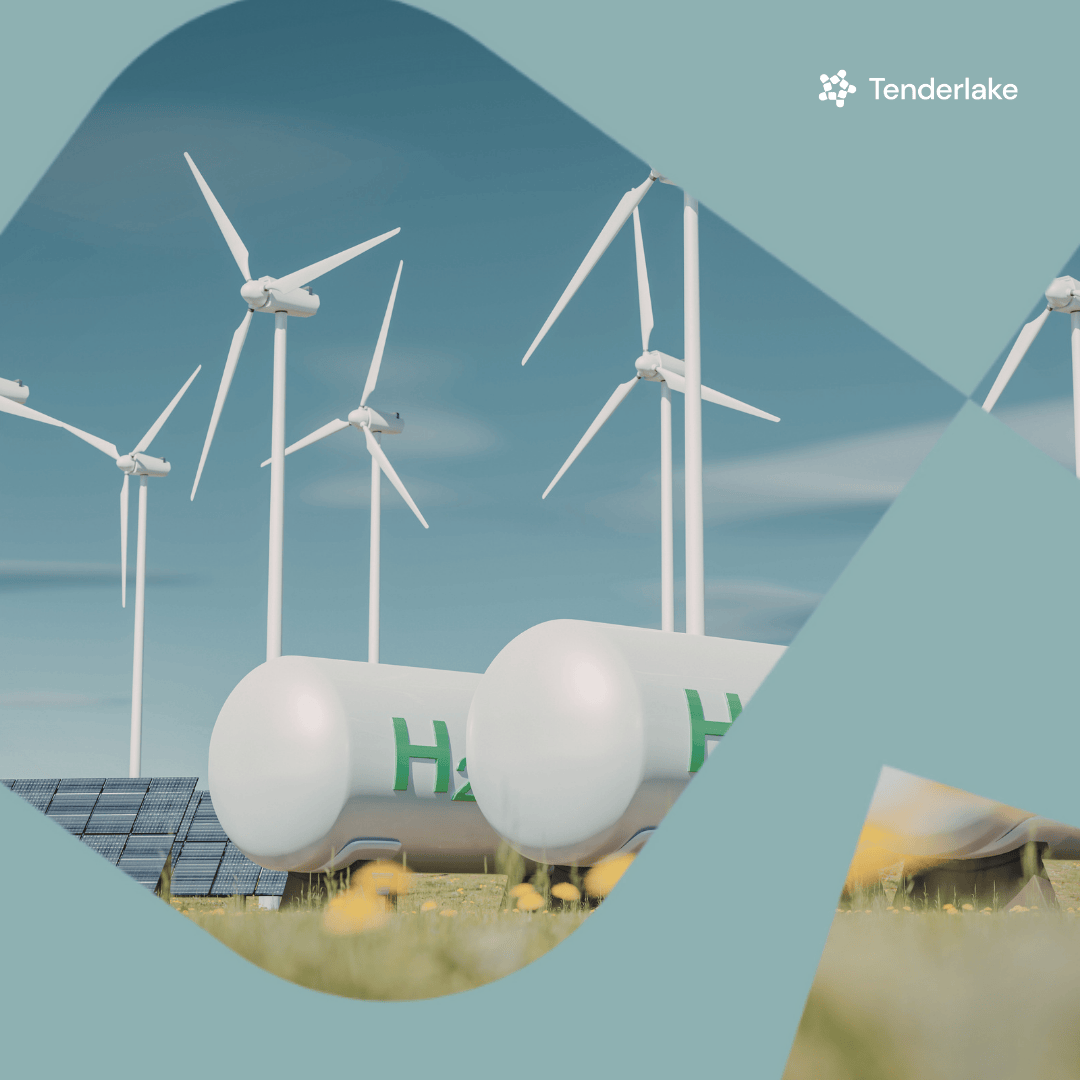
Research institution launches tender for hydrogen CHP plant
Tender for a hydrogen storage unit and CHP plant aims to boost research into integrating renewable energy and low-carbon heat in real-world conditions.
Tender for a hydrogen storage unit and CHP plant aims to boost research into integrating renewable energy and low-carbon heat in real-world conditions.
Follow Tenderlake on LinkedIn for concise insights on public-sector tenders and emerging procurement signals.
Forschungszentrum Energiespeichertechnologien at Technische Universität Clausthal is procuring a hydrogen storage unit and combined heat and power (CHP) plant to upgrade its hydrogen research infrastructure. The scheme will be supplied with locally produced renewable energy, turning the campus into a live test bed for non-battery energy storage and sector-coupled heat and power.
On 10th March 2026, the research centre published a contract notice for a new hydrogen storage and CHP project. The tender covers the delivery and installation of both assets, with the explicit goal of strengthening hydrogen-related research at Technische Universität Clausthal.
Although the summary does not specify capacities or technical configuration, the outline is clear enough: a hydrogen storage unit will interface with a CHP plant that can convert hydrogen into electricity and heat. By feeding the system with locally generated renewable power, the university can study how hydrogen works as a buffer between variable generation and steady heat and power demands.
This type of arrangement matters because it tackles several questions at once:
The Clausthal project sits alongside a growing set of smaller-scale hydrogen installations that combine teaching, research and demonstration. In September 2025, the city of Großräschen launched the Hydrogen System for Energy Workshop, combining a fuel cell, electrolyser, storage units and a link to a photovoltaic system. Both schemes use hydrogen to bridge solar power and controllable heat and electricity, but with a focus on learning and experimentation rather than pure commercial output.
The move by Technische Universität Clausthal reflects a wider trend: universities and research bodies are investing in dedicated hydrogen infrastructure to underpin teaching and applied R&D.
In November 2025, Land Baden-Württemberg, represented by Technische Hochschule Ulm, issued a contract notice for Hydrogen Infrastructure Expansion. That procurement aims to deliver a 50 MW hydrogen storage system to increase energy flexibility and link the electricity, heat and mobility sectors at the University of Applied Sciences Ulm. Where Clausthal focuses on a single storage and CHP combination, Ulm is planning a much larger storage asset explicitly framed as a cross-sector integration tool.
Laboratory capacity is also expanding. In February 2026, Vysoká škola báňská – Technická univerzita Ostrava published a notice for Hydrogen Laboratory Expansion, seeking PEM electrolyser equipment for its Hydrogen Technology Laboratory. Here, the emphasis is on production hardware and controlled experiments rather than integrated heat and power.
Storage itself is becoming a specialist component. In October 2025, Physikalisch-Technische Bundesanstalt Braunschweig went to market for Gas Storage for Hydrogen, specifying a dedicated gas storage solution for hydrogen. That notice underlines how component-level performance and safety requirements are becoming an important research topic in their own right.
Collaboration models are also evolving. In February 2026, Westfälische Hochschule issued a prior information notice for the H2 Solution Lab Project, seeking a private partner under a public–private partnership to construct and operate a research facility for hydrogen applications. The facility is expected to host specialised technology for hydrogen production and management, signalling interest from both academia and industry in shared experimental platforms.
Seen together, these procurements point to a layered ecosystem. At one end are component and laboratory projects focused on precise measurements and small volumes. At the other are campus-scale systems, like those in Ulm and Clausthal, designed to run real buildings and energy networks while generating data for research. The Clausthal tender is notable because it embeds hydrogen directly into a CHP plant, tightening the link between storage research and day-to-day thermal and electrical supply.
Beyond universities, utilities and infrastructure operators are procuring hydrogen and heat assets that push non-battery storage into mainstream energy systems.
In February 2026, EBL – Entsorgungsbetriebe Lübeck published Engineering Services for Hydrogen Plant under the H2ANSE project. That procurement seeks engineering support for a decentralised hydrogen production plant, including a PEM electrolyser and associated infrastructure. It shows utilities preparing not just to consume hydrogen but to produce it locally.
On the process side, the Emschergenossenschaft is going further. Its February 2026 contract notice for a Hydrogen Production Plant at the KA Bottrop site covers hydrogen production, CO₂ capture and methanol production. Here, hydrogen is part of a broader transformation of residual streams into chemical products, not just an energy carrier.
Municipal energy systems are also moving towards hydrogen-compatible generation. In February 2026, Municipiul Iasi issued a contract notice for the Conversion of CET II Holboca, shifting a coal-fired plant to natural gas with new H₂-ready cogeneration units. While natural gas remains the primary fuel, the ability to adopt hydrogen in future is designed in from the outset.
Conventional CHP assets are being renewed at the same time. In February 2026, Stadtwerke Schwäbisch Hall GmbH tendered for the Combined Heat and Power Plants Project, covering the delivery, installation and commissioning of three 1 MW CHP units plus maintenance. While the fuel type is not highlighted in the summary, the scale is typical of municipal heat networks—and similar CHP plants are potential end-points for hydrogen produced and stored in systems like those being developed at Clausthal.
Thermal storage is emerging as a key complement to CHP. In November 2025, Gothaer Stadtwerke ENERGIE GmbH launched a notice titled Thermal Storage Construction, for a 60 MWh atmospheric heat storage facility to improve the operation of CHP systems at the HKW Gotha West site. Large-scale heat storage of this type can smooth heat demand and allow CHP or hydrogen systems to run more evenly.
Other buyers are turning to low-temperature heat sources. In October 2025, Energie und Wasser Potsdam GmbH advertised Deep Geothermal Energy Center, an energy centre with three heat pump modules using geothermal heat, plus buildings for transformers and storage, to support city-wide decarbonisation. Together with projects such as Stadt Bad Kissingen’s Sewage Treatment Plant Optimization, which combines a heat pump and wastewater heat exchanger, these notices underline that heat pumps, geothermal resources and wastewater heat recovery are being developed in parallel with hydrogen.
Within this wider picture, the Clausthal research centre’s hydrogen storage and CHP project is a bridging asset. It is small enough to be instrumented and studied in detail, but close enough to real CHP and district heating practice to generate insights that utilities and municipalities can use.
The Clausthal tender summary leaves open important questions on capacity, operating strategies and control integration. How large the storage unit is, how the CHP plant modulates, and how tightly the system is linked to local renewable generation will shape both research outcomes and the value of the installation as a reference for other buyers.
As more universities, utilities and municipalities move ahead with hydrogen production, storage, CHP and thermal storage procurements, the data and operating experience from projects like Clausthal’s will be watched closely. For suppliers and system integrators, the research centre offers a live environment in which non-battery storage concepts can be tested against the practical demands of reliable heat and power supply.
Tenderlake Monitor reads every public sector notice published across the UK, the EU and the EEA, in the language it was published in, and tells you which ones match what your company sells and why. It works from a plain description of your business, not from keywords or CPV codes.
Follow Tenderlake on LinkedIn for concise insights on public-sector tenders and emerging procurement signals.