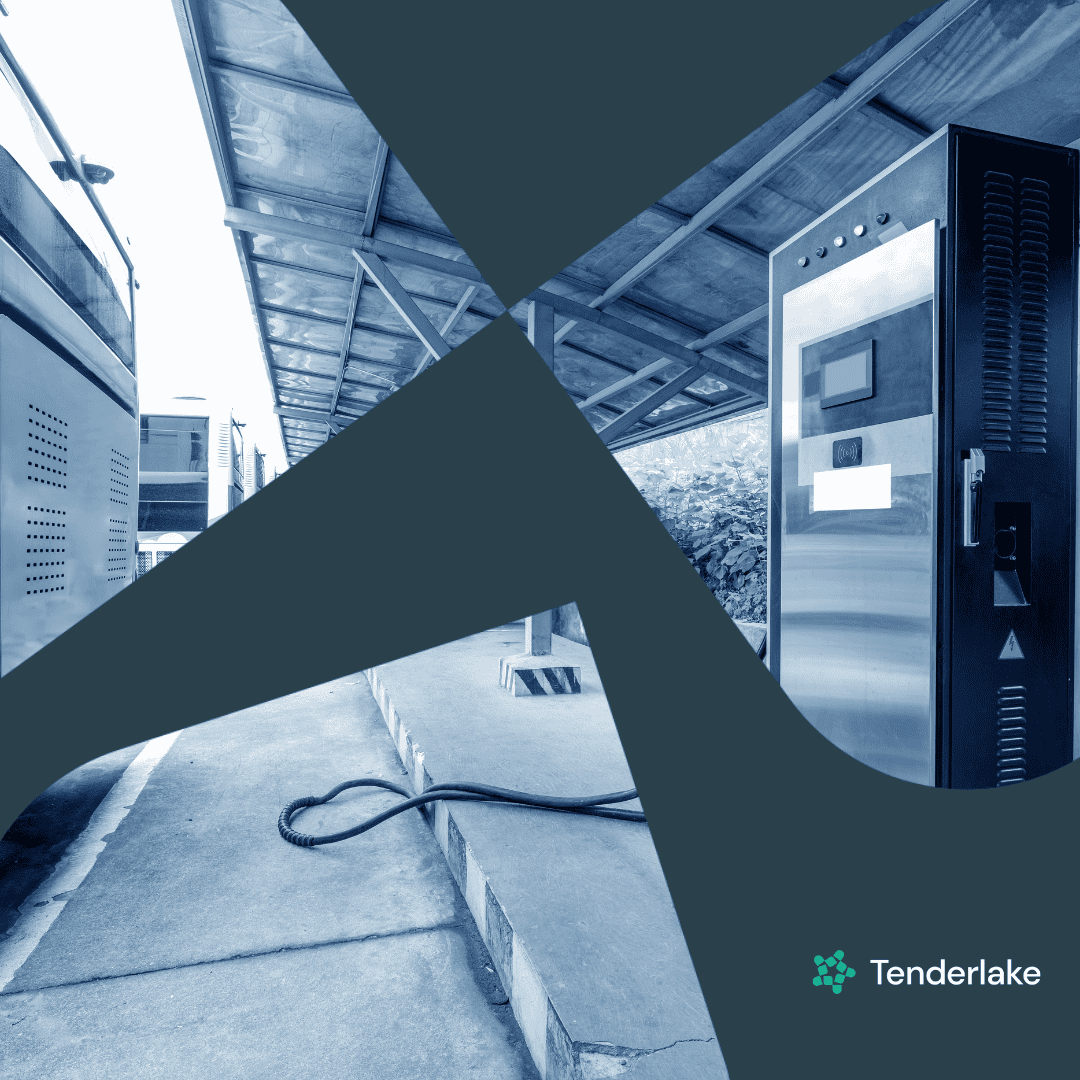
Bus operator launches tender for 36-point depot charging
Contract covers planning, delivery and commissioning of 36 charging points at a bus depot, with options for expansion, maintenance and electrical works.
Contract covers planning, delivery and commissioning of 36 charging points at a bus depot, with options for expansion, maintenance and electrical works.
Follow Tenderlake on LinkedIn for concise insights on public-sector tenders and emerging procurement signals.
Verkehrsbetriebe Luzern AG has gone to market for a new charging system for electric buses at its Weinbergli depot, with a contract that combines planning, design, delivery and commissioning of infrastructure for 36 charging points and options for further build‑out, maintenance and electrical installation. The move underlines how Lucerne’s bus network is being reshaped around electric operations, and adds to a growing pipeline of depot charging projects across central Europe.
The contract notice for the VBL Charging Infrastructure Project, published on 21st April 2026, sets out plans to equip the Weinbergli depot with new charging capacity dedicated to electric buses. The scope covers the full lifecycle of the installation phase, from planning and design through to delivery and commissioning on site.
At its core, the project is designed around components for 36 charging points. This suggests a substantial share of the depot’s fleet will be able to charge simultaneously once the system is operational, though the exact charging power and configuration are not detailed in the notice. The focus is on ensuring that the new equipment is delivered and commissioned as a coherent system rather than as standalone devices.
Crucially, the contract also builds in flexibility for the next phase of electrification. Verkehrsbetriebe Luzern AG is seeking options for:
By bundling these options with the main build, the buyer is signalling that electrification will not stop with the first wave of chargers. It also points to a preference for long‑term technical support from the supplier, rather than a one‑off equipment purchase.
For the market, this structure favours providers that can combine electrical engineering, depot integration and ongoing service capability. The need to plan, design and commission the system at an operational bus depot further raises the bar on coordination and project management.
The Weinbergli depot scheme sits alongside a broader charging agenda in Lucerne. In March 2026, the city’s civil engineering office, Stadt Luzern, Tiefbauamt, issued a contract notice for Public Charging Infrastructure in Lucerne. That tender seeks a concessionaire to implement and operate public charging stations in designated city‑owned parking lots.
The city concession notice stresses comprehensive service provision, including installation, maintenance and customer support. This mirrors the depot project’s emphasis on bundled delivery and long‑term upkeep, even though one focuses on buses and the other on public charging for a wider mix of electric vehicles.
Lucerne is not alone in aligning depot and public charging. In November 2025, the municipality of Richterswil launched a concession for Public Charging Infrastructure Concessions in municipal parking lots, requiring concessionaires to install and manage the network while paying an annual location rent. In April 2026, the City of Wallisellen followed with a similar Public Charging Stations Concession, covering infrastructure development, installation and comprehensive service management.
Taken together, these notices suggest a model in which local authorities concentrate on planning and site provision, while specialist operators take over the financing, delivery and day‑to‑day running of on‑street charging. In Lucerne, the Weinbergli depot project adds a third strand: the dedicated high‑capacity charging needed to keep an electric bus fleet moving.
Beyond Lucerne, the Weinbergli plans sit within a wider wave of bus‑depot tenders that put charging infrastructure at the heart of fleet renewal. Several recent notices highlight how rapidly the scale and complexity of these projects is increasing.
In January 2026, Stuttgarter Straßenbahnen AG published a contract notice for Bus Charging Infrastructure, covering the delivery and installation of equipment for 42 charging points at its Gaisburg depot and 16 at Möhringen, all for battery‑electric buses. In December 2025, Kölner Verkehrs‑Betriebe AG went even further, tendering an Expansion of Charging Infrastructure for 139 electric bus parking spaces at its Cologne‑Porz depot, including low‑voltage switchgear and DC charging systems.
More recent notices reinforce this direction of travel. On 2nd April 2026, TüBus GmbH launched a contract for Charging Infrastructure for Electric Buses at its depot in Tübingen to support its transition to an electric fleet. On 20th April 2026, SWU Verkehr GmbH published a notice for Charging Infrastructure for Bus Depot works at its own depot, specifying 19 pantograph chargers and five connector chargers to support 24 vehicles.
Other buyers are combining depot chargers with on‑route infrastructure and power‑supply upgrades. In February 2026, Hagener Straßenbahn AG tendered for Charging Infrastructure for Electric Buses, covering chargers at a depot, expansion of the power supply and new charging points along bus routes, with an emphasis on functional and safety‑compliant systems. EW Bus GmbH, in a February 2026 contract notice for Charging Infrastructure for Buses, highlighted the need for a scalable system including transformer technology to integrate battery‑electric buses into its regional fleet.
In several cases, bus procurement and charging infrastructure are being tightly coupled. Mürztaler Verkehrs‑Gesellschaft m.b.H. set this out clearly in April 2026 with its Electric City Line Buses Procurement, which combines three new electric buses with maintenance, warranty, charging infrastructure and real‑time load management. Similar bundling appears in notices from Robert Bayer GmbH in December 2025, Seger AG Omnibusunternehmen in March 2026 and Burgasbus EOOD in April 2026, all of which package new buses with associated charging systems and, in some cases, training for staff.
This pattern underlines the context for Lucerne’s move at Weinbergli. Depot charging is no longer treated as a peripheral add‑on; it is specified as a critical system, often alongside power‑supply infrastructure, digital management tools and long‑term maintenance. Verkehrsbetriebe Luzern AG’s insistence on options for further infrastructure and service provision fits this wider trend.
Another shared feature across recent tenders is the growing importance of service models and backend systems. For public charging, cities such as Wolfenbüttel and Wilhelmshaven are turning to concession contracts that transfer not only construction but long‑term operation to private partners. Wolfenbüttel’s January 2026 notice on the Charging Infrastructure Expansion sought operators to construct and manage facilities in public spaces, divided into two lots according to a site concept. Wilhelmshaven’s December 2025 Electric Vehicle Charging Infrastructure notice went further, targeting at least 230 charging points with the option of extending the concession for an extra ten years.
On the bus side, the digital layer is also becoming more visible in the specifications. The October 2025 prior information notice from RVK | Regionalverkehr Köln GmbH for GMH Charging Infrastructure describes a new operating yard for hydrogen fuel‑cell and battery‑electric buses with medium‑voltage fields, transformers, low‑voltage distributions, DC chargers and a combined load and charging management system. In March 2026, the city of Bad Homburg’s notice for Charging Infrastructure for Electric Buses required not only chargers for 15 buses at two locations but also a backend system for monitoring and maintenance.
Even smaller‑scale projects are embedding system management and training into their scope. The February 2026 tender from Dopravní společnost Zlín‑Otrokovice, s.r.o. for Electric Vehicle Charging Stations specifies not just eight charging stations for electric buses but also the necessary equipment for system management, warranty service and operator training. Similar requirements appear in notices from municipal bus companies in Paderborn, Warsaw and Burgas.
Against this backdrop, Verkehrsbetriebe Luzern AG’s inclusion of maintenance and electrical installation options within the Weinbergli depot contract positions the project firmly within the mainstream of current practice, where buyers are looking for long‑term partners rather than one‑off equipment suppliers.
The Weinbergli depot project is a clear marker of Lucerne’s shift towards electric buses and of the infrastructure needed to support that change. How the contract balances initial delivery with the optional expansion and maintenance elements will be worth watching, as will the way it dovetails with the city’s separate public‑charging concession. For suppliers, it is another sign that future tenders in this space are likely to favour integrated offerings that span design, electrical works, hardware, digital control and multi‑year service support.
Tenderlake Monitor reads every public sector notice published across the UK, the EU and the EEA, in the language it was published in, and tells you which ones match what your company sells and why. It works from a plain description of your business, not from keywords or CPV codes.
Follow Tenderlake on LinkedIn for concise insights on public-sector tenders and emerging procurement signals.