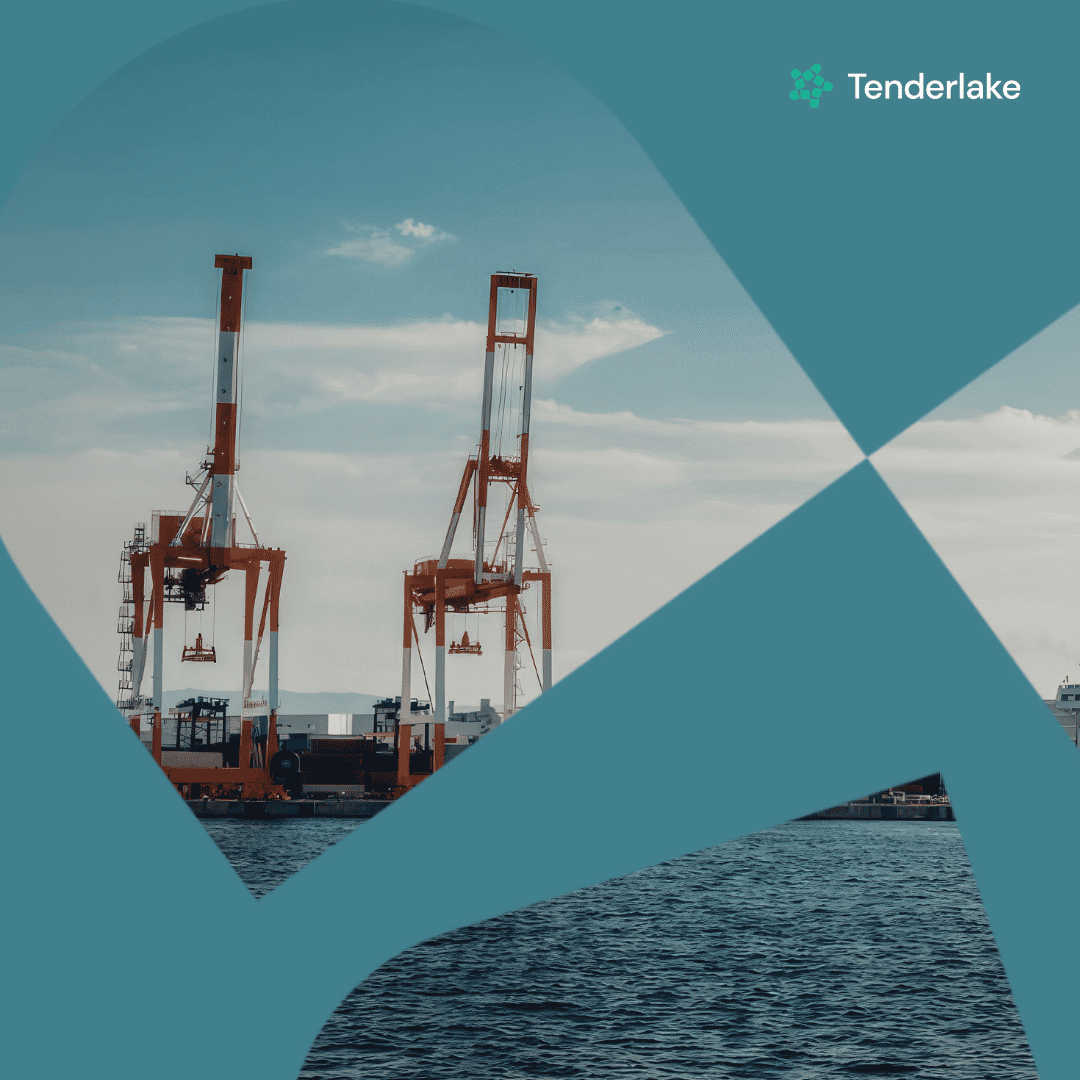
Port operator launches tender for terminal electrification works
Tender covers design, verification and electrification works at a major container terminal, building new power infrastructure to cut emissions from maritime activity.
Tender covers design, verification and electrification works at a major container terminal, building new power infrastructure to cut emissions from maritime activity.
Follow Tenderlake on LinkedIn for concise insights on public-sector tenders and emerging procurement signals.
A new contract notice from Constanta South Container Terminal SRL sets out major electrification works at the DP World terminal in Constanța, co-financed under the Connecting Europe Facility and intended to build electrified infrastructure that supports decarbonisation in maritime transport.
On 20th May 2026, Constanta South Container Terminal SRL published a contract notice for electrification works at the DP World terminal in Constanța. The contract combines design, technical verification, technical assistance and electrification works, and is co-financed under the Connecting Europe Facility with the explicit aim of creating electrified infrastructure to support decarbonisation efforts in maritime transport.
The focus on electrification at a significant container terminal in Constanța places this project firmly within the wider European push to cut emissions from shipping and port activity. By bringing new electrical infrastructure into the heart of terminal operations, the buyer is seeking to enable maritime transport around the terminal to rely more on low-carbon power.
Because the project is co-financed under the Connecting Europe Facility, it draws on a European funding instrument rather than relying solely on local resources. The emphasis on design, verification and technical assistance in the notice suggests that documentation and compliance will carry as much weight as the physical works themselves.
The notice sets out a package that spans the full technical chain of the investment. Instead of procuring studies and construction separately, the buyer is seeking suppliers able to handle every stage of the electrification project within a single contract.
This all-in-one structure mirrors a wider trend in recent Romanian infrastructure tenders. On 21st November 2025, the Municipality of Constanța published a notice for Integrated Design Services for Constanța, seeking integrated design, technical expertise and documentation services to support a range of public investment projects.
At county level, Vrancea County Council adopted a similar approach. On 3rd March 2026 it launched a tender for Road Infrastructure Modernization, combining design services, technical assistance from the designer and execution of works on county roads. Like the Constanța terminal electrification, it brings the whole project lifecycle under one procurement, with designers staying involved through delivery.
The terminal electrification project sits alongside a series of rail investments that also converge on Constanța’s port area. On 17th December 2025, Compania Națională de Căi Ferate 'CFR' SA launched a consultancy tender for Consultancy for Railway Modernization in Constanța Port, covering consultancy and supervision services for the design and execution of modernization works on port railway infrastructure, with an eye to service quality, safety and competitiveness.
On 17th March 2026, the Constanța regional rail branch followed with a contract notice for Railway Line Rehabilitation and Electrification on line 816 from Palas to Port A. That project combines design and execution of rehabilitation and electrification works, including tunnel consolidation and modernization, to enhance access to the Port of Constanța.
Together with the new terminal electrification works, these rail schemes point towards a more integrated, electrically powered logistics chain into and within the port area. While each contract focuses on a different asset – terminal infrastructure, port rail lines and supporting consultancy – all prioritise upgraded, electrified systems.
Beyond Constanța, inland port infrastructure is seeing similar treatment. On 25th February 2026, the town of Zimnicea advertised Zimnicea Port Rehabilitation Services, covering technical design, technical verification, technical assistance and execution of modernization works for the port’s infrastructure. The mix of services is strikingly similar to the Constanța container terminal procurement, even if the scale and location differ.
Upgrades to the wider electrical system are advancing in parallel. On 4th December 2025, the national electricity transmission operator Transelectrica sought a service contract for Power Line Rehabilitation Design, covering design and documentation for reconductoring and rehabilitating the 220 kV double-circuit line between Porțile de Fier and Reșița. Strengthening high-voltage assets of this kind sits within the same broad agenda of preparing electrical infrastructure for more intensive use.
Local authorities are also investing in their own generation and storage. On 9th December 2025, the Municipality of Zalău issued a tender for a Photovoltaic Power Plant Project, covering supply, installation and commissioning of photovoltaic panels and inverters, together with connection works to the electricity grid and the necessary technical documentation.
On 4th March 2026, Sibiu municipality went to market for a Photovoltaic Park Project, seeking design and execution services for a solar park to produce renewable energy for the municipality, alongside technical assistance and project approvals. Five days later, on 9th March 2026, Craiova municipality advertised an Electricity Storage Facility Project to design and build a battery-based electricity storage installation intended to optimise operation of the city’s photovoltaic plant and support local energy system stability.
Viewed together with the Constanța terminal electrification, these municipal renewable and storage projects show how efforts to decarbonise transport increasingly rely on clean electricity produced and managed on shore.
The same design-plus-works model is evident at air transport hubs. On 7th April 2026, Brașov-Ghimbav International Airport published a contract notice for Airport Infrastructure Development, combining design and execution of works to extend the boarding and disembarking platform, create a rapid clearance road, enhance the lighting network and relocate electrical installations.
In February 2026, Compania Națională Aeroporturi București SA issued a tender for Design and Execution Services covering design, technical assistance and works for rehabilitation and modernization of PDA 1 at Bucharest airport, including railway connections, safety zone arrangements and rapid release solutions. As with the port and rail schemes, the buyer is looking for teams that can carry a complex infrastructure project from design desk to completed works.
For suppliers, the Constanța terminal electrification tender points to a market that favours multidisciplinary teams. Bidders will need to demonstrate capability in electrical design, technical verification, on-site delivery and ongoing technical support, all while meeting the requirements associated with Connecting Europe Facility co-financing.
For policymakers, the contract underlines how decarbonisation in maritime transport is increasingly implemented through concrete infrastructure projects. Rather than stand-alone pilots, the focus is shifting towards embedding electrified systems into day-to-day terminal operations and into their links with rail and other modes, in line with wider European efforts to reduce emissions from shipping and port activities.
The next phase will depend on how effectively these projects are delivered and coordinated. As the Constanța terminal electrification moves from procurement to implementation, its interaction with ongoing investments in rail, ports, energy and airports will be worth watching for anyone tracking how high-level commitments on decarbonisation are translated into operational infrastructure.
Tenderlake Monitor reads every public sector notice published across the UK, the EU and the EEA, in the language it was published in, and tells you which ones match what your company sells and why. It works from a plain description of your business, not from keywords or CPV codes.
Follow Tenderlake on LinkedIn for concise insights on public-sector tenders and emerging procurement signals.