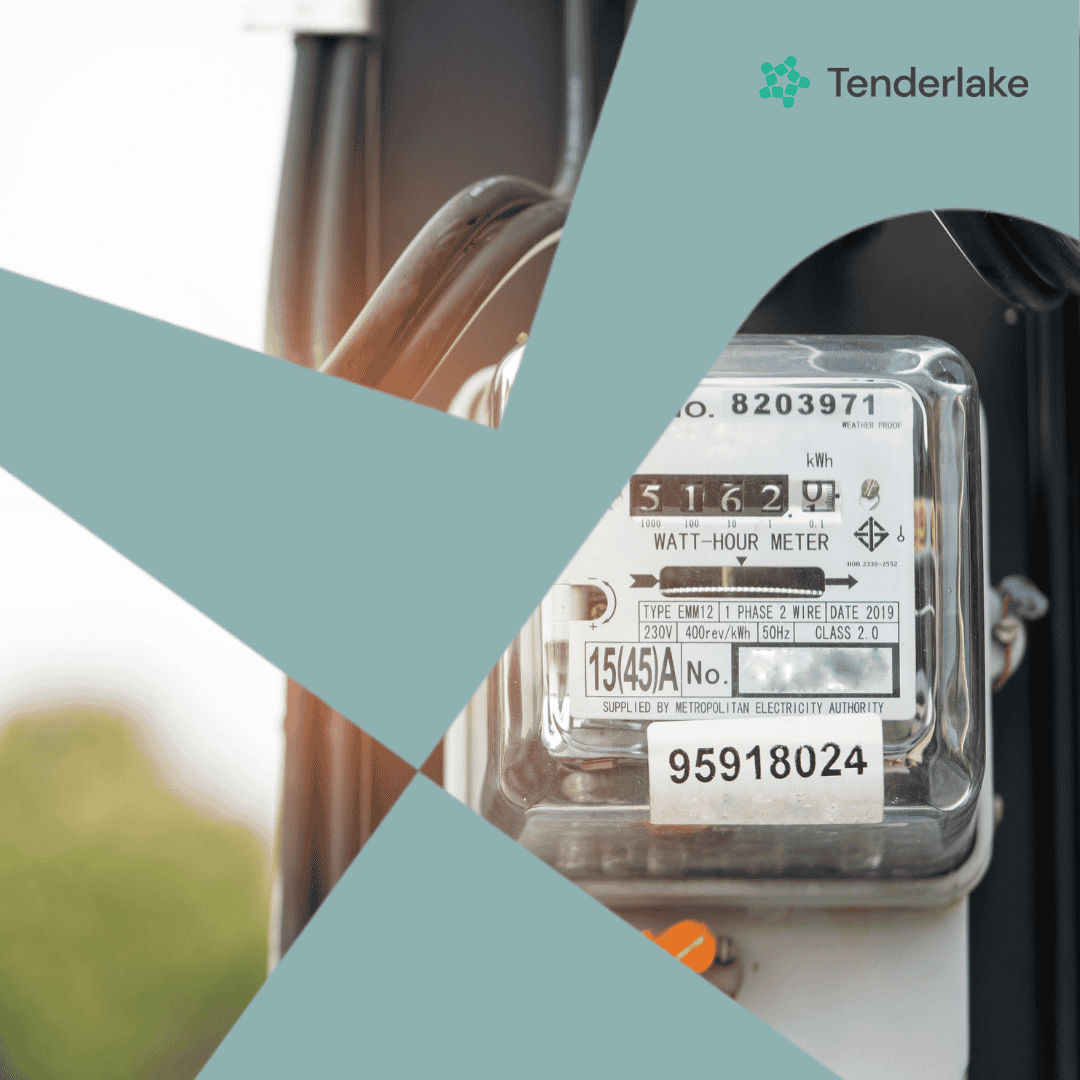
Water body opens market engagement on remote meter reading system
A multi-municipal consortium seeks views on a remote water meter reading system that could accelerate digitalisation of the water cycle and smarter billing.
A multi-municipal consortium seeks views on a remote water meter reading system that could accelerate digitalisation of the water cycle and smarter billing.
Follow Tenderlake on LinkedIn for concise insights on public-sector tenders and emerging procurement signals.
A multi-municipal water consortium in Gran Canaria has issued an early signal to the market on a future contract for a remote water meter reading system. The planned deal would cover both the supply and implementation of new technology and its operation across several municipalities, with the stated aim of digitalising the water cycle. For technology and service providers in the smart metering space, this is a clear sign that another sizeable cluster of consumers is preparing to move away from manual meter reads.
On 9th June 2026, the Presidencia del Consorcio Intermunicipal Cumbres de Gran Canaria published a prior information notice for a project titled Remote Water Meter Reading System. The notice describes a mixed contract that will involve supplying and implementing a remote reading system for water meters, then operating that system for multiple municipalities.
The stated focus is on digitalising the water cycle. In practical terms, that points to a shift from periodic, manual readings towards more continuous, data-led oversight of consumption. For a group of municipalities sharing infrastructure and resources, a common remote reading system also offers the prospect of comparable data, standardised processes and, potentially, more coherent demand management.
Because this is a prior information notice rather than a full contract notice, the published summary concentrates on high-level scope rather than detailed technical or commercial conditions. Even so, it signals that the consortium expects suppliers to offer not just hardware and software, but also operational capability over the life of the system.
The Gran Canaria announcement lands in the middle of a clear surge of water sector digitalisation projects across southern Europe, many of them focused on remote meter reading and network monitoring.
In December 2025, the municipal government of Siero in northern Spain launched a tender for a Remote Reading System for Water Meters in Colloto, La Fresneda and El Berrón. That project, described as part of a digitalisation initiative funded by the European Union, similarly combines the supply and implementation of a tele-reading system with the broader objective of modernising local water management.
Also in December 2025, the regional company Consorcio Medioambiente y Aguas Provincia de Cáceres - Mas Medio went to market with a Water Cycle Digitalization Project. That contract focuses on supplying and integrating sensing and control equipment across multiple locations to improve water management efficiency. While it is less about individual meters and more about network control, it reflects the same shift towards data-rich operation.
In Castilla y León, a public infrastructure and environment company followed a similar path. At the end of December 2025, it advertised a tender for the Supply and Installation of Meters and communication networks for tele-reading and connectivity services, a project explicitly co-financed by the European Union. Here, the emphasis on both meters and communication networks underlines that connectivity is now as central as the measuring devices themselves.
By early 2026, individual water utilities were specifying more advanced communications technology. On 3rd February 2026, the municipal water company in Gijón issued a notice for Water Meter Renewal and Remote Reading, calling for high-quality cold water meters and telecommunications services for automatic remote reading using the Narrowband-IoT standard. That degree of specificity about the communications layer hints at expectations that new systems will be capable of large-scale, low-power data collection.
Other municipalities are tying smart metering more directly to service quality and governance. The council of Peraleda de la Mata, for example, published a February 2026 contract for Water Meter Installation and Digitization, explicitly linking the work to improved water resource management, transparency, environmental compliance and the creation of technical employment. In March 2026, the municipality of Muro went out to tender for a Smart Water Management System made up of measuring elements and a remote reading system, envisaged both to enhance the concessionaire’s management of the water service and to give users real-time information.
Seen alongside these projects, the Gran Canaria consortium’s early notice fits a pattern: remote meter reading is becoming a standard expectation, and public buyers are increasingly looking for integrated solutions that combine devices, communications and ongoing service.
The digitalisation push is not limited to customer meters. In May 2026, the council of Lardero launched a contract for a Digitization Project for Water Networks focused on monitoring hydraulic sanitation and supply networks. The aim there is to embed digital monitoring deeper into the physical infrastructure, rather than only at the point of consumption.
A similar network-centred approach underpins the Cáceres Water Cycle Digitalization Project, which centres on integrating sensing and control equipment at multiple points across a province to improve efficiency. Outside Spain, a December 2025 tender from Asis Salernitana Reti e Impianti SpA in Italy covers the Monitoring and Control System Installation for aqueduct networks, explicitly tied to sustainable water resource management.
These projects show how meter-focused initiatives sit within a broader drive to make the whole water cycle more observable and controllable. For the Gran Canaria consortium, framing its forthcoming procurement as part of “digitalizing the water cycle” rather than simply modernising billing suggests it is alive to that wider agenda, even if the initial scope is centred on meters and remote reading.
Although the Gran Canaria notice is still high level, recent comparable procurements offer some pointers on what the market is likely to expect. Across the Spanish and Italian examples, several recurring themes stand out:
There is also evidence that, in some territories, the traditional model of outsourced physical meter reading still co-exists with newer systems. In January 2026, companies in the Veolia group in Spain advertised a tender for Meter Reading Services across several regions. That contract focuses on services for reading existing meters, rather than installing new remote-capable devices. Against that background, the Gran Canaria consortium’s intention to install a remote reading system underlines a deliberate move towards more automated data collection.
For suppliers, the multi-municipal character of the Gran Canaria project will be an important factor. Other multi-location contracts, such as the Cáceres digitalisation programme, require integration of sensing and control equipment at numerous sites. A multi-municipal meter reading system is likely to face similar questions about scalability, interoperability, and the ability to manage assets dispersed across different local networks and administrative boundaries.
The prior information notice from the Consorcio Intermunicipal Cumbres de Gran Canaria is, at this stage, a signal rather than a full specification. A detailed contract notice will be needed to clarify the technical architecture, performance requirements, communications standards and length of the operational phase.
Even so, the language of digitalising the water cycle, combined with the broader wave of smart metering and network monitoring projects in late 2025 and early 2026, suggests that the consortium intends to align itself with a wider European move towards data-driven water management. Suppliers active in remote reading, meter technology, connectivity and operational services are likely to watch closely for the next step in this procurement, and for how far the final scope extends beyond basic consumption metering into the wider management of local water systems.
Tenderlake Monitor reads every public sector notice published across the UK, the EU and the EEA, in the language it was published in, and tells you which ones match what your company sells and why. It works from a plain description of your business, not from keywords or CPV codes.
Follow Tenderlake on LinkedIn for concise insights on public-sector tenders and emerging procurement signals.