Local authority launches tender for wastewater plant upgrade
Tender covers a three-phase upgrade of a wastewater treatment plant, highlighting rising demand for advanced sludge processing and project expertise.
Tender covers a three-phase upgrade of a wastewater treatment plant, highlighting rising demand for advanced sludge processing and project expertise.
Follow Tenderlake on LinkedIn for concise insights on public-sector tenders and emerging procurement signals.
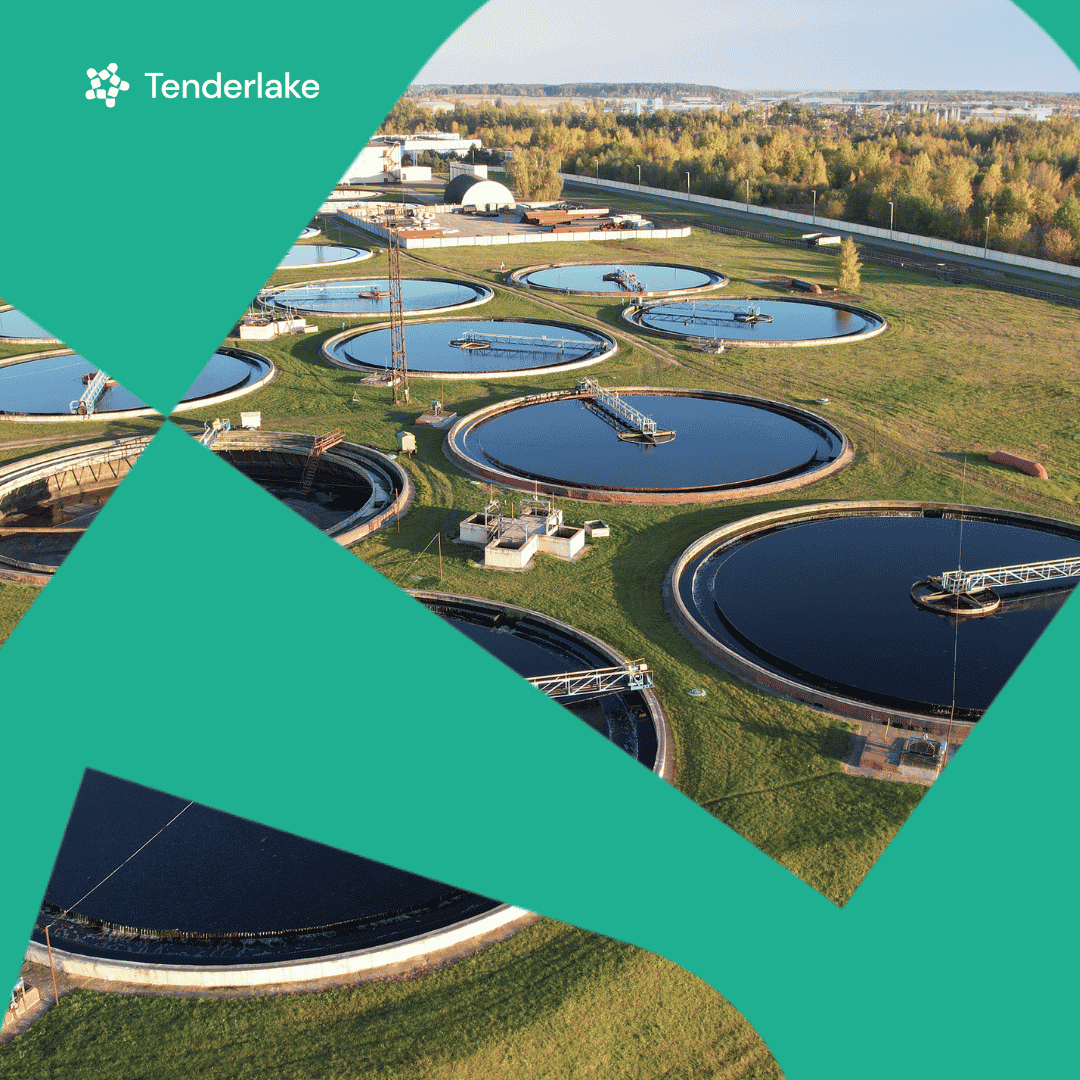
Communauté de Communes du Grand Pontarlier has launched a three-phase upgrade of the Doubs wastewater treatment plant, combining refurbishment, new construction and advanced sludge processing in a project that mirrors how utilities are reshaping ageing assets.
On 21st July 2026, Communauté de Communes du Grand Pontarlier published a contract notice for the Doubs Wastewater Treatment Project. The scheme is structured in three phases to improve the operation of the existing wastewater treatment plant.
Clarifiers sit at the core of many treatment processes, and their rehabilitation often has a direct effect on plant reliability and capacity. Grouping this with new-build works and a dedicated sludge-processing phase suggests a programme that addresses both ageing assets and downstream handling of residuals.
Phased delivery is becoming a common feature of wastewater investment. On 26th May 2026, Město Příbram published a contract notice for the Wastewater Treatment Plant Reconstruction, divided into two phases, with the second contingent on financial coverage. In July 2026, in BW association intercommunale SC went further in its Perwez Wastewater Treatment Plant Upgrade, combining civil engineering and electromechanical works for extension, tertiary treatment and renovation while keeping the plant in operation.
The Doubs project follows this broader pattern: breaking work into phases that can be sequenced and integrated with existing operations, and signalling to the market that both construction and process-engineering expertise will be required.
The explicit focus on “advanced sludge processing equipment” in Doubs underlines how sludge management is becoming a core design element rather than an afterthought. Utilities are seeking solutions that address treatment performance, handling, storage and, in some cases, energy recovery.
On 26th March 2026, VITAL S.A. BAIA MARE issued a contract notice for the Sludge Treatment Improvement Project at Baia Mare wastewater treatment plant. That scheme combines design and execution of a sludge drying installation, a reception station for vacuumed sludge, a storage platform for dehydrated sludge and the purchase of trucks for transport. It shows how buyers now treat the entire sludge chain – from reception to onward movement – as a single, integrated system.
Some authorities are pushing further into resource recovery. In June 2026, SYSEG sought a design‑build partner for the Construction of Sludge Methanization Unit at its Givors wastewater treatment plant. The contract covers a methanisation unit with biogas production and covered sludge storage. A similar approach underpins the Technical Assistance for Wastewater Plant at Thionville Fensch Agglomération, published on 16th June 2026, which prepares for both capacity expansion and the introduction of a methanisation solution while maintaining continuous treatment.
Elsewhere, the emphasis is on service arrangements for sludge once it leaves the works. On 30th March 2026, Vodovody a kanalizace Břeclav, a. s. launched a Sludge Disposal Framework Agreement for collection and disposal of sludge from its treatment plants, to be delivered by a single contractor under a framework.
Within this context, Doubs’ investment in advanced sludge-processing equipment places the plant alongside a wider wave of projects that seek to tighten control over sludge quality, reduce storage and transport pressures, and open options for recovery where conditions allow.
Although the Doubs contract centres on a single site, it forms part of a broader shift towards planning wastewater assets at system level, linking collection networks, treatment capacity and regulatory expectations.
On 14th April 2026, Troyes Champagne Metropole published a notice for a Sanitation System Master Plan. The contract covers diagnosing the wastewater network, drawing up a management plan and studying how the treatment plant should be adapted to meet upcoming regulations. Here, capacity and process design at the treatment works are explicitly tied to the performance and future development of the upstream network.
Network-to-plant integration is also central to the Wastewater Network Project Management contract that Communauté d'agglomération Quimper Bretagne Occidentale advertised on 7th April 2026. That project management mission covers new construction and rehabilitation works to reorganise the collection and pumping network from several sectors to the Corniguel wastewater treatment plant.
These tenders highlight a direction of travel in which master planning and network rearrangements set the stage for individual plant upgrades. The Doubs clarifier rehabilitation and new-build works will sit within a similar system context, with inflows shaped by upstream networks and future regulatory requirements.
Across recent water infrastructure procurements, environmental compliance, structured project management and, at times, social value commitments are becoming standard. The Doubs modernisation is likely to be delivered under comparable expectations, even if the notice itself is concise.
On 11th February 2026, Saint-Nazaire Agglomération – la CARENE tendered a Project Management for Infrastructure contract. The selected project manager will oversee several phases of work while ensuring compliance with environmental authorisations, and the brief also stresses social integration through employment opportunities. This places environmental and social objectives inside the core scope of engineering contracts.
Regulatory drivers feature clearly in plant modernisations. The Wastewater Treatment Plant Modernization at Albena, advertised on 27th March 2026 by Vodnosnabdyavane i kanalizatsiya Dobrich AD, combines design, construction and commissioning of a modernised plant with installation of new technological equipment, staff training and explicit requirements to comply with environmental regulations. The Troyes Champagne Metropole master plan, meanwhile, is framed around adapting the treatment plant to meet upcoming rules.
On the drinking water side, the Conseil Départemental de Côte d'Or is taking a similar approach to risk and compliance. Its Project Management for Water Resource contract, published on 20th May 2026, covers the production of a new water resource from the Boucle des Maillys. It spans study phases, assistance with public works and administrative procedures, and calls for skills in hydraulics, drinking water treatment and project management.
Seen alongside these examples, the Doubs project’s combination of clarifier rehabilitation, new facilities and advanced sludge treatment is more than an asset refresh. It reflects the same blend of process performance, regulatory alignment and structured delivery that is now expected across the sector.
The Doubs wastewater treatment upgrade is, on paper, a focused scheme: rehabilitate key process units, add new structures and install higher-specification sludge equipment. Yet the design choices taken here will reveal much about how the authority intends to run and decarbonise its treatment assets over the coming years.
Technology selection will be particularly telling. Some buyers are choosing nature-based options; for example, AUTOROUTES DU SUD DE LA FRANCE (ASF) is upgrading a plant on the Frontonnais service area using a reed bed filter system under its Wastewater Treatment Plant Rehabilitation notice of 26th January 2026. Others are investing in sludge methanisation units, as seen at Givors. The solution chosen for Doubs will indicate where the balance is struck between land take, operational complexity, energy recovery and off-site sludge logistics.
The contract also sits within a broader wave of master plans, project management missions and plant rehabilitations. How the Doubs project connects into that longer pipeline of network and treatment investment, and whether further procurements follow for associated services, will be important for consultants, contractors and technology suppliers watching the water sector.
Tenderlake Monitor reads every public sector notice published across the UK, the EU and the EEA, in the language it was published in, and tells you which ones match what your company sells and why. It works from a plain description of your business, not from keywords or CPV codes.
Follow Tenderlake on LinkedIn for concise insights on public-sector tenders and emerging procurement signals.