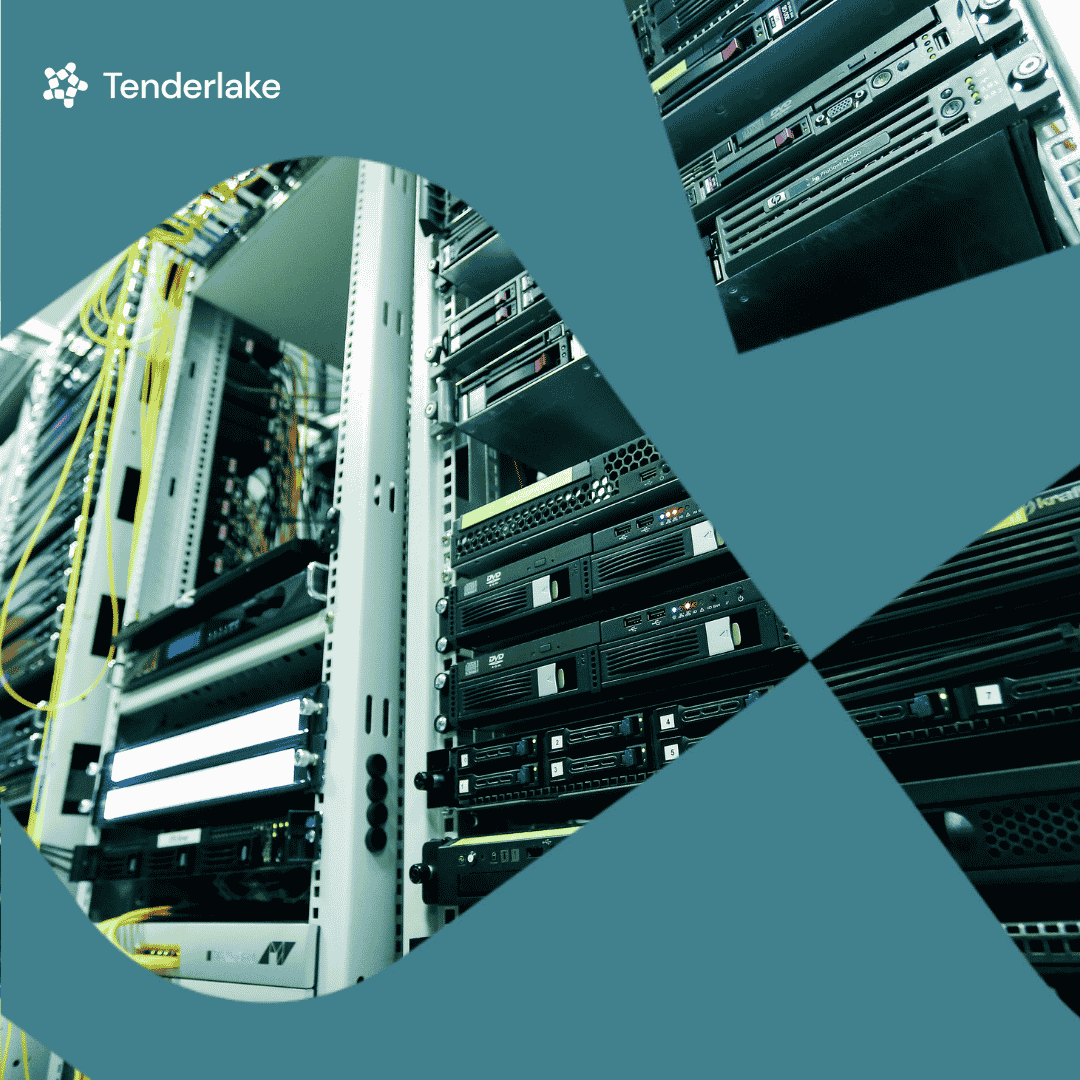
University launches tender for AI-ready supercomputing cluster
A university seeks a supercomputer-based HPC and AI cluster with full integration, training and maintenance, highlighting rising public-sector demand for AI.
A university seeks a supercomputer-based HPC and AI cluster with full integration, training and maintenance, highlighting rising public-sector demand for AI.
Follow Tenderlake on LinkedIn for concise insights on public-sector tenders and emerging procurement signals.
Vysoká škola báňská - Technická univerzita Ostrava has launched the HPCQC-AI Computational Cluster procurement to replace ageing equipment with a new supercomputer and integrated high-performance computing and artificial intelligence environment, backed by implementation, integration, training and maintenance services.
Published on 1st July 2026, the contract notice sets out a clear modernisation goal: to acquire a supercomputer and use it as the basis for a “comprehensive system solution for high performance computing and artificial intelligence”. Rather than a simple hardware refresh, the university is seeking an end-to-end platform.
The scope of the contract reaches beyond delivery of the machine itself. The university expects the supplier to:
That combination suggests the cluster is intended as shared infrastructure for a broad internal user base, including researchers and other staff who will need support to exploit high-performance computing (HPC) and AI capabilities in their projects.
The Ostrava supercomputer is part of a wider surge of public-sector investment in HPC and AI infrastructure visible in procurement notices across Europe in 2026.
In January 2026, Uniwersytet w Białymstoku issued a contract notice for a computing cluster dedicated to data analysis and AI, underlining how universities are building specialised platforms to handle increasingly complex workloads.
Later that same month, Narodowe Centrum Badań Jądrowych launched an expansion of its HPC computing cluster to support the NOMATEN CoRE and PolFEL initiatives, again pairing supply and installation with integration into existing systems.
The pattern extends beyond academia. In February 2026, KOMENDA GŁÓWNA PAŃSTWOWEJ STRAŻY POŻARNEJ sought innovative high-performance computing infrastructure for advanced data processing and AI applications to support a national Warning and Alert System. Here, AI-enabled HPC is positioned as a critical part of civil protection.
In the same month, Ministerstvo vnitra published a tender for a cloud-based AI assistant to help public officials in administrative proceedings, including the application’s ongoing operation and development. While the technical focus here is software rather than infrastructure, it points to growing interest in AI tools that can streamline routine public administration.
Also in February 2026, the European High-Performance Computing Joint Undertaking launched an AI-optimised supercomputer procurement, seeking specialised hardware and software to bolster research capacity and meet growing AI computational demand.
By May 2026, Access e.V. was procuring a new high-performance computing cluster designed to support simulation-based digital twins and AI applications, with a strong emphasis on efficient parallel processing and substantial storage capacity.
Other buyers are targeting domain-specific AI workloads. Ústav živočišné fyziologie a genetiky AV ČR, v. v. i. is procuring a computational server for data-intensive analyses in genomics, transcriptomics, proteomics and structural biology, explicitly linking advanced algorithms and AI to life-science research.
A different strand of activity focuses on large language models. In May 2026, Česká průmyslová zdravotní pojišťovna launched a procurement for two AI supercomputers aimed specifically at large language model inference, underlining how generative AI workloads are beginning to shape infrastructure choices.
The mix of hardware types is also evolving. Institut »Jožef Stefan« is going a step further with a tender for a superconducting quantum computer with at least five qubits, including control electronics and comprehensive software, aimed at both research and education.
Alongside these national and research-scale projects, more local initiatives are appearing. The Cámara Oficial de Comercio, Industria, Servicios y Navegación de Ceuta is implementing a computing centre for artificial intelligence, covering hardware, storage, networking, software and associated installation and support services.
Statutární město Brno, meanwhile, is looking beyond infrastructure to applications, with a project to design and implement a multi-agent AI platform for the city. The platform is expected to include intelligent chatbots and internal AI agents, with a strong focus on scalability, service availability, support and training.
Against this backdrop, the HPCQC-AI Computational Cluster stands out for its emphasis on a single, integrated solution that spans infrastructure and services. Some contemporary procurements, such as Univerzita Karlova’s computing cluster supply, focus on delivering technical equipment and meeting warranty requirements. Others, like SVEUČILIŠTE U ZAGREBU PRIRODOSLOVNO-MATEMATIČKI FAKULTET’s GPU server procurement, target specific machine-learning workloads.
By contrast, Vysoká škola báňská - Technická univerzita Ostrava is asking bidders to deliver not only a supercomputer, but also the expertise to embed it within the university, connect it to existing systems, and equip users with the skills to run both HPC and AI workloads. Training is called out explicitly as part of the contract scope, signalling that building human capability is as important as installing hardware.
The inclusion of maintenance within the same procurement suggests the university wants a long-term, stable relationship with its supplier, with a clear line of accountability for keeping the system operational. This mirrors approaches seen in other projects, such as the Ίδρυμα Τεχνολογίας & Έρευνας (ΙΤΕ) HPC and AI research infrastructure tender, which couples advanced servers, storage and high-speed networking with a five-year operational guarantee.
The university’s decision to frame the investment around both high-performance computing and artificial intelligence also reflects a broader convergence. Many of the 2026 notices explicitly reference AI alongside HPC, whether for digital twins, life-science analytics, language models or city-facing services. The HPCQC-AI project positions the supercomputer as a shared platform for these types of workloads, rather than as a niche resource.
For vendors, the HPCQC-AI tender reinforces several themes emerging from this crop of procurements:
The DEEP_AI initiative, for example, is building a high-performance data centre focused on AI and machine-learning applications for the space economy and other sectors, with STARTUP WORKSPACE S.R.L. procuring project management services. Meanwhile, HRVATSKA AKADEMSKA I ISTRAŽIVAČKA MREŽA CARNet is procuring a local high-performance computing platform to support compute-intensive scientific, educational and infrastructural workloads.
Together, these notices point to a market in which suppliers that can integrate HPC and AI, provide robust storage and networking, and back their solutions with solid support arrangements are likely to find a receptive audience.
The outcome of the HPCQC-AI Computational Cluster competition will show how one major technical university chooses to balance raw computing power, AI capability and support services in a single package. With parallel investments under way in research institutes, city administrations and sector-focused data centres, the project is another indication that AI-ready supercomputing is becoming core public-sector infrastructure rather than a specialist add-on.
For now, the detail sits with the bidders. What follows will be an important test of how well suppliers can translate growing public-sector ambitions for AI and high-performance computing into practical, maintainable systems.
Tenderlake Monitor reads every public sector notice published across the UK, the EU and the EEA, in the language it was published in, and tells you which ones match what your company sells and why. It works from a plain description of your business, not from keywords or CPV codes.
Follow Tenderlake on LinkedIn for concise insights on public-sector tenders and emerging procurement signals.