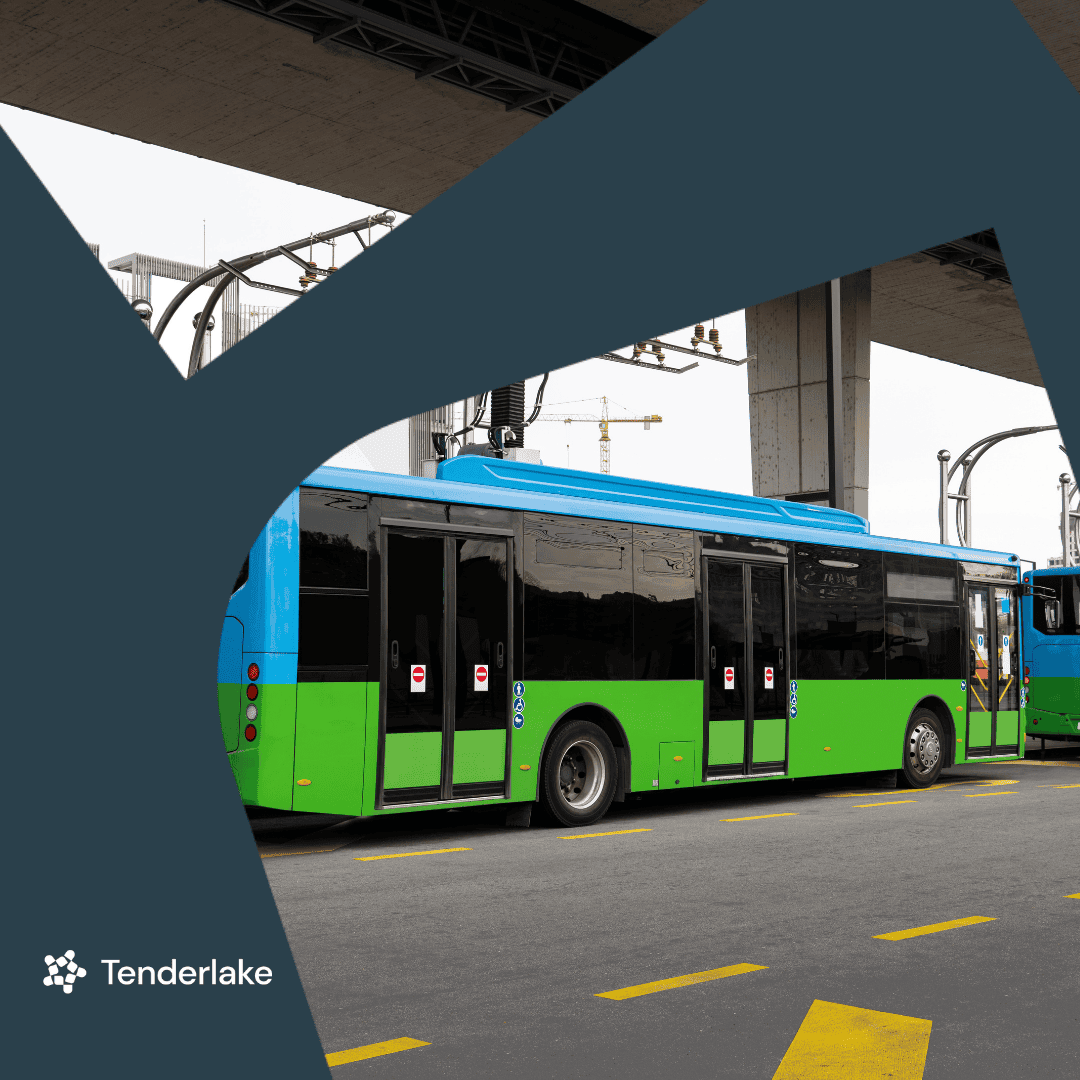
City authority launches tender for electric buses and chargers
Tender covers electric buses, charging stations and staff training, signalling rising interest in integrated fleet and infrastructure contracts.
Tender covers electric buses, charging stations and staff training, signalling rising interest in integrated fleet and infrastructure contracts.
Follow Tenderlake on LinkedIn for concise insights on public-sector tenders and emerging procurement signals.
Miasto Łowicz is seeking suppliers of electric buses and charging stations for its municipal transport company, bundling vehicles, infrastructure and staff training into a single contract. The move places the operator among a growing group of transport bodies across the region that are procuring buses, charging hardware and operational know-how together in single packages.
Published on 6th February 2026, the contract notice sets out a straightforward but wide-ranging scope. The supplier will provide electric buses for the Municipal Transport Company in Łowicz, deliver the associated charging stations, and supply training and documentation covering both operation and maintenance.
In summary, the contract brings together:
The published description does not specify the number or class of buses, nor the type or location of charging stations. What is clear, however, is that a single supplier will be responsible for both the physical assets and the transfer of knowledge needed to run them. For the buyer, that creates a single point of accountability for how the new equipment is deployed, used and maintained.
By spelling out training and documentation alongside the vehicles and chargers, the Łowicz procurement puts long-term operability on the same footing as the initial delivery. That emphasis on skills and support mirrors a pattern emerging across many recent electric bus tenders in the region.
In September 2025, Miasto Białystok issued an order for 60 electric city buses and 15 charging stations, combining vehicle delivery with training and technical support for operation and maintenance. The scale of that order contrasts with smaller tenders elsewhere, but the model – buses plus chargers plus training – is similar.
In January 2026, Miasto Siedlce went to market with a tender to produce and deliver six low-floor electric city buses and install four charging stations, again including training and technical support for the public transport operator. On 9th February 2026, Miasto Ostrołęka published a project to purchase and deliver two new electric city buses and two charging stations, with training for operators and maintenance staff, funded jointly by the city and European funds.
In December 2025, GMINA MIASTO SOCHACZEW launched a contract for MINI and MIDI electric buses alongside new charging stations, covering both the supply of vehicles and the construction of charging infrastructure, as well as staff training. Zarząd Transportu Miejskiego w Kielcach, in September 2025, sought five mid-class electric buses together with charging infrastructure, requiring that a majority of products supplied be sourced from the European Union and explicitly allowing subcontracting.
Larger operators are also moving in this direction. In October 2025, Miejskie Przedsiębiorstwo Komunikacyjne Sp. z o.o. we Wrocławiu called for delivery of 21 new low-floor zero-emission electric buses in two tasks, including provision of charging infrastructure and related services. Dopravní podnik Ostrava a.s. went further in December 2025 with a contract for up to 70 new single-deck electric buses that bundles in technical support, additional services, necessary documentation, software, operator training and a commitment to provide spare parts throughout the buses’ lifespan.
Several smaller municipalities are taking similar steps on a more modest scale. In January 2026, Gmina Ryki published a tender for a single electric bus and a portable plug-in charger for local public transport. In February 2026, Gmina Miasto Lubartów followed with a project for one new electric bus that includes necessary equipment, registration documents, operating instructions in Polish, employee training and a quality guarantee. Earlier, in November 2025, Gmina Kowale Oleckie sought a new zero-emission electric bus together with a mobile charging station.
In December 2025, Gmina Dobiegniew invited bids for a new low-floor electric bus for public transport, including employee training and compliance with European and Polish regulations. Together, these projects underline that electric bus deployment is now on the agenda for a wide range of authorities, from major cities to smaller municipalities, and that they are often choosing to buy vehicles, charging infrastructure and operational support as one package.
Beyond Łowicz, many recent notices show buyers using procurement to shape their charging strategies. Komunikacja Gminy Tarnowo Podgórne TPBUS Sp. z o.o. has issued a contract to deliver and install stationary DC charging stations and a mobile charger for electric buses at its depot, focusing solely on the infrastructure needed to support an electric fleet.
Miejski Zakład Komunikacyjny w Kędzierzynie-Koźlu sp. z o.o. has combined fleet renewal with new charging solutions, procuring two low-floor electric buses together with a mobile wired charger and a pantograph charger, plus the necessary construction works and training. In the Opole agglomeration, Miejski Zakład Komunikacyjny Sp. z o.o. is ordering three 12-metre electric buses and related infrastructure, including two depot charging stations, with promotional stickers to highlight the transport project.
Other buyers are leaning on mobile solutions. In August 2025, Miasto Suwałki launched a contract for a brand new MEGA electric bus with a mobile charger for public transport, while Miasto Radomsko is seeking electric city buses and mobile chargers, including installation, training and necessary documentation. Projects in Ziębice and Kowale Oleckie, meanwhile, specify mobile chargers or charging stations to accompany their buses.
For suppliers, these notices point to a market where depot-based charging, mobile units and pantograph systems all have a role, and where charging provision is no longer an afterthought but a central element of bus procurement strategies.
The Łowicz contract is explicit that the supplier must provide training and documentation for both operation and maintenance. A look across recent notices shows similar expectations being built into many electric bus projects.
Miasto Radomsko’s order for electric city buses and mobile chargers bundles in installation, training and the necessary documentation for the local transport company. Gmina Ziębice’s procurement of four new zero-emission buses and two mobile chargers includes necessary software and training, along with requirements to meet safety and environmental standards.
Several authorities are also locking in wider support. Miejski Zakład Komunikacji Puławy Sp. z o.o. w Puławach is seeking five zero-emission electric buses together with training for drivers and technical staff on their operation and maintenance. The large-scale order from Dopravní podnik Ostrava a.s. requires not only buses but also technical support, documentation, software and a spare parts commitment covering the vehicles’ lifespan.
At the smaller end, Gmina Dobiegniew’s single low-floor electric bus procurement includes employee training and explicit compliance with European and Polish regulations, while Gmina Miasto Lubartów requires operating instructions in Polish, training and a quality guarantee. In Ostrow Wielkopolski, MIEJSKI ZAKŁAD KOMUNIKACJI SPÓŁKA AKCYJNA is buying four low-floor electric buses and a charging system with dual-position chargers to enhance public transport and reduce emissions.
Projects in Ziębice, Gmina Busko-Zdrój and Puławy explicitly describe their vehicles as zero-emission buses. Gmina Busko-Zdrój’s order covers four minibuses and one midibus for urban and intercity transport to two municipalities. Several tenders – including the purchase of four electric buses in Zawiercie, as part of a project co-financed by the European Union, and the Ostrołęka project – also point to co-financing from European or other funds. Across this cluster of procurements, training, documentation, software and long-term support are treated as integral elements of electric bus investment.
For Miasto Łowicz, the current tender will determine which supplier delivers electric buses, charging stations and training for the municipal operator. Key commercial details such as fleet size, charger configuration and the depth of support services are not set out in the brief summary, but will be central to the eventual contract.
Set against the run of recent procurements from Białystok, Siedlce, Ostrołęka, Wrocław, Kielce and a host of smaller municipalities, the Łowicz project reinforces a clear trend towards bundled purchasing of buses, charging infrastructure and long-term support. Observers of this market will be watching whether upcoming tenders continue to follow this integrated model, and how requirements around charging technology, training and lifetime support develop over time.
Tenderlake Monitor reads every public sector notice published across the UK, the EU and the EEA, in the language it was published in, and tells you which ones match what your company sells and why. It works from a plain description of your business, not from keywords or CPV codes.
Follow Tenderlake on LinkedIn for concise insights on public-sector tenders and emerging procurement signals.