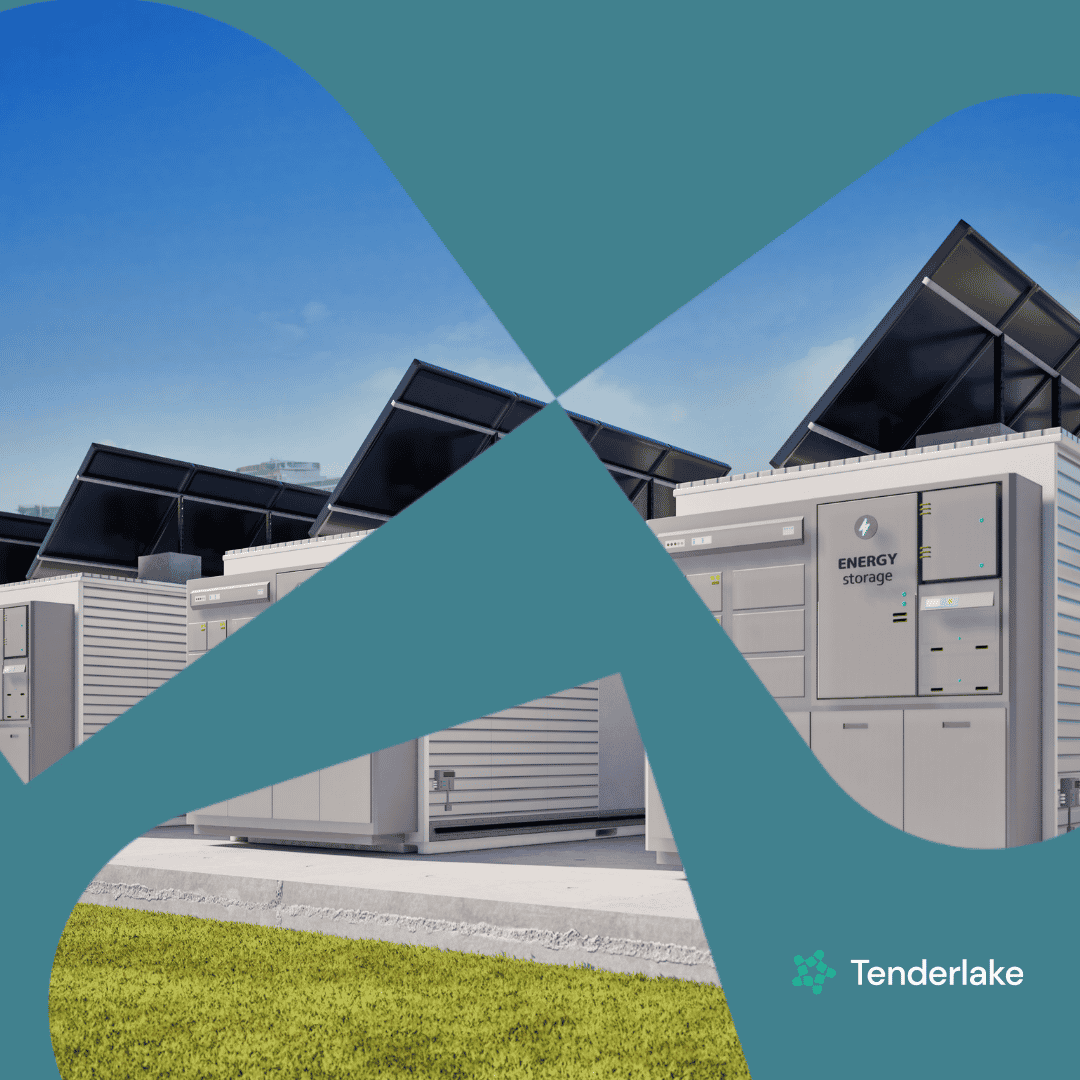
Waste authority launches tender for second-life battery storage
A waste authority is seeking delivery and installation of a second-life battery storage system, signalling growing demand for battery reuse in infrastructure.
A waste authority is seeking delivery and installation of a second-life battery storage system, signalling growing demand for battery reuse in infrastructure.
Follow Tenderlake on LinkedIn for concise insights on public-sector tenders and emerging procurement signals.
Bergischer Abfallwirtschaftsverband is going to market for the delivery and installation of a second-life battery storage system, underlining how battery energy storage and reuse are moving into the mainstream of public-sector infrastructure projects.
Published on 11th May 2026, Bergischer Abfallwirtschaftsverband's contract notice is short but explicit about what it wants: delivery and installation of a second-life battery storage system. The wording points to a single contract covering both supply of the equipment and the on-site work needed to put it into operation.
The reference to "second-life" sets this procurement apart from many standard battery tenders. The term suggests that the storage system will make use of batteries that have already been used elsewhere, rather than new cells alone, placing emphasis on reuse within the project's design.
Although the notice does not describe technical parameters or performance requirements, framing the purchase at system level gives suppliers a clear signal about the scope. The contracting authority is not only interested in components; it is looking for a functioning storage system that can be delivered and installed as a defined package.
In January 2026, Die Autobahn GmbH des Bundes - NL Südbayern published a notice for the planning of a photovoltaic system integrated with battery storage. Here, storage appears alongside on-site generation from photovoltaic panels, with the focus on planning an integrated system rather than buying equipment item by item.
April 2026 brought a similar combination from Vermögens- und Hochbauverwaltung Baden-Württemberg, which issued a contract notice for photovoltaic systems that include storage capabilities. In May 2026, Verbandsgemeindeverwaltung Adenau issued a notice for the construction of two photovoltaic systems, a battery storage system and a double charging station.
Local authorities are making similar moves. Stadt Bad Bentheim's February 2026 notice covers the delivery and installation of a photovoltaic system with battery storage, while Stadt Goettingen's February 2026 tender sets out requirements for the delivery and installation of a photovoltaic system. In the transport sector, Verkehrsbetriebe Extertal GmbH is procuring the provision of three DC charging stations in May 2026, adding charging infrastructure to the mix.
Taken together, these projects show public buyers treating storage as part of a broader package of on-site energy and charging assets. Against that backdrop, Bergischer Abfallwirtschaftsverband's focus on a stand-alone storage system still sits within a wider wave of procurement involving batteries paired with photovoltaic systems and charging points.
The recent cluster of notices also highlights how varied battery-related procurement has become, ranging from large storage systems to specialist laboratory equipment.
In February 2026, Technische Hochschule Wildau launched a tender for the delivery of two lithium-ion battery cabinets along with necessary accessories. Around the same time, Fernleitungs-Betriebsgesellschaft mbH advertised the procurement of storage and charging cabinets. In March 2026, Die Autobahn GmbH des Bundes - NL Westfalen sought the provision of lithium-ion battery charging cabinets, underlining demand for dedicated enclosures and charging points for battery units.
Research and higher-education institutions are active buyers as well. Universität Münster is looking to acquire a battery cycler, and Deutsches Zentrum für Luft- und Raumfahrt e.V. has issued a notice covering the delivery of LiFePO4 batteries. Universität Bielefeld's April 2026 procurement titled LiLi-Storage points in the same direction, even though the brief text refers only to the applicable procurement rules.
Other buyers are concentrating on the connection and control of storage assets. Karlsruher Institut für Technologie has a notice dealing with the connection of a battery storage system, while enercity Netz GmbH in March 2026 published a tender simply described as the procurement of a storage system. These examples underline that planning, connection and system integration are now regular features of public tenders in this field.
For suppliers, this broader landscape means that expertise in batteries is relevant across many contract types, from cabinets and charging infrastructure to bespoke research equipment and full-scale storage systems.
Alongside new storage projects, many public authorities continue to focus on backup power and UPS arrangements.
Abwasser-Zweckverband Südholstein's December 2025 notice covers the delivery, assembly and commissioning of UPS systems. In April 2026, Universität Stuttgart went to market for the replacement of UPS battery stock, indicating ongoing maintenance and renewal of existing systems rather than entirely new installations.
Backup power for key buildings also features strongly. Stadt Bad Harzburg is procuring the delivery and installation of a backup power system for the Town Hall, while Landesdirektion Sachsen has issued a contract notice for the delivery, installation and commissioning of backup systems and storage solutions. Together, these notices show how storage technologies support continuity of operations as well as new energy projects.
One clear pattern across these procurements is the preference for contracts that bundle equipment supply with installation and, often, commissioning.
Stadt Bad Bentheim's photovoltaic system with battery storage, Stadt Goettingen's photovoltaic system and Stadt Bad Harzburg's backup power system all use the formulation "delivery and installation". Landesdirektion Sachsen specifies "delivery, installation and commissioning", and Abwasser-Zweckverband Südholstein requires "delivery, assembly and commissioning" for its UPS systems. DUALE HOCHSCHULE SACHSEN follows the same structure with its notice for the delivery, installation and commissioning of a rectification system.
Against this backdrop, Bergischer Abfallwirtschaftsverband's requirement for the delivery and installation of a second-life battery storage system fits squarely within a wider move towards turnkey arrangements, where suppliers take responsibility for providing working systems rather than just individual pieces of equipment.
Transport operators and municipalities are adding to demand for battery-related equipment through vehicle and charging procurements. Stadtwerke Postdam GmbH issued a March 2026 notice for the delivery of electric vehicles, and Stadt Aachen - Zentrale Vergabestelle FB60/310 has a contract notice covering the delivery of two electric vans. These vehicles will require suitable charging infrastructure and power arrangements.
The picture is completed by dedicated charging projects such as Verkehrsbetriebe Extertal GmbH's May 2026 tender for the provision of three DC charging stations. When seen alongside photovoltaic and storage projects, these notices point to a gradual build-out of local energy and charging networks within which battery storage systems can play multiple roles.
Across late 2025 and the first months of 2026, a growing number of contract notices have referenced batteries, storage systems, backup power and associated equipment. This activity cuts across sectors, from transport and utilities to universities and research institutes.
Within that trend, Bergischer Abfallwirtschaftsverband's procurement stands out for its explicit focus on a second-life battery storage system. By signalling an interest in reuse, the contract adds a new dimension to how public buyers approach storage technology.
It will be important to see whether future tenders follow this example and specify second-life storage alongside new-build systems. For suppliers able to offer integrated solutions, from system planning and connection to delivery, installation and commissioning, the current set of notices suggests that public demand for battery-related projects is already broad and varied.
Tenderlake Monitor reads every public sector notice published across the UK, the EU and the EEA, in the language it was published in, and tells you which ones match what your company sells and why. It works from a plain description of your business, not from keywords or CPV codes.
Follow Tenderlake on LinkedIn for concise insights on public-sector tenders and emerging procurement signals.