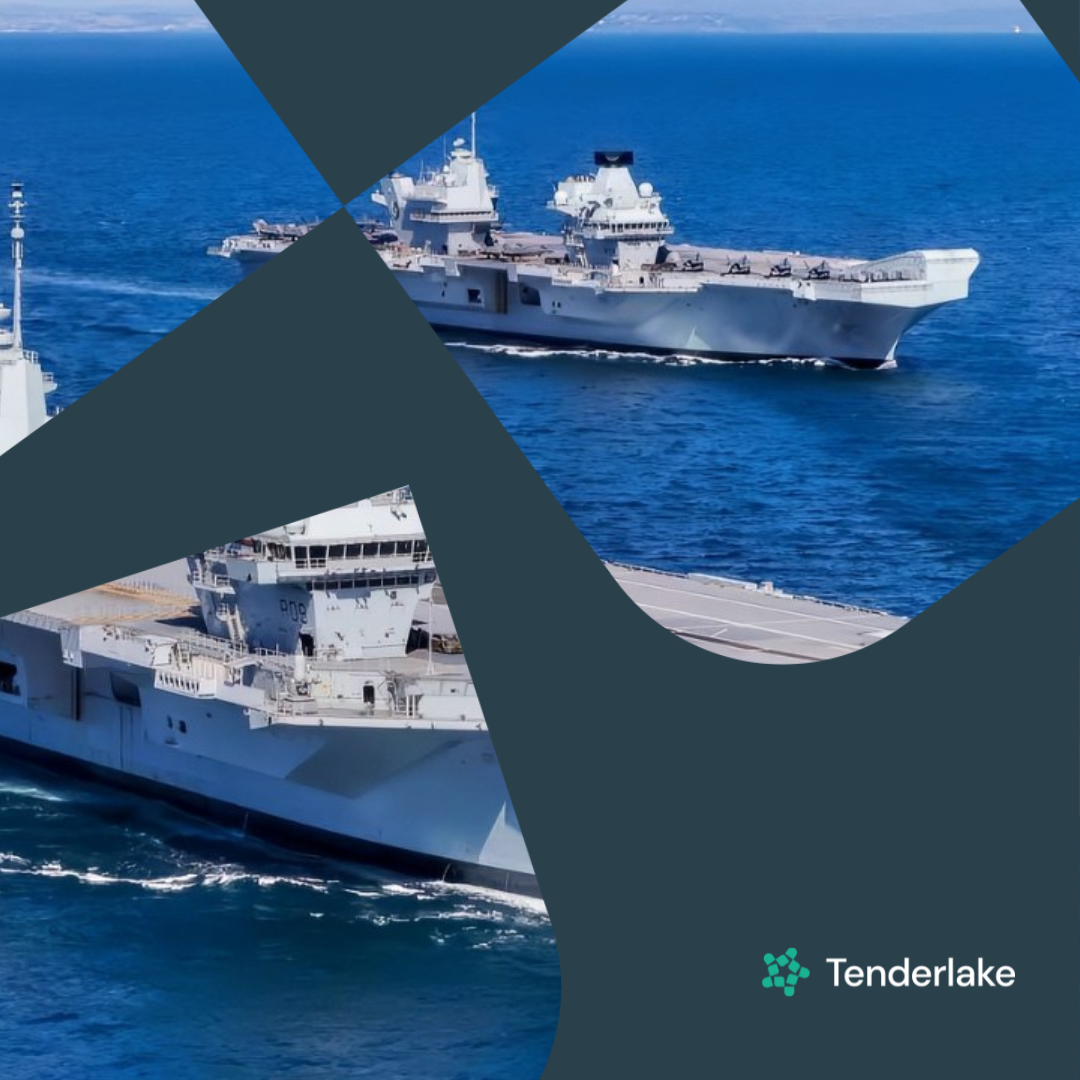
Public sector explores carrier-capable autonomous aircraft demo
A request for information seeks industry input on a fixed‑wing STOL autonomous platform for carrier operations, signalling early moves to shape a future hybrid air wing.
A request for information seeks industry input on a fixed‑wing STOL autonomous platform for carrier operations, signalling early moves to shape a future hybrid air wing.
Follow Tenderlake on LinkedIn for concise insights on public-sector tenders and emerging procurement signals.
An early-stage market engagement aims to shape a fixed‑wing, short take‑off and landing autonomous collaborative platform that can operate from a Queen Elizabeth Class aircraft carrier. The concept is intended to support a Hybrid Air Wing and could widen options for carrier air operations.
In June 2025, the Ministry of Defence issued an RFI for Autonomous Aircraft Platform as a Prior Information Notice to gather industry input for a technical demonstration. The focus is clear: prove how a fixed‑wing, STOL autonomous system could be made operational from the deck of a Queen Elizabeth Class aircraft carrier and contribute to a Hybrid Air Wing.
The emphasis on a technical demonstration underlines a pragmatic approach: test the concept, understand the constraints of carrier operations, and inform subsequent decisions. Early engagement points to a desire to ground requirements in what industry can credibly deliver and integrate.
Making an autonomous platform usable from a carrier deck would broaden the roles and reach of a Hybrid Air Wing. STOL characteristics suggest an intent to work within the carrier’s available launch and recovery envelope without introducing wholly new flight-deck infrastructure. A collaborative platform, by definition, implies teaming with other assets in the air wing, whether crewed or uncrewed, and operating as part of a larger system.
As a Prior Information Notice, the RFI is about shaping options rather than selecting a solution. The notice does not set out budgets or timelines, but it signals an ambition to test and validate a set of capabilities that could alter how carriers generate air power.
This RFI lands amid a visible shift toward uncrewed systems and the enabling technologies that connect them. In May 2025, Defence Equipment and Support opened market engagement for the Army’s next uncrewed air system via Project CORVUS UAS Procurement, aiming to replace Watchkeeper with a modern, cost‑effective solution for the Land Tactical Deep Find surveillance requirement. That notice underlines how unmanned air capability is being refreshed across services, not just at sea.
Enabling communications are also in focus. In June 2025, the Crown Commercial Service sought industry input for military‑grade systems through its Tactical Communication Systems PIN, highlighting the role of secure, resilient networks in fielding next‑generation platforms.
Beyond the UK, defence buyers are exploring adjacent paths. In June 2024, Norway’s Forsvarsmateriell sought supplier information for fixed‑wing RPAS with VTOL capabilities, a different take on launch and recovery that still aims to expand where and how uncrewed aircraft can operate. And in February 2025, France’s Direction Générale de l’Armement issued a framework agreement for training drones and related services to support familiarisation for drone combat. Together, these moves show European defence ministries investing across the spectrum: from frontline platforms to the training and communications that make them usable in practice.
Against that backdrop, a carrier‑capable autonomous collaborative platform would occupy a distinct niche: projecting uncrewed capability from a capital ship. It would also test how autonomy and collaboration scale in complex maritime environments, where deck operations, airspace control and electromagnetic conditions are demanding.
Although the notice stays high level, the focus on a demonstration invites proposals that show credible paths to carrier operations. Industry may look to illustrate how STOL performance can be achieved within deck constraints, how autonomous behaviours enable teaming within a Hybrid Air Wing, and how the platform could interface with existing mission systems. Evidence that proposed concepts are realistic to trial at sea is likely to be important.
The connection to broader enabling technologies is also clear. Communications, control links and information systems—highlighted in the CCS PIN—will shape how collaborative functions are delivered. Experiences from land UAS modernisation and allied RPAS initiatives may help vendors frame ideas that are adaptable and interoperable.
As this is an RFI, the next step to watch is whether the buyer sets out demonstration parameters, evaluation criteria and a route to trial. The provided materials do not specify budgets, schedules or a procurement approach. Any future notice that clarifies the scope and timing of at‑sea testing, and how the concept aligns with other uncrewed programmes, will indicate how quickly carrier‑borne autonomy could move from exploration to proof of capability.
Tenderlake Monitor reads every public sector notice published across the UK, the EU and the EEA, in the language it was published in, and tells you which ones match what your company sells and why. It works from a plain description of your business, not from keywords or CPV codes.
Follow Tenderlake on LinkedIn for concise insights on public-sector tenders and emerging procurement signals.