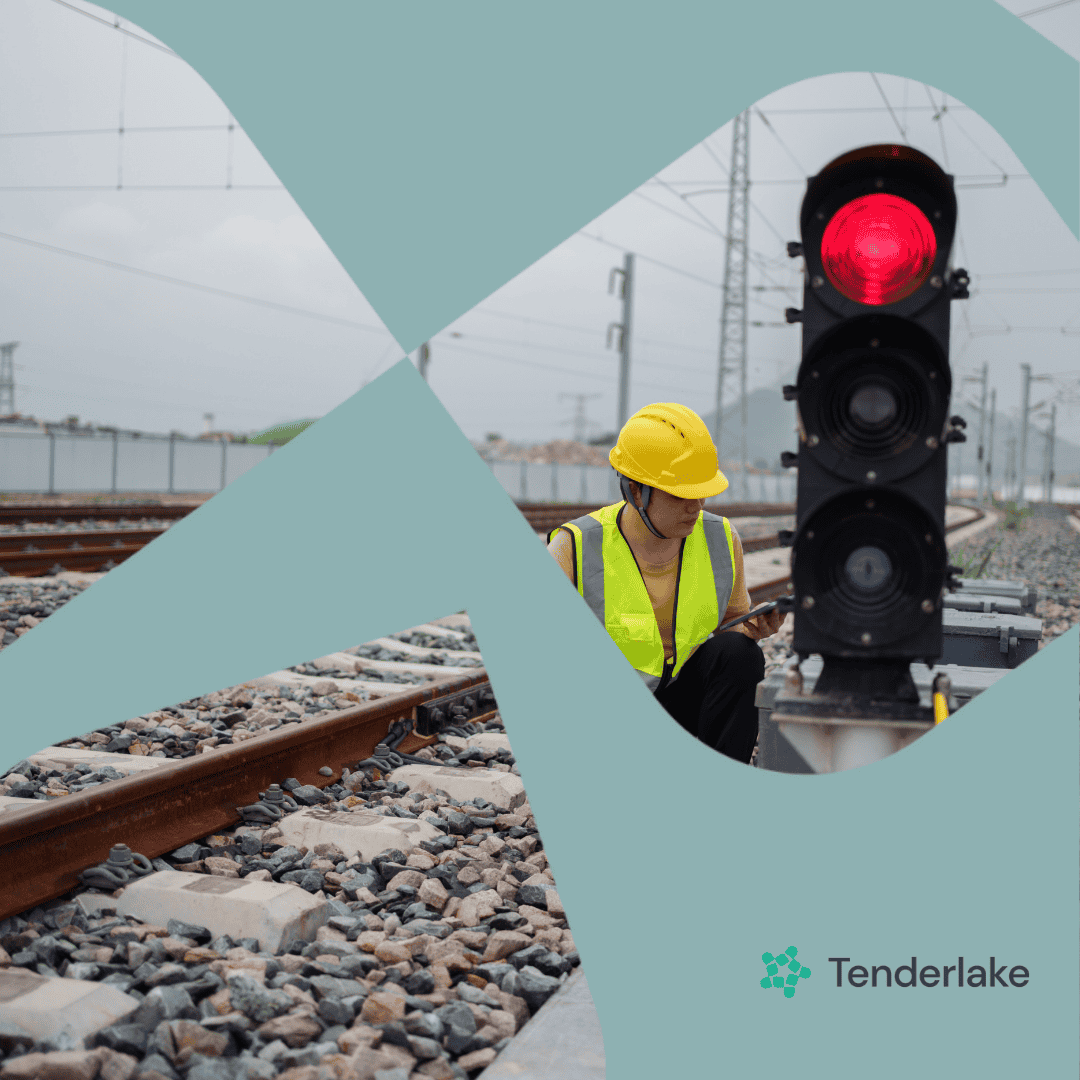
Rail sector opens dialogue on telecoms and signalling monitoring
A public rail buyer is consulting suppliers before tendering a system to monitor and diagnose telecoms and signalling, aligning plans with market capability.
A public rail buyer is consulting suppliers before tendering a system to monitor and diagnose telecoms and signalling, aligning plans with market capability.
Follow Tenderlake on LinkedIn for concise insights on public-sector tenders and emerging procurement signals.
Banedanmark has launched a market conversation to shape a forthcoming tender for a solution to monitor and diagnose railway telecommunications and signalling systems. The aim is to align the specification with what suppliers can deliver before the tender is released. The move was set out in a Prior Information Notice published in July 2025, under the title Market Dialogue for Railway Systems.
The notice is concise but clear on purpose: before publishing its tender, Banedanmark wants input from potential vendors on a solution that can monitor and diagnose railway telecommunications and signalling systems. In practice, this means the buyer intends to test its thinking with the market and calibrate requirements to match proven capabilities. The emphasis is on fit with what the market can credibly supply rather than prescribing a fixed design up front.
Beyond that, the notice does not set out further technical scope, budget, contract structure or timeline. Those details will follow in the tender documents. For now, the focus is on gathering well‑grounded feedback that will shape the final specification.
The use of structured dialogue ahead of procurement has been growing across transport and infrastructure. It is not new in Denmark. In November 2022, the Danish Road Directorate ran a written dialogue, with the option of follow‑up meetings, to explore IT solutions for managing time, quality and cost on construction contracts (Software package and information systems).
In March 2023, the Danish Road Traffic Authority set out a two‑part market study for a new Driving Licence Register, combining a written consultation with bilateral meetings. The agency said it wanted to understand products, services and technical approaches so the tender would meet market capabilities and mitigate identified risks (Market research regarding acquisition, implementation and maintenance of a new IT system).
There are strong parallels in rail and road infrastructure elsewhere in the Nordics. In May 2023, Finland’s transport infrastructure agency invited bilateral meetings on rail track and switch profiling, using the dialogue to discuss solution options before moving to an open procedure (Repair, maintenance and associated services related to railways and other equipment).
In February 2024, Finland’s road traffic company invited dialogue on the Vuosaari road tunnel replacement, covering technology renovation, lifecycle management and the packaging of works into separate civil and electrical contracts (Market Dialogue: Vuosaari Road Tunnel Replacement).
Closer to urban rail, in January 2024 the city of Vantaa sought bilateral meetings to test procurement routes for the tram project, including the possibility of two alliances or separate procurements for different parts of the scheme (Bilateral Market Dialogues: Vantaa Tram Alliance Procurement).
Digital mobility has followed the same path. In January 2025, a national body for demand responsive transport invited suppliers to discuss the state of the market ahead of a tender for a new digital IT solution for flex traffic (Market Dialogue for Digital IT Solution).
Across these cases, buyers signal a preference to ground their tenders in reality: understand the technology baseline, learn where risks and costs lie, and decide how to structure the procurement before committing to a specification. Banedanmark’s step into dialogue on telecoms and signalling systems sits squarely in that pattern.
Banedanmark’s notice does not list topics for discussion. But recent dialogues in Denmark and Finland show recurring themes that are likely to be relevant here:
For suppliers active in railway telecommunications and signalling, Banedanmark’s step is a practical signal. The buyer wants to see how the market would approach monitoring and diagnostic capabilities, and it wants that input before locking down its requirement. That approach tends to favour clear, evidence‑based responses that show how standard functionality could meet operational needs, and where configuration or integration would be required.
It also reflects a broader trend across public services. Health and regional authorities have used market engagement to test options for network analysis tools and accessibility solutions. In September 2024, a Norwegian health procurement body sought input to shape an analysis tool for a joint network solution (Market Dialogue for Analysis Tool). In February 2025, a regional authority engaged the market on making clinical documents web accessible and highlighted the importance of identifying document archetypes and contract conditions (Market Dialogue on Web Accessibility). The common thread is early, structured testing of what the market can support before formal competition begins.
Transport buyers continue to refine this practice. Ferry services, for example, were the subject of a questionnaire and online meetings in February 2024 (Ferry Services Market Dialogue). In healthcare technology, a municipality opened a dialogue on patient signalling systems in November 2024 (Patient Signalling System Framework).
The next step will be a formal procurement. The current notice does not set out technical detail, budget or contract approach beyond the intent to hold a dialogue. When the tender lands, watch for how the scope is defined across telecommunications and signalling, and how the buyer chooses to package the requirement. Elsewhere, operators have weighed single procurements against multiple alliances or separate lots, as seen in Vantaa in January 2024 and at Vuosaari in February 2024.
Also look out for the format of engagement that follows. Other buyers have relied on written questionnaires, one‑to‑one meetings and demonstrations. Each tool can help test assumptions and reduce risk before the competition begins. Banedanmark’s market dialogue is a step in that direction; the tender will show how that feedback has been absorbed.
Tenderlake Monitor reads every public sector notice published across the UK, the EU and the EEA, in the language it was published in, and tells you which ones match what your company sells and why. It works from a plain description of your business, not from keywords or CPV codes.
Follow Tenderlake on LinkedIn for concise insights on public-sector tenders and emerging procurement signals.