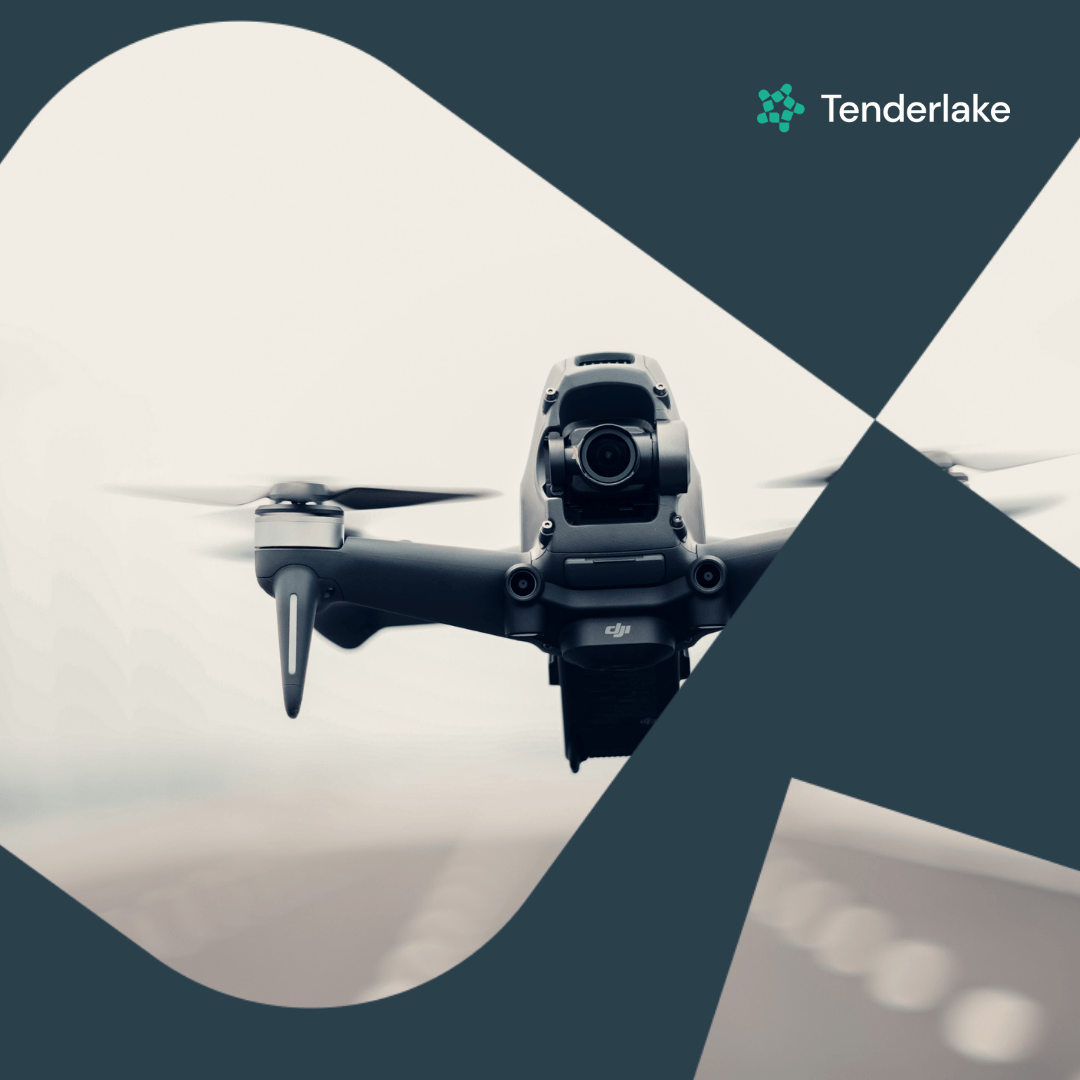
All-weather drones sought for year-round border operations
A new contract seeks unmanned aircraft that can fly in all conditions to support statutory missions, signalling a regional shift to more capable border UAS.
A new contract seeks unmanned aircraft that can fly in all conditions to support statutory missions, signalling a regional shift to more capable border UAS.
Follow Tenderlake on LinkedIn for concise insights on public-sector tenders and emerging procurement signals.
Rajavartiolaitos is moving to buy unmanned aircraft systems that can operate year-round in all weather to support a range of statutory tasks, with a clear emphasis on readiness and adherence to aviation rules. The plan points to a wider shift across Europe toward resilient, regulated drone capability for border and safety work.
The Border Guard’s UAS System Acquisition, published in October 2025, sets out a requirement for systems capable of all-weather operations, supporting various statutory missions. It underlines two priorities: maintaining operational readiness and complying with aviation regulations.
The notice does not detail platform type, range, or fleet size. That will come later. For now, the focus is on outcomes: dependable performance in harsh conditions and a procurement that sits squarely within the aviation rulebook.
The push for rugged drones mirrors a broader trend in Nordic and Baltic public procurement. In December 2023, Sweden’s maritime administration sought a complete UAS package for ice reconnaissance from icebreakers, including sensors, radio link, training and service, tailored for winter conditions (procurement).
Further north, the Danish defence ministry set demanding criteria in February 2023 for a NATO Class I small UAS, including vertical take-off and landing, shipboard launch and recovery, and operation across severe temperature ranges, with an endurance profile suited to long ISR sorties (framework).
Maritime use is not limited to the Nordics. In August 2023, Bulgaria’s General Directorate Border Police at the interior ministry ran a tender for two interoperable UAS—one ship-based and one mobile—with electro‑optical and thermal cameras, ship and mobile control stations, and operator training (notice). In June 2025, Germany’s interior ministry procurement office sought a maritime UAV in helicopter configuration along with a mobile ground control station, plus integration work, training and support (contract notice).
Close to home, the Police and Border Guard Board in Estonia signalled steady demand in April 2024 with a framework for purchasing professional UAVs (framework). The pattern is clear: public buyers want complete systems—air vehicles, ground control, sensors, training and sustainment—that can shift from shore to ship, from summer to winter.
Rajavartiolaitos places compliance with aviation regulations at the heart of its plan. That emphasis sits alongside a broader public-sector focus on managing unmanned traffic and enforcing the rules. In April 2024, Poliisihallitus procured a UAS observation system to monitor lower airspace, using radio‑frequency technology to detect, locate, track and identify commercial drones in real time under a five‑year lease covering 1–30 systems (procurement).
Elsewhere, public buyers are pairing drone adoption with counter‑UAS capability. In July 2024, a Romanian military unit moved to buy detection and combat systems—two UAS detection platforms and 22 portable systems—to protect military sites (notice). In June 2025, a Croatian interior ministry tender sought a mobile detection system housed in an elevated van or off‑road vehicle, providing workspace and power (contract notice). And in October 2025, a Romanian gendarmerie unit sought devices to detect, intercept and capture unmanned systems to safeguard public spaces and critical infrastructure (project).
Taken together, these procurements point to a maturing operating environment: more drones in public service, and more tools to ensure they fly safely and legally—or are countered when they do not.
There is a recent domestic benchmark for Rajavartiolaitos’s approach. In January 2023, the Finnish Border Guard planned a purchase of 40–50 systems in the 2–10 kg class, pairing airframes with ground control, datalinks, EO/IR cameras, spares, training for operators and instructors, maintenance training, documentation, and integration interfaces. Options included tethered kits, payload‑drop equipment and a GCS‑integrated simulator. The notice also set out typical use cases: border traffic monitoring, situational awareness, ISTAR, search and rescue, and support to special operations (contract notice).
While today’s acquisition does not yet disclose technical specifications, its focus on year‑round, all‑weather readiness aligns with those mission profiles and with regional practice. It also echoes how neighbouring buyers bundle sensors, training and support into complete, deployable systems—whether for ice reconnaissance, shipboard surveillance or land‑border patrols.
Drones are increasingly integral to emergency services. In February 2024, Greece’s civil protection ministry sought a mixed fleet—including tethered systems, multicopters and mini multicopters—for fire service surveillance, fire suppression support, rescues and responses to natural disasters and accidents (procurement). Two months later, the same ministry launched a separate competition for a fixed‑wing UAS and a flight project service (tender).
These civil tasks often mirror Border Guard needs—persistent situational awareness, rapid deployment, and safe operation under regulatory oversight—reinforcing the significance of Rajavartiolaitos’s focus on compliance and readiness.
Details will matter. The next stages should clarify platform class (for example, whether fixed‑wing, rotary or VTOL), sensor suite, and the extent of training, spares and support. It will also be worth watching whether the package includes maritime or winter‑specific capabilities, as seen in several regional procurements, and how compliance and airspace‑management requirements are reflected in delivery and operations. For now, the signal is clear: all‑weather, regulated UAS are becoming standard tools for public authorities tasked with keeping borders and citizens safe.
Tenderlake Monitor reads every public sector notice published across the UK, the EU and the EEA, in the language it was published in, and tells you which ones match what your company sells and why. It works from a plain description of your business, not from keywords or CPV codes.
Follow Tenderlake on LinkedIn for concise insights on public-sector tenders and emerging procurement signals.