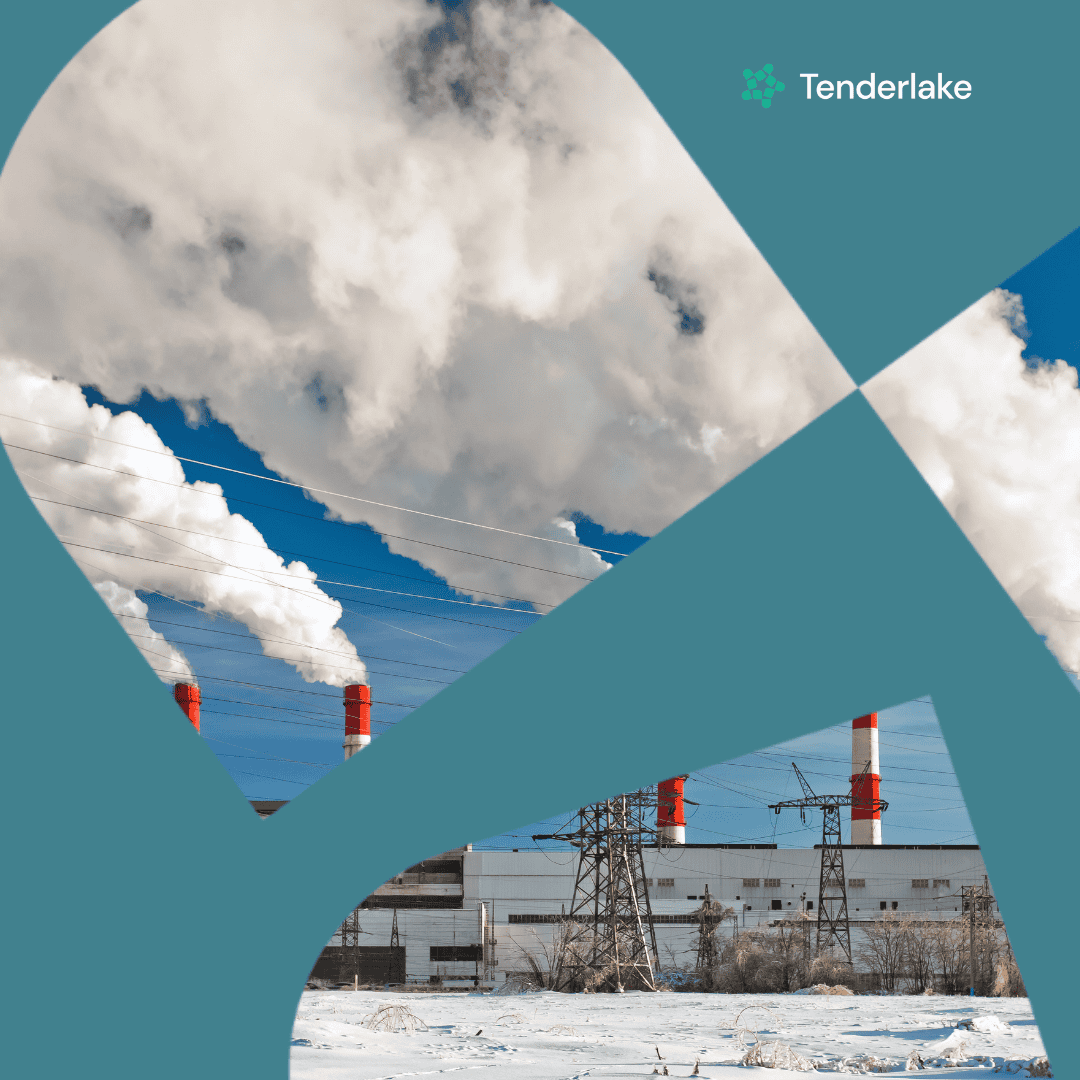
State commissions nationwide assessment of air pollution
A new contract will map air pollution levels across a European country, highlighting growing reliance on outsourced monitoring and analysis services.
A new contract will map air pollution levels across a European country, highlighting growing reliance on outsourced monitoring and analysis services.
Follow Tenderlake on LinkedIn for concise insights on public-sector tenders and emerging procurement signals.
In December 2025, Lithuania’s environment ministry moved to buy specialist services to assess air pollution levels across the country for the national Environmental Protection Agency. The contract puts external expertise and data at the centre of air policy and mirrors a broader European shift towards treating air-quality assessment as an ongoing, outsourced service.
On 22nd December 2025, Lietuvos Respublikos aplinkos ministerijos Aplinkos projektų valdymo agentūra published a contract notice for services to assess air pollution levels in Lithuania on behalf of the Environmental Protection Agency. The short description is clear about the core task: provide services that evaluate how polluted the air is across the country.
The notice emphasises services rather than equipment. That signals a focus on expert assessment, interpretation and reporting, rather than on procuring monitoring hardware. The Environmental Protection Agency is positioned as the client for this work, indicating a need for a coherent national picture of air quality to support regulation, planning and public communication.
While the text does not spell out specific pollutants, methods or timelines, it does frame the assignment at national scale. For a relatively compact statement of need, the implications are wide: whoever wins the contract will shape the evidence base that underpins decisions on emissions, industrial permitting, transport, and urban development.
The contract notice can be consulted in full via the official publication, but even the headline description underlines how central independent assessment has become to environmental governance.
The Lithuanian move sits alongside a series of recent European procurements where public authorities are buying environmental data and analysis as long-term services.
In July 2025, Romania’s Ministerul Mediului, Apelor si Padurilor sought services to strengthen the national inventory of air pollutant emissions. That study focuses on sectors such as manufacturing and residential heating and is explicitly tied to improving compliance with EU reporting obligations. It shows how specialised contractors are now central to meeting international environmental reporting requirements.
In November 2025, Denmark’s Miljøstyrelsen went to market for a reference laboratory responsible for air and odour emissions methods. The contract covers management of measurement methodologies, proficiency testing, workshops and advisory services, and requires the provider to stay current on air pollution knowledge between 2026 and 2029. Here, the state effectively outsources a knowledge hub that underpins its regulatory standards.
Also in November 2025, Sweden’s Trafikverket Myndighet issued a framework for laboratory services focused on environmental analysis, while in July 2025 Estonia’s Regionaal- ja Põllumajandusministeerium sought a provider to run the national reference laboratory for halogenated persistent organic pollutants in food and feed.
These notices share a theme with Lithuania’s new contract: public bodies are not only buying instruments or software, but full service packages built around expert staff, validated methods, quality control and interpretation. The Lithuanian procurement leans into this model by specifying services for air pollution assessment, leaving contractors to propose how best to deliver robust, policy-ready evidence.
Data alone is not the end point. Other recent procurements show how air-quality evidence is being turned into local management plans and post‑hoc evaluations.
In July 2025, Šiaulių apskaitos centras launched a contract for services to prepare the Šiauliai City Environmental Air Quality Management Program for 2025–2030. This is a clear example of a municipality commissioning experts to translate monitoring and modelling into a multi‑year action plan, with specific measures and timelines.
Across the border in Latvia, Liepaja has gone a step further into evaluation. A prior information notice from Liepājas valstspilsētas pašvaldība in July 2025, followed by a contract notice from Liepājas Centrālā administrācija in August 2025, both address the evaluation of the city’s Air Quality Improvement Action Program for 2021–2025 and its implementation, later detailed in a second tender. Here, consultants are asked not just to measure air quality, but to judge how effective past measures have been.
Seen against this backdrop, Lithuania’s new national-level assessment looks like a foundational step. A robust, up‑to‑date picture of air pollution across the country will give the Environmental Protection Agency and municipalities alike the evidence they need to design or revise programmes similar to those in Šiauliai and Liepaja. It creates a common baseline from which to prioritise interventions.
Other authorities are pairing service contracts with investment in physical monitoring networks and alert systems.
In August 2025, Agencija Republike Slovenije za okolje tendered for engineering and design services for nine permanent measuring stations. Those stations will form part of a system to inform and alert citizens about outdoor air pollution. The focus here is not only on data collection, but on public-facing communication and timely warnings.
In October 2025, Croatian public health institute NASTAVNI ZAVOD ZA JAVNO ZDRAVSTVO DR. ANDRIJA ŠTAMPAR sought a mobile laboratory for determining air quality, including a van, upgrades and instruments for continuous monitoring of air pollutants. Mobility allows targeted measurements near suspected hotspots or incidents, complementing fixed networks.
Further south, in August 2025, Ypourgeio Perivallontos kai Energeias in Greece issued a tender for specialised marine pollution monitoring equipment. The contract covers autonomous recording sensors and an automatic system for measuring chemical pollutants, with data integrated into existing databases. Although focused on marine rather than urban air quality, it shows how monitoring infrastructures increasingly feed into centralised data platforms.
By contrast, the Lithuanian contract under discussion is squarely about assessment services. It is likely to build on existing monitoring infrastructure, whatever form that takes, and to concentrate on analysis, synthesis and reporting. Together, these different tenders show how states are attempting to balance investment in hardware with investment in expertise.
Air pollution intersects with health, land use and other environmental pressures, and recent contracts highlight how authorities are trying to join up these strands.
In August 2025, the Swiss Bundesamt für Umwelt BAFU moved to continue a documentation centre on air pollution and health. The centre reviews and summarises scientific literature on the health effects of air pollutants, in line with the requirements of an Environmental Protection Act. Here, the emphasis is not on fresh measurements, but on curating global evidence so that health and environment authorities can draw clear, law‑compatible conclusions.
Others have focused on pollutants in land and buildings. In October 2025, Bundesanstalt für Immobilienaufgaben in Germany tendered for services to investigate pollutants and assess condition, likely within its property portfolio. In September 2025, Conseil Départemental des Ardennes in France sought providers to carry out environmental assessments for agricultural, forestry and other land‑development projects across several municipalities.
In November 2025, Sociedad Pública de Gestión Ambiental, IHOBE, S.A. in Spain turned to the market for technical assistance on documentation related to soil pollution prevention and remediation legislation, while Finland’s Senaatti-kiinteistöt sought environmental consulting services for contaminated land risk management and protection structures across defence and civil properties.
These contracts, though not all about ambient air, underline a common reliance on specialist assessments to navigate the health and ecological impacts of pollution. Lithuania’s decision to commission a nationwide air pollution assessment for its Environmental Protection Agency fits within this wider picture: a turn towards independent, technically grounded advice as the basis for regulation and investment.
The Lithuanian notice is deliberately concise. It does not outline methodologies, pollutants, or timeframes in detail. Yet it clearly signals that the Ministry of Environment, through Aplinkos projektų valdymo agentūra, wants to reinforce the analytical spine of air policy by ensuring the Environmental Protection Agency has a comprehensive view of air pollution levels.
As the procurement progresses, observers may look for follow‑on tenders: for example, work to develop or update local air quality programmes, independent evaluations of existing measures, or investments in monitoring infrastructure and public information systems similar to those seen in Slovenia, Croatia or Latvia. For now, the contract marks another step in a European trend where environmental authorities commission specialised services to measure, interpret and act on pollution data.
Tenderlake Monitor reads every public sector notice published across the UK, the EU and the EEA, in the language it was published in, and tells you which ones match what your company sells and why. It works from a plain description of your business, not from keywords or CPV codes.
Follow Tenderlake on LinkedIn for concise insights on public-sector tenders and emerging procurement signals.