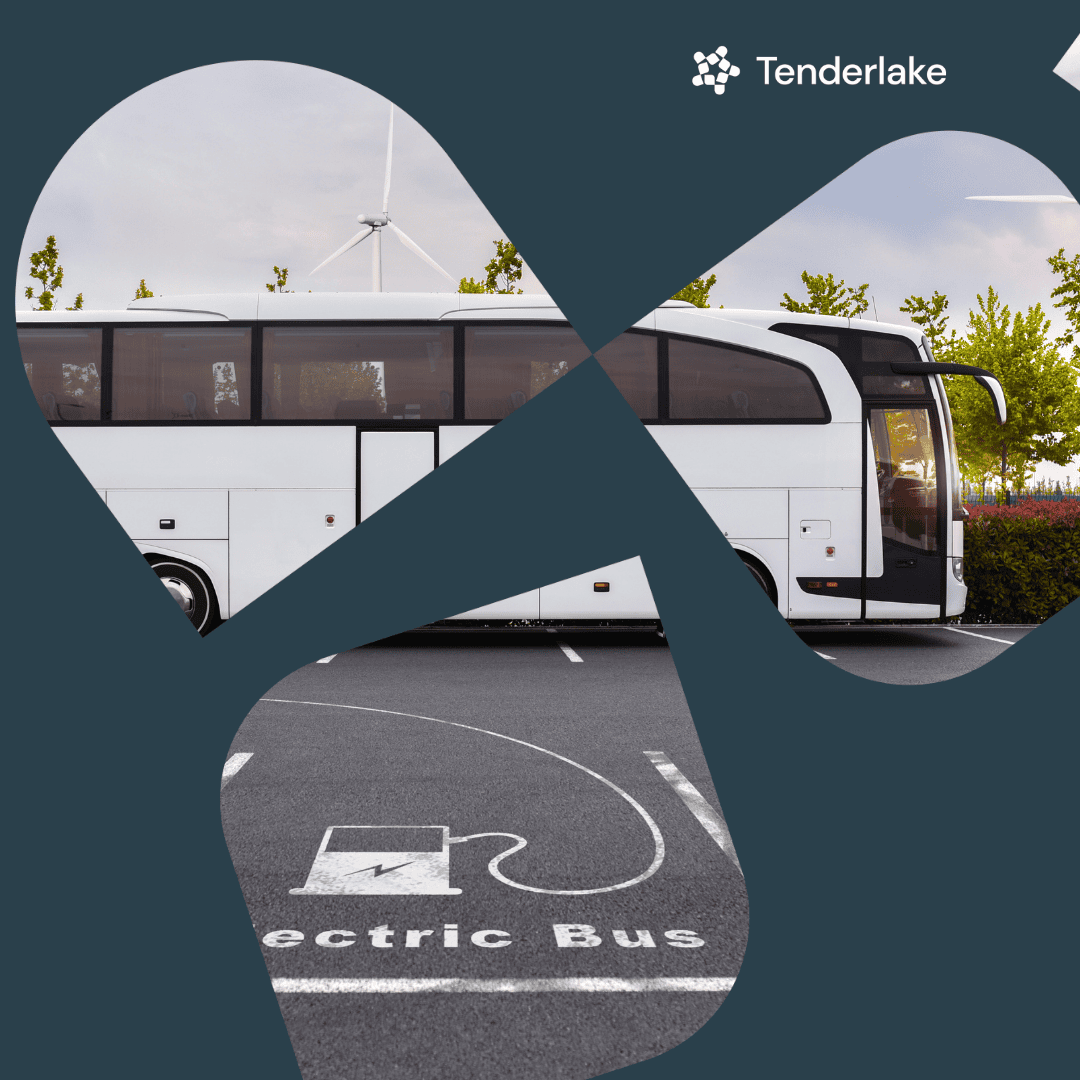
Public transport operator tenders integrated depot charging infrastructure for e-bus fleets
A depot will add chargers, charging hoods and new wiring linked to operations systems, showing how public operators are reshaping sites for e‑buses.
A depot will add chargers, charging hoods and new wiring linked to operations systems, showing how public operators are reshaping sites for e‑buses.
Follow Tenderlake on LinkedIn for concise insights on public-sector tenders and emerging procurement signals.
A municipal transport operator is preparing a fresh wave of depot upgrades to support electric buses, combining new chargers, charging hoods and cabling with changes to existing systems. The contract shows how bus depots are being re-engineered as complex electrical and digital hubs rather than simple parking yards.
On 22nd December 2025, Leipziger Verkehrsbetriebe (LVB) GmbH, Bereich Einkauf und Logistik published a contract notice for the establishment of new charging infrastructure for electric buses. The contract, titled Charging Infrastructure Expansion, covers the delivery and installation of multiple chargers and charging hoods, complete wiring, and modifications to existing technology at one of its bus depots.
A central requirement is to integrate the new charging equipment with the depot’s site operations management systems. Rather than procuring stand-alone chargers, the buyer expects the charging hardware and cabling to form part of a wider operational control environment. That pushes the work beyond straightforward electrical installation into the realm of systems integration.
The scope described in the notice spans several distinct elements:
Together, these components point to a project that links physical charging hardware, electrical distribution and digital control. The successful contractor will have to work within an existing depot environment, adapt installed systems and avoid disrupting daily operations while the new infrastructure is fitted.
The current notice sits within a broader programme at the same depot. In August 2025, Leipziger Verkehrsbetriebe (LVB) GmbH published a related contract, Lindenau Bus Depot Expansion, covering high and low voltage systems in a technical building at the Lindenau site.
That earlier package focused on the electrical backbone: medium- and low-voltage systems that bring power into and around the depot. The December 2025 Charging Infrastructure Expansion notice shifts attention to the charging technology itself: the depot chargers, the charging hoods, the final cabling runs to vehicles and the link into operations management systems.
Read together, the two contracts depict a multi-stage upgrade of the Lindenau bus depot. First, the operator is strengthening and organising its power supply; then it is layering on dedicated e-bus charging hardware and embedding it into day-to-day depot control. That sequencing echoes how many other public transport operators are approaching depot electrification.
Leipziger Verkehrsbetriebe is not alone in reworking depots around electric buses. Throughout 2025, transport operators and city authorities have issued tenders that move beyond isolated charging points to full-site conversions.
In July 2025, NEW AG, acting in the name and on behalf of NEW mobil und aktiv Mönchengladbach GmbH, launched a project titled Charging Infrastructure Expansion at the Mönchengladbach bus depot. That contract combines construction of a medium voltage ring with new energy centres and high power chargers mounted on the roof of the storage hall, underlining the need to rethink electrical layouts and physical structures.
Also in July 2025, KViP - Kreisverkehrsgesellschaft in Pinneberg mbH issued Charging Infrastructure for Buses, covering delivery, installation and commissioning of 27 DC charging points along with depot boxes, electrical connections and system management components. Here, as in Leipzig, charging is specified as a managed system rather than a loose set of devices.
In September 2025, Bochum-Gelsenkirchener Straßenbahnen AG set out plans to expand charging at its Ückendorf depot through the Charging Infrastructure Expansion contract, which calls for 17 charging stations, two transformer stations and the necessary cabling. Again, transformers and network works sit alongside the chargers themselves.
By December 2025, some schemes had reached substantial scale. Kölner Verkehrs-Betriebe AG’s Charging Infrastructure Expansion notice for an electric bus depot in Cologne-Porz specifies low-voltage switchgear and DC charging infrastructure for 139 electric bus parking spaces, pointing to a depot designed primarily around battery-electric vehicles.
Other transport companies are planning phased roll-outs. Verkehrsbetriebe Luzern AG’s Charging Infrastructure Planning tender from September 2025 sets out initial plans for six charging points at the Weinbergli site by December 2026, followed by a further 25 by mid-2027, with an emphasis on comprehensive electrical planning and execution.
Later that month, Regionalverkehr Bern-Solothurn AG and Busbetrieb Solothurn Grenchen und Umgebung AG published Charging Infrastructure for Electric Buses, seeking infrastructure for 44 charging points with an option for an additional 66, alongside a maintenance contract. Scalability and long-term service support are explicitly built into the procurement.
Several notices also link vehicles and charging in a single package. On 10th September 2025, Miasto Białystok’s Electric Buses and Charging Stations contract covers delivery of 60 electric city buses and 15 charging stations, including training and technical support for operation and maintenance. Empresa Municipal de Transportes de Madrid, S.A. takes a similar depot-focused approach in its 3rd September 2025 notice, Charging Points for Buses, which calls for supplying, installing and commissioning charging stations and inverted pantographs for 27 articulated bus charging points.
In December 2025, EW Bus GmbH added a regional dimension with its Charging Infrastructure for Regional Buses tender, seeking a scalable charging infrastructure, including transformers, to support the transition of a regional bus fleet to battery-electric drives, along with training and maintenance services. Aachener Straßenbahn und Energieversorgungs-AG (ASEAG) similarly emphasised long-term use in its 3rd December 2025 notice, Electric Bus Charging Infrastructure, which covers planning, design, construction, installation and maintenance of charging infrastructure, including up to 27 CCS-Combo 2 charging points across two halls and a requirement for compatibility with future fleet expansions.
Beyond the bus-only schemes, a series of 2025 procurements treat charging infrastructure as part of wider energy and data systems.
At depot level, regiobus Potsdam Mittelmark GmbH’s July 2025 notice, Charging Infrastructure Planning, seeks electrical planning services for the Stahnsdorf depot, including transfer stations, transformers, low-voltage distribution, civil engineering and management systems. Rather than buying hardware alone, the operator is procuring the design of an integrated electrical and control environment.
On a government campus, Land Schleswig-Holstein, represented by Gebäudemanagement Schleswig-Holstein AöR, set out a similar direction in its 14th October 2025 tender, Charging Infrastructure Planning for the Düsternbrook campus. That project involves upgrading the power supply and expanding charging infrastructure for electric vehicles, renewing ageing electrical systems and integrating photovoltaic systems.
Some buyers are already connecting charging with on-site generation. Delbus GmbH & Co.KG’s 15th December 2025 notice, Delbus PV System, covers installation of a photovoltaic system in the charging area to provide energy for workshop operations and the operational service building, with future expansion capability and integration into the existing electrical system.
Load management and data backends feature more often too. Stadt Detmold’s 26th November 2025 procurement, E-Mobility Charging Infrastructure Planning, seeks planning services for charging infrastructure at a construction yard, including charging points, electrical distribution networks, load management and a backend solution for data processing and billing.
RVK | Regionalverkehr Köln GmbH’s prior information notice of 29th October 2025, GMH Charging Infrastructure, looks ahead to a new operating yard for hydrogen fuel cell and battery-electric buses. It lists medium-voltage fields, transformers, low voltage distributions, DC chargers and a load and charging management system, showing how multi-fuel depots still rely on a common electrical and digital backbone.
On the public charging side, Coventry City Council’s 6th November 2025 Street Charging Hubs Project envisages hubs that bring together charging infrastructure, battery storage, solar canopies and wireless charging systems across multiple locations. SDEC Energie’s 10th November 2025 framework, Charging Stations Supply and Commissioning, covers the supply and commissioning of charging stations for electric and plug-in hybrid vehicles along with associated signage, with installations distributed across the department of Calvados.
Stadt Wilhelmshaven’s 8th December 2025 notice, Electric Vehicle Charging Infrastructure, goes further by procuring both construction and operation of publicly accessible charging stations across multiple locations, with a stated focus on user-friendly and high-quality service.
Against this backdrop, Leipziger Verkehrsbetriebe’s focus on integrating depot charging with site operations management systems fits a clear pattern. Public buyers now tend to frame charging as part of their energy, data and operational infrastructure, not as a bolt-on asset.
The Leipzig depot project will test how well new chargers, charging hoods and wiring can be blended with existing technology and operational systems at a live site. The notice does not spell out capacities or timelines, but its emphasis on both modification of existing systems and integration with operations management suggests that coordination between engineers, IT teams and depot managers will be central.
Across the wider field, several themes from 2025 procurements are likely to shape how observers assess projects like this one at Lindenau: multi-phase build-outs that leave room for future expansion, as seen in Luzern and Solothurn; closer coupling of charging with generation and building services, as in Düsternbrook and the Delbus PV installation; and stronger attention to software, load management, billing backends and maintenance, reflected in notices from Detmold, RVK and many bus operators.
For now, Leipziger Verkehrsbetriebe’s Charging Infrastructure Expansion contract stands as another marker of how quickly bus depots are being rebuilt around electric vehicles, with charging equipment, power networks and operations software now specified as a single, interdependent system.
Tenderlake Monitor reads every public sector notice published across the UK, the EU and the EEA, in the language it was published in, and tells you which ones match what your company sells and why. It works from a plain description of your business, not from keywords or CPV codes.
Follow Tenderlake on LinkedIn for concise insights on public-sector tenders and emerging procurement signals.