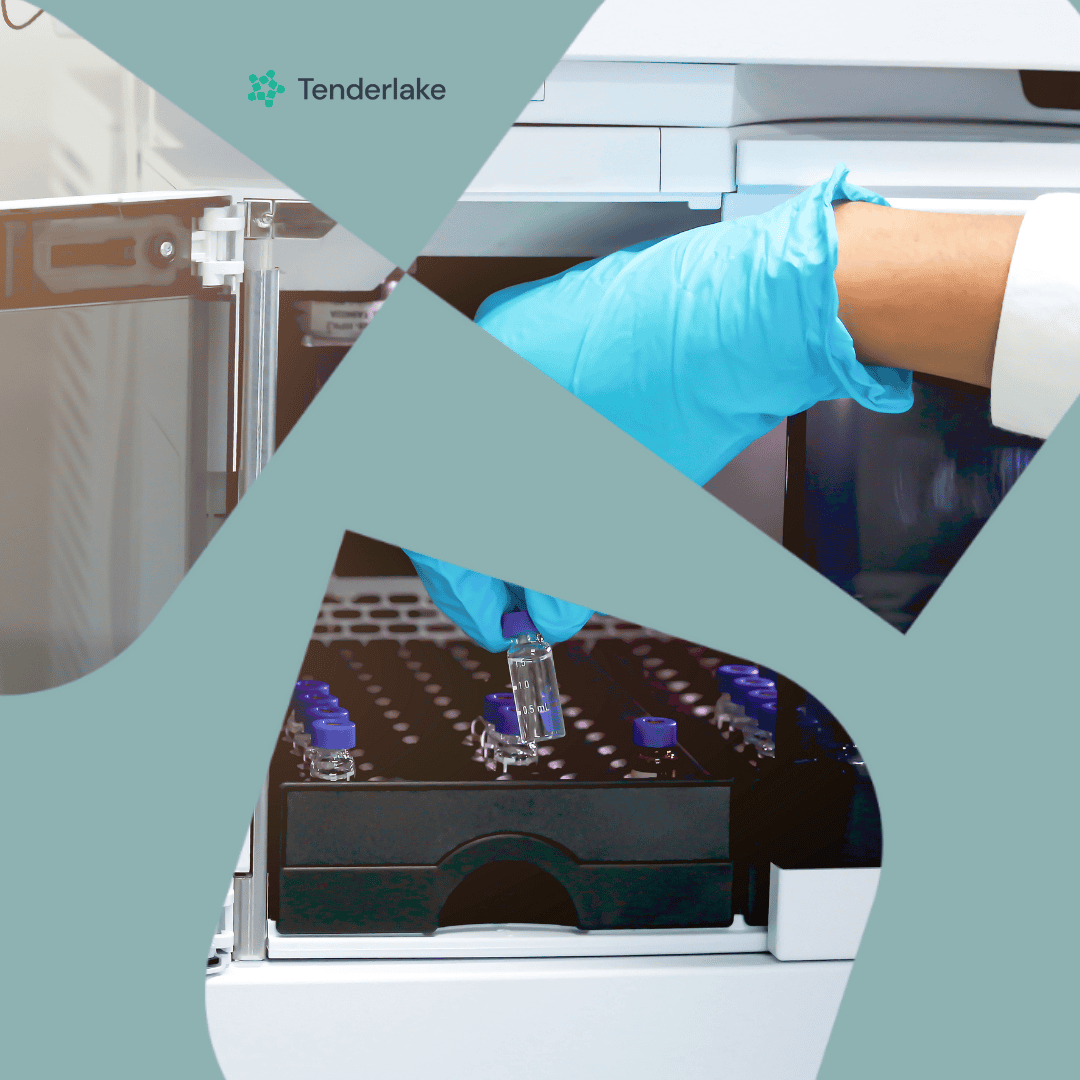
Hospital launches tender for genetic tumour profiling platform
Tender seeks a next-generation sequencing solution for rapid multi-biomarker tumour profiling, signalling growing demand for integrated genomic diagnostics.
Tender seeks a next-generation sequencing solution for rapid multi-biomarker tumour profiling, signalling growing demand for integrated genomic diagnostics.
Follow Tenderlake on LinkedIn for concise insights on public-sector tenders and emerging procurement signals.
Karolinska University Hospital has launched a procurement for a next-generation sequencing-based solution for targeted multi-biomarker tumour profiling with fast turnaround, reflecting rising demand for genomic tools in cancer care.
On 31st March 2026, Karolinska University Hospital published a contract notice titled Genetic Tumor Profiling Solution. The hospital is seeking “a technical solution for targeted multi-biomarker analysis in genetic tumor profiling, focusing on next-generation sequencing to detect various genetic alterations with quick response times.”
The wording points to a next-generation sequencing (NGS) set-up that can interrogate several biomarkers in tumour samples and return results within clinically relevant timeframes. Rather than open-ended exploratory sequencing, the emphasis is on targeted analysis of a defined set of markers and panels.
Four elements stand out in the notice:
Beyond these points, the notice does not spell out whether Karolinska expects a turnkey platform, particular instruments and consumables, dedicated analysis software or a service-based model. The term “technical solution” leaves room for different configurations, but it makes clear that the end result must support reliable genetic tumour profiling in the hospital’s laboratories.
Karolinska’s tender appears amid a steady flow of oncology-focused NGS procurements. In December 2025, Hospital Universitario Fundación Alcorcón issued a contract notice for the supply of reagents and materials “for detecting actionable biomarkers in cancer using next-generation sequencing” through its Supply of NGS Reagents tender. In the same month, Meditsinski universitet – Plovdiv sought NGS services for complete exome and targeted sequencing of genomic and tumour DNA “to aid in cancer diagnosis and treatment” in its Sequencing Services Procurement.
The scope of routine testing is also widening. In March 2026, HUS Group launched the Large Somatic Gene Panels competition, seeking laboratories able to provide panel tests for solid tumours, haematological malignancies and liquid biopsies, with bidders required to offer all three. Also in March 2026, Klinički bolnički centar Zagreb published a Genetic Profiling Reagents tender for reagents and consumables to support comprehensive tumour profiling, while Uniwersyteckie Centrum Kliniczne went to market for reagents for mutation analysis using NGS in a haematology-oncology laboratory.
These examples show NGS-based assays moving from niche projects into standard cancer workups, with hospitals looking to cover multiple tumour types, sample types and mutation categories. Karolinska’s emphasis on targeted multi-biomarker analysis and rapid turnaround places its project squarely in this trend towards clinically focused, panel-based sequencing.
As sequencing becomes embedded in clinical pathways, buyers are increasingly looking for end-to-end solutions that link instruments, reagents and informatics. In December 2025, CHU de Lille - ES du GHT HPGL launched a Genomic Profiling Solution tender for a comprehensive platform for solid tumours that combines advanced NGS technologies with computational analysis tools. On 30th March 2026, Leids Universitair Medisch Centrum followed with its NGS Analysis Platform procurement, seeking software to annotate, classify, filter, prioritise and report genetic variants from whole-genome sequencing data for genetic diagnosis.
Framework-style initiatives reinforce the same direction. In December 2025, Resah sought “molecular biology and NGS sequencing solutions” spanning PCR automation, nucleic acid extraction, high-throughput sequencers, library preparation kits and digital PCR. On 26th February 2026, Azienda Regionale della Salute (ARES) opened a market consultation on service-based diagnostic systems related to NGS sequencing, including automated library preparation and data analysis platforms for ASL of Cagliari. In March 2026, Mazowieckie Centrum Leczenia Chorób Płuc i Gruźlicy tendered for a system of laboratory devices, including a sequencer and nucleic acid isolation device, to support NGS-based research in a clinical research support centre.
Other buyers link new platforms directly to personalised medicine strategies. On 18th February 2026, the Dirección General de Gestión Económica, Contratación e Infraestructuras de la Conselleria de Sanidad advertised a cytogenetic equipment contract “to enhance precision personalized medicine in the Valencian Community.” In October 2025, the Department of Human Genetics at Radboud Universitair Medisch Centrum used an optical genome mapping consultation to explore equipment that could boost diagnostic capabilities and throughput for haematological indications.
Across these procurements, several expectations recur:
Karolinska’s insistence on quick response times sits neatly within this pattern. Although the hospital’s notice does not detail automation or informatics requirements, its call for rapid, targeted multi-biomarker NGS suggests a solution that can slot into time-critical oncology and pathology workflows.
Several recent tenders point to laboratories layering additional dimensions onto tumour genomics. On 31st March 2026, Uppsala University’s Department of Immunology, Genetics and Pathology launched a procurement for a spatial multiomics platform to support advanced tissue analysis in spatial biology and cancer immunology, including high-resolution protein and RNA detection. In November 2025, Universitatea de Medicina si Farmacie “Iuliu Hatieganu” Cluj-Napoca published a Spatial Transcriptomic and Sequencing Equipment notice combining a spatial transcriptomic analysis platform with long-read NGS for research into rare thyroid cancer.
On 19th January 2026, Meditsinski universitet – Sofia tendered for reagents and a starter kit for a Next Seq 500 platform to carry out methylation microchip analysis in solid tumours as part of a multi-omics project. The following month, Cliniques universitaires Saint Luc sought a contractor to implement a patented diagnostic test in a clinical trial using circulating tumour DNA as a biomarker for patients with locally advanced head and neck squamous cell carcinoma; its contract notice covers real-time ctDNA testing, sample management and coordination across several centres.
These projects show tumour profiling broadening to embrace spatial context, methylation patterns and liquid biopsy alongside DNA sequence changes. By contrast, Karolinska’s current procurement remains tightly focused on targeted, tissue-based genetic tumour profiling using NGS, without explicitly venturing into these additional layers of data, but it sits on the same continuum towards richer molecular characterisation.
The short text of the Genetic Tumor Profiling Solution notice concentrates on technical aims and does not describe contract value, lotting, anticipated test volumes or an implementation timetable. Those details will emerge from the full procurement documents and any subsequent clarifications.
Set alongside the wave of NGS and genomic profiling tenders issued between October 2025 and March 2026, Karolinska’s project reinforces a clear trajectory: oncology services in university hospitals are embedding high-throughput sequencing into routine practice and looking for solutions that deliver broad biomarker coverage within tight turnaround targets.
The eventual configuration chosen at Karolinska – in terms of panel design, throughput, automation and reporting – will offer a useful signal of how far major centres now expect NGS platforms to go in supporting rapid, clinically meaningful tumour profiling, echoing the emphasis on “actionable biomarkers” and “precision personalized medicine” in other recent procurements.
Tenderlake Monitor reads every public sector notice published across the UK, the EU and the EEA, in the language it was published in, and tells you which ones match what your company sells and why. It works from a plain description of your business, not from keywords or CPV codes.
Follow Tenderlake on LinkedIn for concise insights on public-sector tenders and emerging procurement signals.