City council launches tender for electric bus depot charging works
Design-and-build contract covers new charging infrastructure at a bus depot, signalling continued investment in zero-emission public transport fleets.
Design-and-build contract covers new charging infrastructure at a bus depot, signalling continued investment in zero-emission public transport fleets.
Follow Tenderlake on LinkedIn for concise insights on public-sector tenders and emerging procurement signals.
Miasto Zielona Góra is seeking a contractor to design and build new charging infrastructure for electric buses at its municipal depot, bringing together planning, construction and commissioning in a single package. The scheme sits within a wider wave of tenders that are shifting from buying individual electric buses to reshaping depots and power networks around zero-emission fleets.
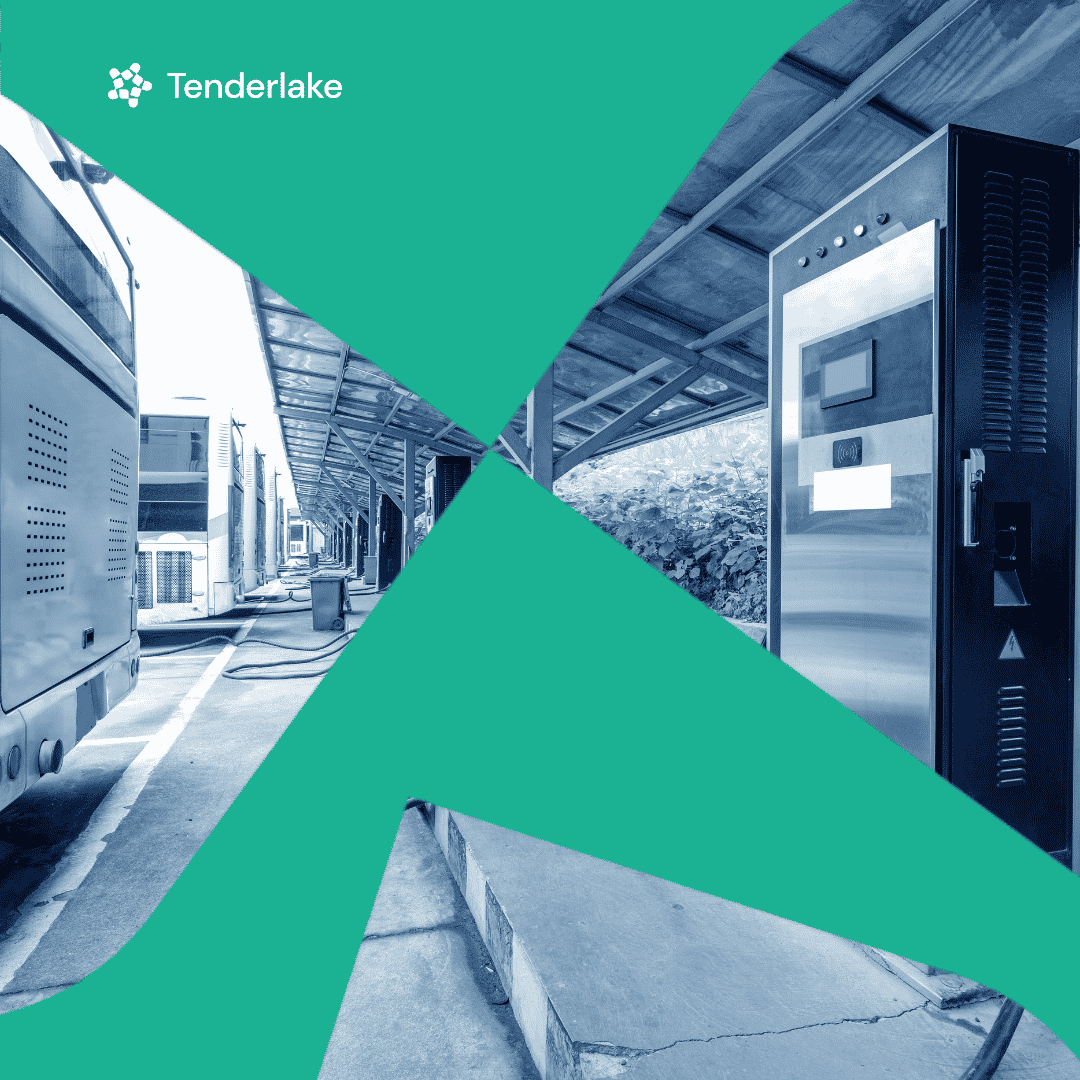
On 10th July 2026, Miasto Zielona Góra published a contract notice for the Electric Bus Charging Infrastructure Expansion. The notice covers “execution of design and build works for electric bus charging infrastructure” at the municipal transport company’s depot in Zielona Góra, including design documentation, construction, supply, assembly and commissioning.
The scope points clearly to a turnkey approach. Rather than running separate competitions for design, civil works, electrical equipment and start-up testing, the buyer has grouped these stages into a single contract. That structure gives one supplier or consortium responsibility from initial design documentation through to handing over a fully commissioned charging system.
The wording of the notice also frames the project as an expansion of existing infrastructure. That points to additional capacity being added at the municipal depot, rather than a completely new site. Any design documentation will need to reflect the constraints and opportunities of a live depot environment.
The Zielona Góra contract sits in a crowded 2026 pipeline of electric bus and charging procurements. In January 2026, Gmina Ryki issued a contract for the Electric Bus and Charger Delivery, centred on a single vehicle and a portable plug-in charger for public transport in the municipality.
By March 2026, other authorities were moving beyond single-bus pilots. On 12th March 2026, Gmina Miasto Lubartów went to market for the Electric Bus Delivery for Public Transport, bundling a brand-new electric bus with necessary equipment, registration documents, maintenance instructions in Polish, employee training and a quality guarantee matching the manufacturer’s warranty. On 29th May 2026, Miasto Suwałki sought one brand new MEGA electric bus with a mobile charger for public transport under the MEGA Electric Bus Delivery notice, explicitly requiring compliance with new technical standards, installation and training.
Larger fleet orders with embedded charging infrastructure are now common. On 2nd February 2026, Miasto Siedlce published a contract for Electric Buses and Charging Stations, covering production and delivery of six eco-friendly electric city buses and installation of four charging stations, together with training and technical documentation for the transport operator. On 6th February 2026, Miasto Łowicz followed a similar path with its Supply of Electric Buses and Charging Stations, which again includes training and documentation for operation and maintenance. On 20th May 2026, Gmina Miasto Krosno tendered for eight new electric buses, installation of mobile chargers, employee training and tools and documentation under its Purchase of Electric Buses contract.
Alongside these combined fleet-and-charger deals, a third group of notices focuses mainly on fixed infrastructure. On 11th February 2026, GMINA PODEGRODZIE launched a project titled Charging Stations Construction, to design and construct charging stations for intercity buses, covering necessary infrastructure, energy management systems and compliance with environmental standards. On 25th February 2026, Dopravní společnost Zlín-Otrokovice, s.r.o. sought the supply, installation and connection of eight charging stations for electric buses in the Electric Vehicle Charging Stations project, including equipment for system management, warranty service and operator training. On 17th March 2026, Miejskie Przedsiębiorstwo Komunikacyjne w Częstochowie S.A. combined the purchase of four new low-floor electric buses with charging infrastructure, staff training, documentation and servicing tools in its Zero-Emission Electric Buses Procurement. And on 19th May 2026, Miejski Zakład Komunikacji Sp. z o.o. tendered for the delivery, installation and commissioning of six new dual-station charging stations for electric buses at a bus depot, together with the necessary infrastructure and options for additional units, under its Electric Bus Charging Stations procurement.
Seen against this backdrop, the Zielona Góra scheme forms part of a clear shift: public bodies are not only buying electric vehicles and standalone chargers, they are now reshaping depots and surrounding infrastructure to support routine zero-emission operations.
Several 2026 notices underline how deeply electric buses are now embedded in depot planning. On 8th May 2026, Gmina Miechów advertised the Garage-Workshop Construction for Buses, covering project documentation, obtaining the necessary permits, execution of construction works and coordination with related projects under the Low-emission urban transport system programme. On 1st April 2026, Gmina Olsztyn launched a Bus Depot Expansion and Upgrades project to expand the bus depot at Sikorski Avenue, construct a workshop and social building, and install photovoltaic panels to enhance urban mobility and eco-transport in Olsztyn.
Dedicated electric bus depots are also emerging. On 17th June 2026, Zarząd Transportu Miejskiego w Kielcach published a contract for the Electric Bus Depot Construction, including design documentation, obtaining permits and carrying out construction and installation works. On 30th April 2026, Przedsiębiorstwo Komunikacji Autobusowej Sp. z o.o. announced works to build a bus charging station and the required technical infrastructure at the bus depot on Chwaszczyńska Street in Gdynia under its Bus Charging Station Construction contract. And on 10th July 2026, Miejskie Zakłady Autobusowe sp. z o.o. went to market for the Electric Bus Charging System Construction, covering construction, installation and commissioning of a system comprising 177 charging stations for electric buses at the R-1 Woronicza Transport Division.
These depot-focused schemes, together with the Zielona Góra project, show that charging is no longer treated as an add-on. Instead, it is driving changes in how depots are laid out, how workshops are equipped and how support buildings are powered, including the use of on-site photovoltaics in Olsztyn.
The power network behind these projects is beginning to attract its own tenders. On 13th July 2026, ENERGA-OPERATOR S.A. published a contract for Power Network Reconstruction for Charging Stations, designing and constructing medium-voltage cable connections to power public vehicle charging stations in Gdańsk and Kowale, and covering a range of installation and construction works. That kind of upstream investment sits alongside depot charging projects such as Zielona Góra’s, illustrating how public bodies are addressing both on-site and grid-side requirements.
Across the 2026 notices, contracting authorities are consistently bundling hardware with training, documentation and long-term support. The Siedlce and Łowicz tenders both require training and technical or maintenance documentation alongside the supply of buses and charging stations. The Zlín–Otrokovice contract specifies not only chargers but also system management equipment, warranty service and operator training.
Larger fleet procurements reinforce this pattern. On 12th June 2026, PRZEDSIĘBIORSTWO KOMUNIKACJI MIEJSKIEJ SP. Z O. O. sought three low-floor electric buses EV12, five low-floor electric buses EV18 and four dual-station mobile chargers through its Electric Buses and Chargers Procurement, bundled with warranty, technical support and training services. On 29th June 2026, Urząd Miasta Gorzowa Wielkopolskiego tendered for twelve MAXI class and two MIDI class electric buses, together with technical service, warranty repairs and personnel training, as part of the Electric Buses and Charging Infrastructure project. And on 26th May 2026, Miejskie Przedsiębiorstwo Komunikacyjne – Łódź Spółka z ograniczoną odpowiedzialnością combined the delivery of new low-floor electric buses with dual charging stations, workshop equipment for repairs, employee training and documentation in its Electric Buses and Charging Stations tender, while allowing for equivalent products that meet specified technical requirements.
Standards and approvals are also explicit in several procurements. The contract published on 28th April 2026 by Zakład Komunikacji Publicznej Suchy Las sp. z o.o. for three electric buses, set out in the Electric Bus Delivery for Public Transport contract, requires approval for use in Poland. The Suwałki notice calls for compliance with new technical standards. In Koszalin, Zarząd Dróg i Transportu’s Electric City Buses and Chargers contract of 10th June 2026 frames the delivery of low-floor electric city buses and associated charging infrastructure as part of a zero-emission mobility project. Together, these provisions highlight the importance that buyers attach to regulatory compliance, technical robustness and the ability of operators to run the new systems confidently.
By contrast, the text of the Zielona Góra notice is notably concise, listing only design documentation, construction, supply, assembly and commissioning. Even so, set against the wider pattern of training, documentation and standards in neighbouring contracts, the broader market signals that contracting authorities increasingly treat operational readiness as part of electric bus infrastructure, not an afterthought.
For suppliers, the Zielona Góra project offers a classic design-and-build challenge at depot scale. The grouped scope calls for teams that can handle design documentation, civil construction, electrical installation, equipment supply and system commissioning as a coherent whole, mirroring how other depots and charging stations are being delivered in places such as Kielce, Gdynia and at the R-1 Woronicza Transport Division.
Unlike many of the 2026 tenders that package vehicles and chargers together, the Zielona Góra contract concentrates on charging infrastructure alone. Market participants will be watching how this depot project connects to the city’s broader plans for electric bus procurement and whether further tenders follow to expand or renew the fleet.
Financing will also be in focus. At least one related scheme, led by Miejskie Zakład Komunikacyjny Sp. z o.o. and published on 24th April 2026, explicitly draws on European resources for urban transport to fund the Electric Buses and Infrastructure Purchase project, which includes delivery of electric buses, charging stations and promotional stickers. That example underlines the role of external funding in making large-scale depot and fleet upgrades viable.
If delivered as envisaged, the charging infrastructure expansion at the municipal depot in Zielona Góra will add another node to the growing network of dedicated electric bus charging facilities described in recent tenders. It reflects a maturing phase in the transition, where attention is shifting from headline vehicle purchases to the less visible but essential infrastructure that keeps zero-emission buses running reliably every day.
Tenderlake Monitor reads every public sector notice published across the UK, the EU and the EEA, in the language it was published in, and tells you which ones match what your company sells and why. It works from a plain description of your business, not from keywords or CPV codes.
Follow Tenderlake on LinkedIn for concise insights on public-sector tenders and emerging procurement signals.