Research institute launches tender for plant biology lab equipment
Tender seeks suppliers of next-generation sequencing and lab instrumentation for a new plant biology centre, signalling continued investment in research capacity.
Follow Tenderlake on LinkedIn for concise insights on public-sector tenders and emerging procurement signals.
Centrum biológie rastlín a biodiverzity Slovenskej akadémie vied, verejná výskumná inštitúcia, has gone to market for next-generation sequencing and laboratory instrumentation, signalling fresh investment in plant biology and biodiversity research capacity.
On 26th November 2026, Centrum biológie rastlín a biodiverzity Slovenskej akadémie vied, verejná výskumná inštitúcia, published a contract notice for Instrumentation for Plant Biology Centre.
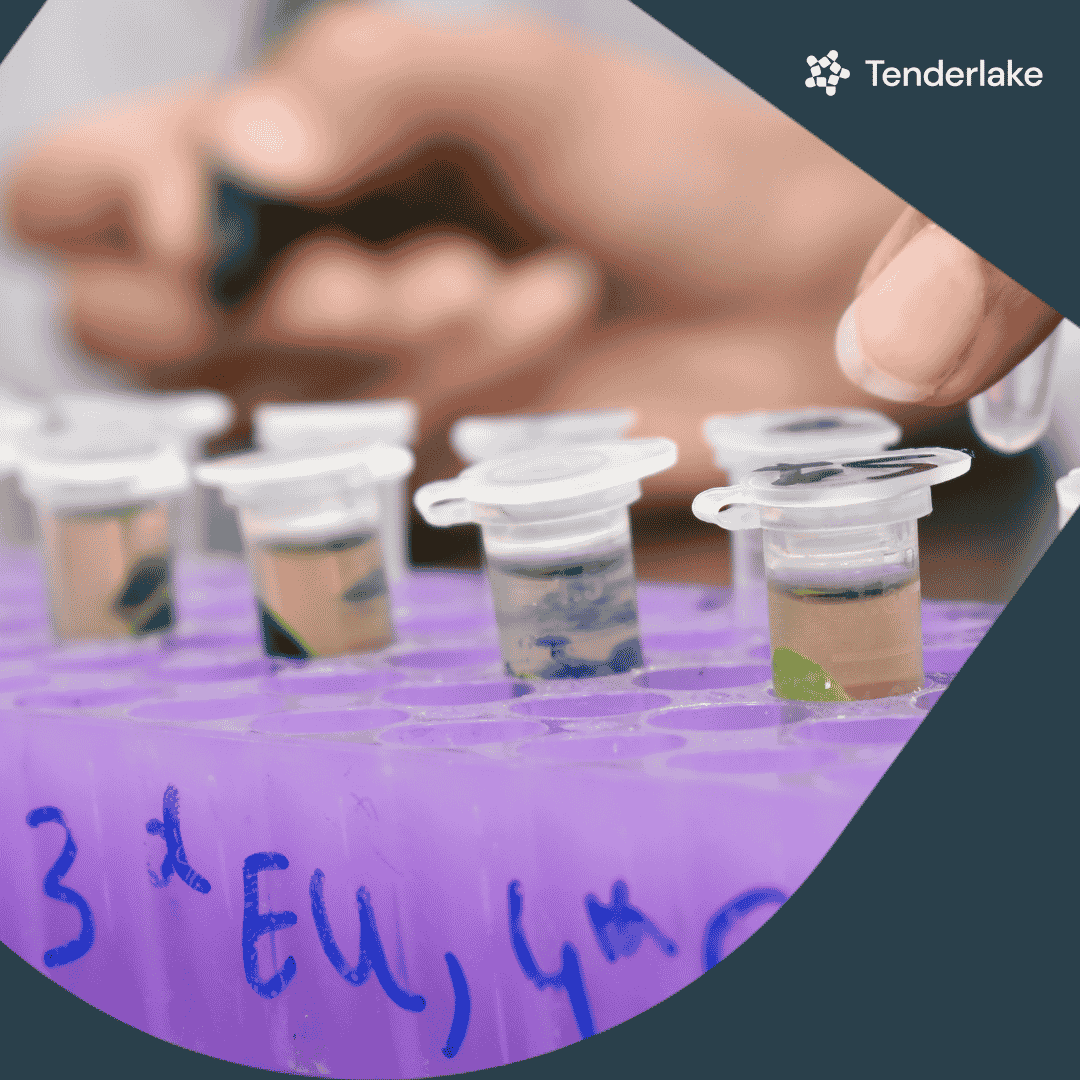
The procurement involves supplying “various instrumentation and technical equipment” for the Centre of Plant Biology and Biodiversity. According to the notice, this includes next-generation sequencing (NGS) sequencers, sample preparation tools, storage equipment and small laboratory devices.
By combining NGS platforms with the tools needed to handle and store biological material, the centre can support complete workflows that take plant and environmental samples from preparation through to sequencing and analysis. The summary available does not detail volumes or models, but the presence of NGS sequencers points to a focus on high-throughput molecular work within plant biology and biodiversity studies.
The breadth of equipment listed also suggests that this is a lab-wide upgrade rather than a single instrument purchase. Smaller devices and storage systems are essential to keep high-end sequencers running efficiently, and they often account for much of the day-to-day reliability of a research facility.
The notice points to four main strands of investment:
Taken together, these elements indicate an effort to equip the Centre of Plant Biology and Biodiversity with the infrastructure needed to run modern molecular and analytical experiments at scale. The notice text does not specify whether installation, commissioning or training are included, nor does it outline any lot structure, but similar research procurements in 2026 have tended to bundle such services with equipment delivery.
The focus on both headline instruments and supporting devices matters for suppliers. Manufacturers of NGS systems will be interested in the core sequencing lots, while distributors of laboratory tools and storage solutions will see potential opportunities around the supporting equipment. The mix of technologies also raises questions about interoperability, maintenance and service models, themes that recur across recent research infrastructure tenders.
The plant biology centre’s contract notice lands amid a wider wave of laboratory investments across research institutes, universities and health bodies during 2026.
In October 2026, Biomedicínske centrum Slovenskej akadémie vied, verejná výskumná inštitúcia, moved to establish a framework agreement under its Laboratory Instruments and Equipment procurement. That framework is designed for purchasing and delivering commonly available laboratory instruments and equipment for science and research as needed by BMC SAS, highlighting a move towards flexible, call-off models for standard kit.
Universities have also been refreshing their laboratory infrastructure. In September 2026, Slovenská technická univerzita v Bratislave issued a contract notice for Laboratory Instruments Supply, covering delivery, installation, functional testing, operator training and warranty for various instruments. Around the same time, Vysoká škola báňská - Technická univerzita Ostrava sought a complete set of laboratory equipment for biological, molecular biological and analytical research, under its Laboratory Equipment Set procurement, including installation, training and warranty service.
Investment in advanced sequencing capacity has been a notable thread. In July 2026, Uniwersytecki Dziecięcy Szpital Kliniczny im. L. Zamenhofa w Białymstoku launched a tender for Medical Equipment Delivery for Research, seeking real-time PCR systems, a preparative centrifuge, a microarray system, an NGS sequencer and additional laboratory tools for a genetic laboratory. In August 2026, Institut po Biologiya i Immunologiya na Razmnozhavaneto published its Laboratory Equipment Supply notice, which includes a long-read sequencing system alongside a light microscope, refrigerated desktop centrifuge, cell counter and automatic pipettes. Later that month, Uniwersytet Łódzki sought devices for nucleic acid isolation and Illumina microarray testing in its Supply of Research Equipment for Biobank, with requirements for new, unused equipment plus installation and training.
Plant and environmental research has been another focus. In June 2026, Tokaj-Hegyalja Egyetem published a call for Viticulture Laboratory Instruments, covering delivery and commissioning of laboratory and field instruments, with user training included. In September 2026, Uniwersytet im. Adama Mickiewicza w Poznaniu went to market for a Delivery of Scientific Research Equipment, including a fluorescence imaging system, a laser microdissection system and a plant observation system. The Institut po Lozarstvo i Vinarstvo - Pleven, meanwhile, is seeking specialised laboratory equipment and consumables for molecular biological analysis of climate change effects on grapevines through its September 2026 Laboratory Equipment and Consumables Supply notice.
Soil and water monitoring capabilities are being upgraded in parallel. Uniwersytet Przyrodniczy w Lublinie is procuring a gradient thermocycler, spectrophotometer, refractive index detector, digital documentation system, climate chamber, stationary chamber and portable soil scanner through its Scientific Research Equipment Delivery notice from November 2026. Back in June 2026, Slovenský hydrometeorologický ústav advertised for Groundwater Quality Monitoring Equipment, seeking portable multiparameter instruments for in situ measurements within the State Hydrological Network. In August 2026, Wojewódzka Stacja Sanitarno-Epidemiologiczna w Bydgoszczy sought gas chromatography systems, ion chromatographs and other specialist kit for water testing under its Specialized Analytical Equipment Delivery contract.
Beyond capital purchases, several buyers are focusing on long-term operation, maintenance and consumables. In June 2026, Ministerstvo vnútra Slovenskej republiky published a notice for Laboratory Equipment Service, seeking framework agreements for service and maintenance of laboratory equipment over a 48‑month period. In November 2026, Kujawsko – Pomorskie Centrum Pulmonologii w Bydgoszczy issued its Laboratory Reagents and Equipment Rental tender, combining microbiological reagents with rental of small laboratory equipment. And in October 2026, Sieć Badawcza Łukasiewicz - PORT Polski Ośrodek Rozwoju Technologii advertised a one-off delivery of chemical reagents, consumables, small laboratory equipment and spare parts in its Delivery of Laboratory Equipment and Supplies notice.
Against this backdrop, the plant biology centre’s investment in NGS sequencers and associated tools fits into a broader pattern: expanding the capacity of public research organisations to run data-rich biological and environmental investigations, spanning plant systems, soils, water quality and health-related laboratories.
The current notice provides only a high-level description of the instruments required for the Centre of Plant Biology and Biodiversity. Key details such as lot structure, delivery schedules or expectations around installation and training are not set out in the published summary, though comparable 2026 tenders suggest these issues are likely to be central once full documentation is available.
Observers of research infrastructure investment will be watching how this contract interacts with other procurements for laboratory frameworks, maintenance services and consumables. Follow-on notices – for example around reagents for NGS workflows, data storage or further expansion of laboratory capacity – will indicate how the centre plans to embed its new instrumentation within long-term research programmes.
Tenderlake Monitor reads every public sector notice published across the UK, the EU and the EEA, in the language it was published in, and tells you which ones match what your company sells and why. It works from a plain description of your business, not from keywords or CPV codes.
Follow Tenderlake on LinkedIn for concise insights on public-sector tenders and emerging procurement signals.