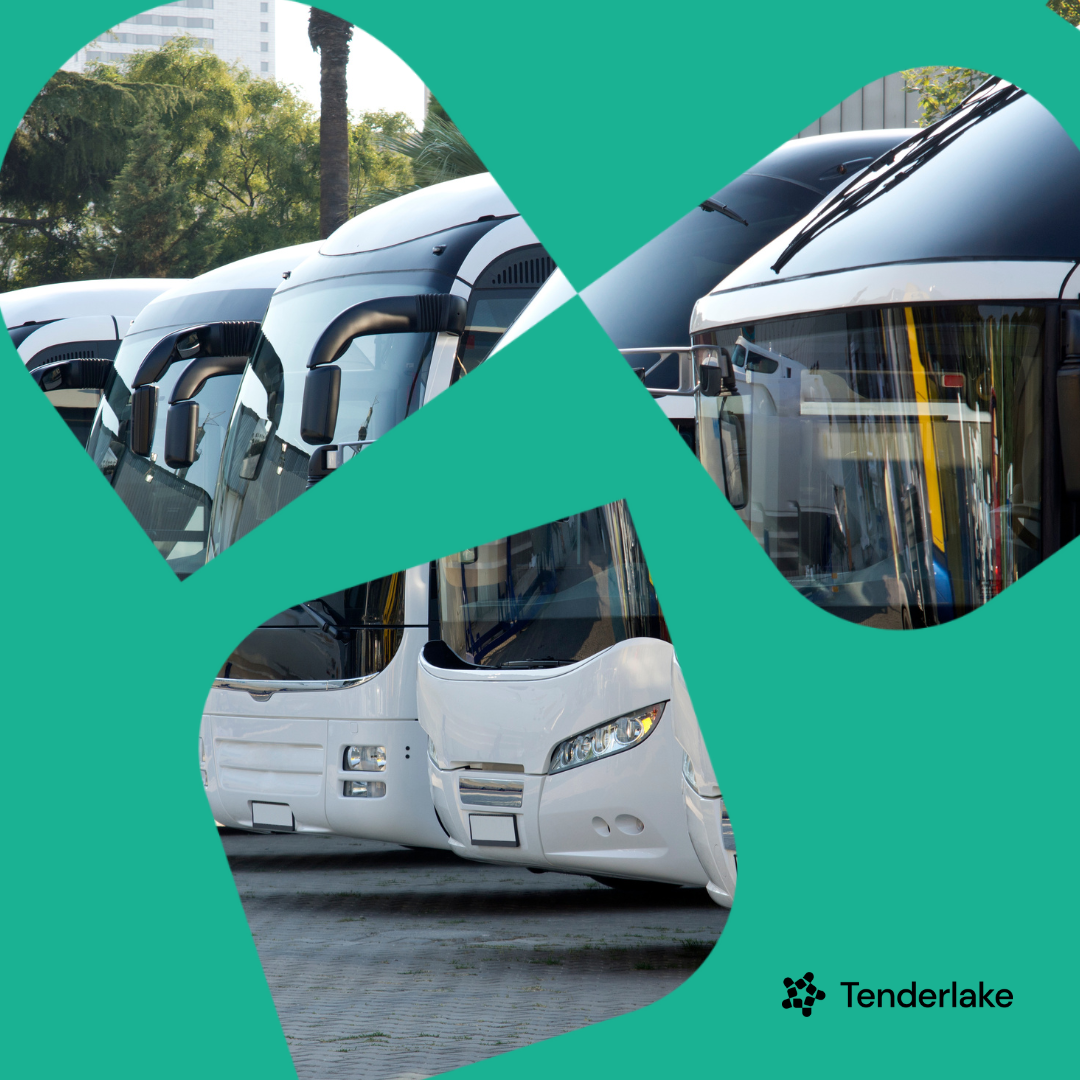
Municipal transport electrification links buses, chargers and AI
A Romanian city is procuring electric buses, depot and on-route charging, and an AI platform, signalling how municipalities are wiring fleets for cleaner, smarter travel.
A Romanian city is procuring electric buses, depot and on-route charging, and an AI platform, signalling how municipalities are wiring fleets for cleaner, smarter travel.
Follow Tenderlake on LinkedIn for concise insights on public-sector tenders and emerging procurement signals.
A Romanian municipality has moved to electrify its bus network with a bundled purchase of vehicles, charging equipment, installation works and an AI platform. In May 2025, Municipiul Drobeta Turnu Severin published the Electric Buses and Charging Stations Supply notice covering buses, slow and fast charging stations, civil and electrical works for installation, and an AI platform to enhance public transport performance. The package signals a push to decarbonise services while tightening operations with data-led tools.
The notice points to an integrated delivery rather than a piecemeal upgrade. It brings together:
Including vehicles, infrastructure and works in a single procurement can reduce interface risk and keep timelines tight. Other cities have adopted similar all-in approaches, often pairing fleet renewal with digital systems.
Romanian municipalities have been expanding electric fleets at pace, typically combining depot and on-route charging to support reliable duty cycles:
Elsewhere, larger programmes underscore the scale of change. In June 2023, Municipiul Suceava split a major order into two lots: 18 standard buses with 8 fast and 18 standard chargers, plus 32 electric minibuses with 32 standard chargers (link). And in August 2023, Zalău structured two lots of 20 buses each, bundling depot slow chargers and on-route fast chargers with design, construction and commissioning of the charging sites (link).
The Drobeta Turnu Severin plan stands out for including an AI platform to enhance performance. Other cities have paired new fleets with intelligent transport systems, creating the data bedrock that AI can use. In August 2022, Tulcea’s 20-bus programme bundled a full ITS suite: AVL for vehicle monitoring and dispatch, e-ticketing, onboard passenger information and infotainment, passenger counting, vehicle CCTV, a “Travel Planner” web and mobile app, and a traffic light subsystem (link). Such components generate operational data and improve passenger experience.
Digital requirements also show up in maintenance and operations. In June 2023, Sibiu’s contract for six 10‑metre buses included depot slow chargers and fast chargers with inverted pantograph, alongside software and equipment for diagnostics and maintenance (link). In June 2023, Bârlad required application software with an unlimited licence and training for the buyer’s staff as part of a six‑bus, eight‑charger package (link).
Building the charging estate is often as complex as buying the buses. The Drobeta Turnu Severin notice includes civil and electrical works for installation — an approach that aligns with recent practice. Zalău’s August 2023 procurement folded in design services, construction, assembly, testing and commissioning for charging stations, and flagged the need for certified capability to design and execute electrical network works up to 20 kV (link).
Phasing can vary. Several projects have required chargers to be delivered and installed ahead of buses. In April 2023, Câmpulung Moldovenesc set out a sequence with stations delivered at least one month before buses within a 15‑month delivery window (link). In June 2023, Bârlad also planned for chargers to arrive two months ahead of bus handover, though that contract placed grid connection works with the buyer (link). By contrast, Făgăraș ran a charging‑only tender in November 2023 — 8 slow 60 kW DC units and 2 fast 150 kW DC units — after purchasing buses separately (link).
Project sizes range widely. Smaller towns like Hunedoara have procured four buses with a mix of slow and fast charging (December 2023; link), while metropolitan areas such as Alba Iulia have gone to market for larger fleets — 21 buses in one lot, plus six minibuses in a second (February 2024; link).
Where values are published, they offer a sense check for budgets. In June 2023, Sibiu estimated 14,354,593.20 lei (excluding VAT) for a six‑bus package with slow and fast charging (link).
Many recent procurements cite the National Recovery and Resilience Plan’s Local Fund as a source of finance — for example in Horezu (June 2023; link) and Miercurea Ciuc (February 2024; link). The Drobeta Turnu Severin notice does not state its funding source.
Key details in Drobeta Turnu Severin’s plan — such as the number and size of buses, charger power and whether on‑route units use pantographs or plug‑in connectors — are not specified in the notice. The inclusion of civil and electrical works suggests a turnkey approach to site delivery; watch for whether grid connections are included (some peers leave that with the buyer) and how the programme phases charger installation ahead of bus arrivals.
The AI platform will be worth tracking. Other cities have paired new fleets with dispatch, ticketing and passenger information systems; the way Drobeta Turnu Severin defines the AI scope will show how far it aims to go on data‑driven operations and customer information.
Across Romania, orders in 2024–2025 range from small three‑ or four‑bus buys to large metropolitan programmes. As more lots reach award, the balance between depot and on‑route charging, and the maturity of digital layers, will set the pace for service quality and emissions cuts in the coming years.
Tenderlake Monitor reads every public sector notice published across the UK, the EU and the EEA, in the language it was published in, and tells you which ones match what your company sells and why. It works from a plain description of your business, not from keywords or CPV codes.
Follow Tenderlake on LinkedIn for concise insights on public-sector tenders and emerging procurement signals.