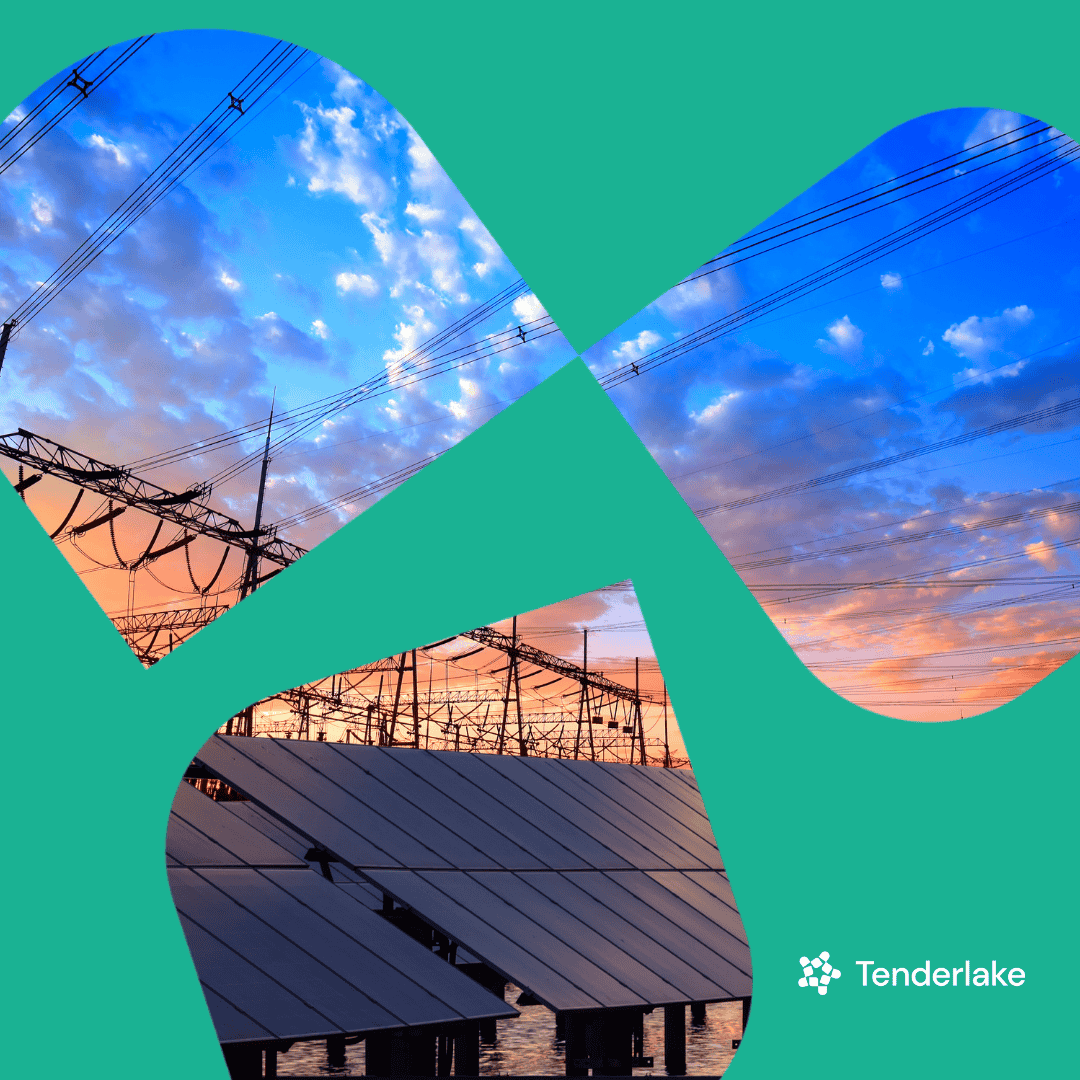
Transmission grid seeking solar and storage at substations
New contract will add photovoltaic plants and batteries to high-voltage stations, cutting operating costs and backing public-sector climate goals.
New contract will add photovoltaic plants and batteries to high-voltage stations, cutting operating costs and backing public-sector climate goals.
Follow Tenderlake on LinkedIn for concise insights on public-sector tenders and emerging procurement signals.
On 7th November 2025, Compania Nationala de Transport al Energiei Electrice "TRANSELECTRICA" S.A. launched a contract notice to install photovoltaic power plants and energy storage systems at its electricity transport stations, aiming to cut operating costs, improve operational efficiency and support its decarbonisation targets while observing environmental protection principles.
The new contract will bring photovoltaic generation and battery storage into a part of the power system that has traditionally focused on transporting electricity rather than producing it. The project description highlights installations at “various electricity transport stations”, signalling a programme that reaches across multiple sites in the national transmission network.
According to the notice, the project has four clear aims:
The brief public summary does not specify how many stations are involved, what capacity the photovoltaic plants and storage systems will have, or how the work will be phased. Those details sit behind the contract documentation. Even so, the direction is evident: the transmission operator plans to use on‑site renewable generation and storage as part of its core infrastructure, rather than relying solely on external power purchases.
By anchoring the project in both cost reduction and decarbonisation, the notice links day‑to‑day grid operations with longer‑term climate goals. The explicit reference to environmental protection principles also points to a project that must balance construction and operation of new assets with careful management of local impacts.
The transmission‑level solar and storage plan is part of a broader wave of public‑sector energy projects that connect infrastructure upgrades directly to emissions and efficiency targets.
In June 2025, Municipiul Constanța launched procurement for the rehabilitation of primary and secondary thermal networks and thermal points in Constanța, including upgrades to equipment and SCADA systems. The focus there is on modernising thermal networks and securing better control over heat distribution.
In July 2025, Municipiul Cluj-Napoca followed with an energy efficiency project covering thermal energy production, transportation and distribution, with aims to enhance energy efficiency and lower CO2 emissions. Together, these projects show municipal authorities using network upgrades as a direct route to emission reductions.
In October 2025, Comuna Telciu moved to diversify its local energy mix with a contract for equipment and works to build a biomass cogeneration plant and associated infrastructure. That project is intended to produce both thermal and electrical energy from biomass and to reduce energy costs and greenhouse gas emissions for local public buildings.
Transport infrastructure is undergoing similar change. In August 2025, C.N.C.F. "CFR" SA – Sucursala Regionala CF Constanța – Unitate Operațională tendered a feasibility study for the electrification of the Ciulniţa – Slobozia – Ţăndărei traffic section, including all documentation required for urbanism certification and approvals, with a view to improving energy efficiency and sustainability in railway transport.
Road transport projects echo the same themes. Also in August 2025, Municipiul Suceava launched a contract to supply and install 28 electric vehicle charging stations in Suceava and surrounding areas, explicitly to promote electric vehicle use and reduce greenhouse gas emissions. In November 2025, Primaria Municipiului Oltenita issued a similar contract for the supply, installation and commissioning of three electric vehicle charging stations to improve the energy efficiency of the SAHIA I building.
Across heat, rail and road, public buyers are tying investment decisions directly to lower emissions, better efficiency and tighter operational control. The transmission‑level solar and storage project extends that logic into the backbone of the power system.
The move by the transmission operator sits alongside a series of solar projects on municipal land and public buildings.
In September 2025, Municipiul Sibiu went to market for design services and construction works to establish a photovoltaic park to produce solar energy for the municipality. The contract combines design, verification of documentation and construction works.
Municipiul Craiova published a notice in September 2025 for technical design services, documentation verification and execution of works to install a new solar energy production capacity in the municipality. Here too, the emphasis is on a full chain from design through to construction.
Healthcare infrastructure is part of the picture. In August 2025, Spitalul Municipal "Sfintii Doctori Cosma si Damian" Radauti sought suppliers to deliver and install a photovoltaic system for the municipal hospital, including monocrystalline panels, inverters and supporting structures, all aligned with detailed technical specifications.
There are parallel developments beyond this national context. In October 2025, Miejski Zarząd Gospodarki Komunalnej w Czeladzi published a contract for designing, supplying and installing photovoltaic systems and energy storage in various public utility buildings in Czeladź, explicitly to improve energy efficiency and increase the use of renewable energy.
Taken together, these notices show public bodies planning solar deployment on municipal land, hospitals and public buildings, and, in some cases, pairing panels with storage. The transmission‑grid project extends this pattern into the high‑capacity infrastructure that underpins the wider system.
While new solar capacity attracts attention, network operators and generators are also investing heavily in the substations and control systems that keep power flowing safely.
In August 2025, Distributie Energie Oltenia S.A. launched a contract for the design and execution of modernisation works at transformation stations and high‑tension networks serving areas connected to the Craiova Sud station. The objective is to increase energy efficiency and improve the quality of electricity supplied to consumers.
In September 2025, Delgaz Grid S.A. issued a contract for the turnkey modernisation of transformer stations, including design, execution, provision of materials and training. Here, modernisation is framed as a complete package, from engineering through to commissioning and staff capability.
Generation assets are also being upgraded. Later in September 2025, SPEEH Hidroelectrica SA launched a substation modernisation project for several 110 kV stations, built around advanced technological solutions. The aims include enhanced safety and operational efficiency, integration of monitoring systems and reductions in environmental impact and maintenance costs.
In November 2025, Compania Nationala de Transport al Energiei Electrice "TRANSELECTRICA" S.A., through its STT Cluj-Napoca branch, added to this set of projects with a contract notice for the modernisation of the command‑control‑protection system at the 220/110/20 kV Sălaj electrical station. The project includes installation of protection cabinets and SCADA server cabinets, along with construction works and product supply.
Seen alongside the new solar‑and‑storage initiative at electricity transport stations, this focus on protection, control and monitoring suggests that the transmission operator is working on both the physical and digital sides of its network. Other buyers are doing the same, with SCADA and advanced monitoring a recurring feature in thermal, renewable and network tenders.
The photovoltaic and storage project at electricity transport stations could mark an important step in how the transmission system manages its own energy use and contributes to decarbonisation. Further detail on the number of sites, technical solutions and delivery timetable will determine the scale of its impact.
Set against a backdrop of municipal solar parks, biomass cogeneration, electric vehicle charging networks, rail electrification studies and substation modernisations, the contract underlines how energy infrastructure is becoming a central focus of public‑sector investment. For suppliers across solar, storage, grid equipment and control systems, the current pipeline points to a sustained demand for expertise at every level of the power system.
Tenderlake Monitor reads every public sector notice published across the UK, the EU and the EEA, in the language it was published in, and tells you which ones match what your company sells and why. It works from a plain description of your business, not from keywords or CPV codes.
Follow Tenderlake on LinkedIn for concise insights on public-sector tenders and emerging procurement signals.