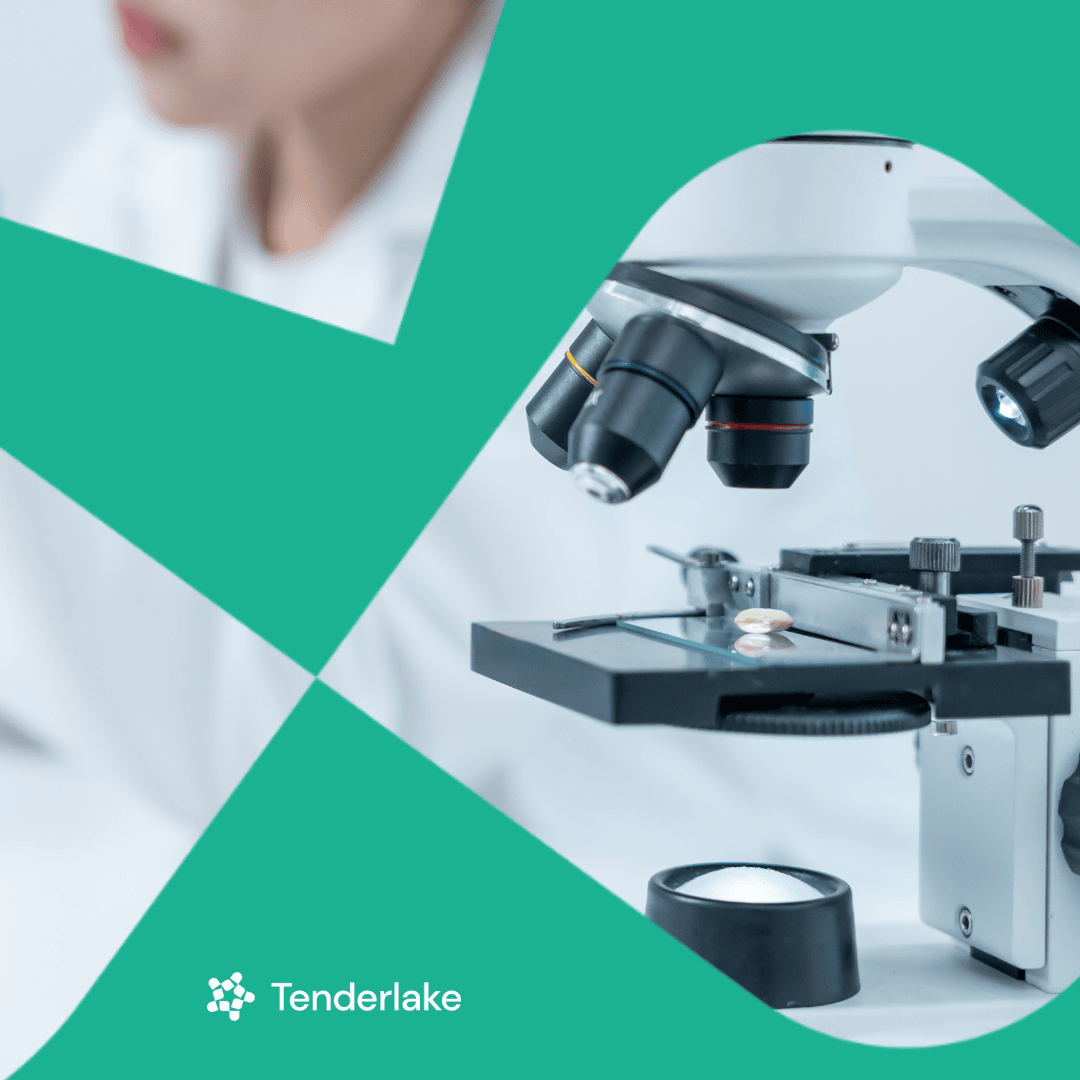
Research institute tenders advanced microscopy and imaging systems
A new contract for electron, confocal and AFM systems will boost a Danube Delta research centre and reflects wider European lab infrastructure upgrades.
A new contract for electron, confocal and AFM systems will boost a Danube Delta research centre and reflects wider European lab infrastructure upgrades.
Follow Tenderlake on LinkedIn for concise insights on public-sector tenders and emerging procurement signals.
The Murighiol Research Center of the Institutul National de Cercetare Dezvoltare pentru Stiinte Biologice (INCDSB) is preparing for a step change in capability, as a new scientific equipment supply contract will bring electron microscopes, AFM and confocal imaging systems on site, with installation and training, to deepen biodiversity research across the Danube-Danube Delta-Black Sea system.
Published on 19th December 2025, the contract notice confirms that INCDSB wants to “enhance the research capabilities” of its Murighiol Research Center. The procurement covers “various advanced microscopy and imaging equipment”, including electron microscopes, AFM and confocal systems, together with the associated installation and training services.
The Murighiol centre concentrates on biodiversity research in the Danube-Danube Delta-Black Sea system. Installing this suite of instruments is intended to give researchers new ways to analyse biological material from river, delta and marine environments within the same facility.
By bundling supply with installation and training, the institute signals that it expects a turnkey solution rather than a simple catalogue purchase. Suppliers will need to integrate the microscopes and imaging systems, ensure they operate to specification on site, and train local staff to use and maintain them.
The mix of electron microscopy, AFM and confocal imaging is typical of laboratories that need to examine samples at different scales and in different conditions. While the notice does not list specific experiments, it points towards a Murighiol facility able to support a wide range of biological imaging tasks linked to biodiversity research in the surrounding region.
The Murighiol investment is one of a cluster of Romanian procurements in 2025 that aim to modernise laboratory infrastructure for health, food and life-science research.
In June 2025, the county of Iași launched a microbiology laboratory equipment procurement for the Cuza Vodă Clinical Hospital of Obstetrics and Gynecology Iași, covering the supply and installation of medical equipment across eight distinct lots. A July 2025 contract from Spitalul Judetean de Urgenta Miercurea Ciuc seeks advanced laboratory equipment for its microbiology laboratory, aimed at “enhancing diagnostic capabilities and improving healthcare services”.
Research universities are also investing. In June 2025, the Universitatea de Stiinte Agronomice si Medicina Veterinara din Bucuresti tendered laboratory equipment for the METROFOOD-RO Evolve project, specifying a fraction collector, an ELSD detector and a UV-VIS spectrophotometer for the Faculty of Biotechnologies. By July 2025, the Universitatea de Stiintele Vietii "Regele Mihai I" din Timisoara was acquiring equipment for the Romanian METROFOOD-RO node, including a microwave extraction system and an analysis system for plant-based products.
At the high end of bioscience, the Universitatea de Medicina si Farmacie "Carol Davila" has launched a December 2025 procurement for genomic research equipment under the “Development of Genomic Research in Romania” project, covering spectrometry and imaging research equipment plus accessory services. The Dr Victor Babeș Infectious Diseases and Pneumophysiology Hospital in Timișoara is meanwhile seeking a broad package of medical equipment, from microorganism identification systems and PCR platforms to centrifuges, autoclaves and microscopy, with transport, installation and staff training built into the contract.
Across these notices, equipment purchases are consistently tied to installation, commissioning, training and long-term programmes. The Murighiol microscopy and imaging package fits this pattern, but applies it to biodiversity in the Danube-Danube Delta-Black Sea system rather than to hospitals or food laboratories.
Similar priorities are visible across Europe. On 30th June 2025, the Instytut Biologii Doświadczalnej im. M.Nenckiego PAN published a high-resolution imaging procurement for a High-Resolution Imaging Laboratory, seeking advanced microscopy systems and modules that enable “super-resolution, ultra-fast imaging, and high-throughput analysis of biological samples”. In early July 2025, the Istituto degli Endotipi in Oncologia, Metabolismo e Immunologia "G. Salvatore" of the Consiglio Nazionale delle Ricerche followed with a contract for scientific instruments that combines a transmission electron microscope, an electron source module for a focused ion beam scanning electron microscope, and a Fourier imaging system with an ultra-fast camera for advanced biological analysis.
Complex instrument suites are becoming standard. The Istituto Superiore di Sanità’s July 2025 call for a next-generation transmission electron microscope specifies supply, installation and commissioning alongside an integrated digital camera, PC, software, compressor and cooling system. In November 2025, the Secretaría General de la Agencia Estatal Consejo Superior de Investigaciones Científicas sought advanced electron microscopy equipment that pairs a field emission scanning electron microscopy system with a complete biological sample preparation system for the Interdisciplinary Research Center of Alcalá, while the Rectorado de la Universidad de Cádiz advertised a TEM/STEM microscope optimised for in-situ environmental experimentation.
Universities are putting equal weight on flexibility and support. Dublin City University’s November 2025 scanning electron microscope notice for its Core Technologies Unit calls for features suited to material analysis and “potential for future modular upgrades”. At Université de Rennes, a December 2025 medical biology equipment contract covers supply, commissioning, training and maintenance for the Cytometry, SITI and MRIC platforms under the CPER 2021-2027 scheme. A July 2025 procurement by ΠΟΛΥΤΕΧΝΕΙΟ ΚΡΗΤΗΣ (transliterated as Polytechnio Kritis) for a high-resolution electronic microscopy system combines advanced scanning and transmission electron microscopes with a sample preparation unit and staff training, while the Electronics Institute at the Bulgarian Academy of Sciences is acquiring a microscope system with delivery, installation, commissioning, training and warranty support in a single package. Kepler Universitätsklinikum GmbH goes further still, seeking a transmission electron microscope that comes with maintenance, project planning, installation, IT integration and training.
These examples underline a shared direction of travel. High-end microscopes and imaging platforms are treated as strategic infrastructure, embedded in research programmes and expected to arrive with full lifecycle support rather than as stand-alone instruments.
The Murighiol microscopy upgrade also aligns with parallel investments in the Danube region’s field infrastructure. In July 2025, the Institutul National de Cercetare-Dezvoltare pentru Geologie si Geoecologie Marina GEOECOMAR sought suppliers for specialised vessels, including multifunctional motorised vessels and ancillary services, for an investment project linked to the International Center for Advanced Studies of Large River Systems in the Danube Delta.
Together, the Murighiol instruments and the GEOECOMAR vessels point to a research system that strengthens both activity on the water and analysis in the laboratory. The specialised boats support work across large river systems in the Danube Delta, while the Murighiol centre’s microscopes and imaging platforms will anchor the analytical end of the biodiversity effort.
The next steps to watch will be the specific combinations of electron microscopes, AFM and confocal systems that the Murighiol Research Center ultimately installs, and the way training is structured around them. Given the strong emphasis on modular upgrades, commissioning and long-term maintenance in many of 2025’s imaging procurements, further investment in supporting infrastructure around the Danube-Danube Delta-Black Sea research system would be consistent with the trajectory set by this latest contract.
Tenderlake Monitor reads every public sector notice published across the UK, the EU and the EEA, in the language it was published in, and tells you which ones match what your company sells and why. It works from a plain description of your business, not from keywords or CPV codes.
Follow Tenderlake on LinkedIn for concise insights on public-sector tenders and emerging procurement signals.