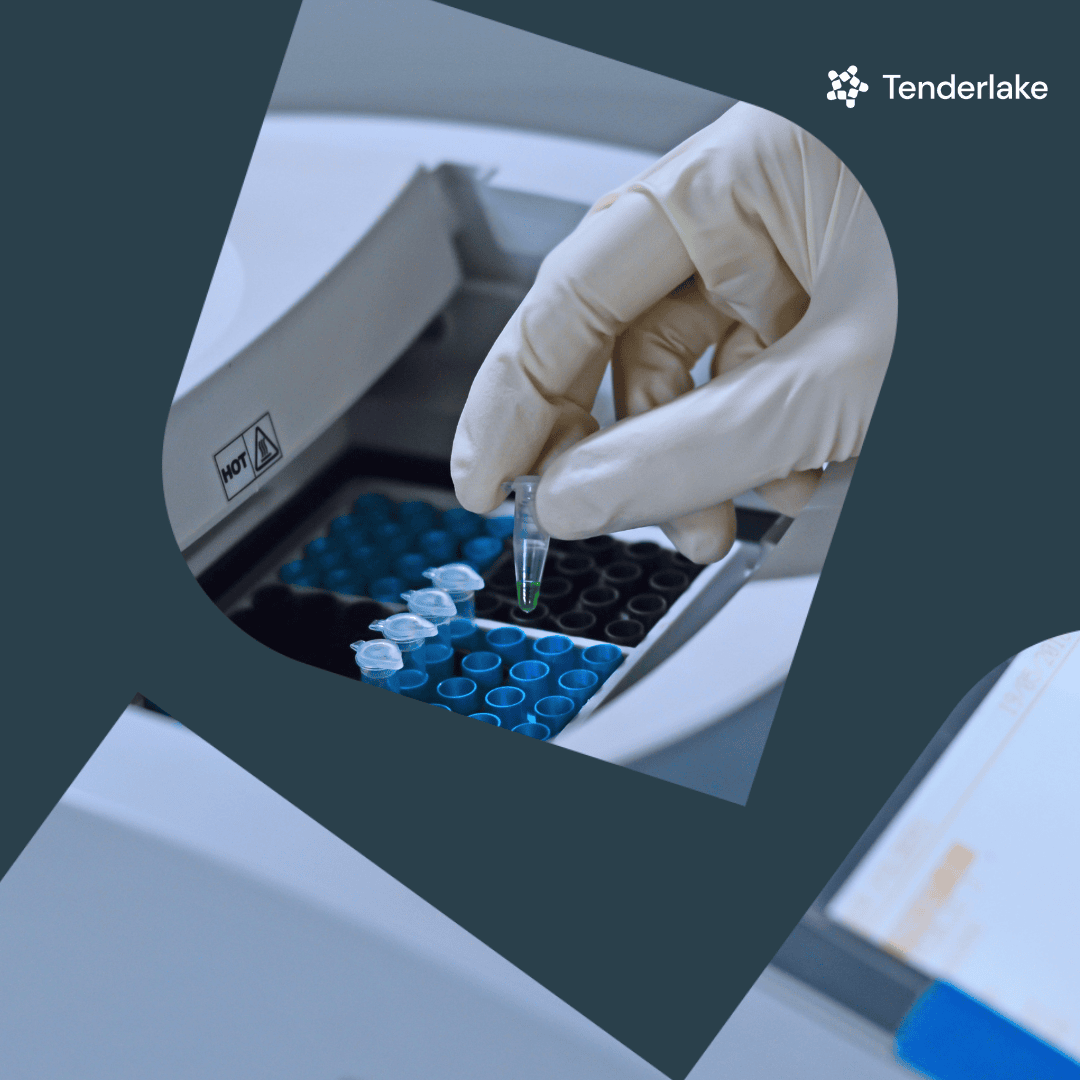
Public procurement opens for real-time gene expression detection systems
A new contract for a real-time gene expression system highlights how public laboratories are upgrading genomic capabilities while tightening sustainability demands.
A new contract for a real-time gene expression system highlights how public laboratories are upgrading genomic capabilities while tightening sustainability demands.
Follow Tenderlake on LinkedIn for concise insights on public-sector tenders and emerging procurement signals.
Warszawski Uniwersytet Medyczny has launched a procurement for a laboratory-based, real-time gene expression detection system with accompanying equipment. The contract notice, published on 16th January 2026, ties the purchase to sustainability principles and explicitly allows equivalent technical solutions, underlining both environmental and competitive priorities in advanced life-science procurement.
The contract covers the delivery of a real-time gene expression detection system, together with specific associated equipment, to a laboratory at Warszawski Uniwersytet Medyczny. While the notice does not spell out the exact configuration, the focus on real-time analysis positions the system as core infrastructure for molecular biology and medical research, where tracking gene activity with precision can inform diagnostics, therapeutic research and teaching.
By specifying a complete system “with equipment”, the university signals a preference for an integrated set-up rather than piecemeal components. That matters for laboratories seeking reliable throughput and reproducible results, especially when systems sit at the intersection of research and clinical work.
The inclusion of sustainability principles in the contract is notable. Laboratory technology procurement has traditionally centred on performance and reliability; here, environmental considerations are written into the purchase. Although the notice does not detail the criteria, the requirement alone will shape how suppliers present their solutions, from energy use and consumables to service life and waste handling.
Alongside sustainability, the university stresses openness to “equivalent technical solutions”. This is a familiar feature of public tenders, but its explicit mention in a high-end genomics context is important. It means the university is not locking the competition to a single specified model, instead setting performance and functional requirements that different platforms can meet.
Other recent laboratory procurements show a similar balance between precise technical demands and room for equivalence. In October 2025, the Wojewódzka Stacja Sanitarno-Epidemiologiczna w Olsztynie sought a broad supply of laboratory equipment, including mass spectrometers, chromatographs and PCR systems. There, the buyer also allowed equivalent solutions and even partial offers, provided bidders could demonstrate compliance with detailed technical sheets.
Similarly, in September 2025 the Wojewódzki Inspektorat Weterynarii w Olsztynie launched a spectrometric system procurement. That notice required bidders to submit technical specifications or equivalent documents to prove compliance, highlighting the paperwork burden that can come with high-spec equipment purchases, even when buyers keep the door open to different brands.
The Warszawski Uniwersytet Medyczny contract fits squarely within this pattern: it aims to secure sophisticated technology while maintaining competition and demonstrable compliance. The added insistence on sustainability suggests an emerging expectation that suppliers of advanced molecular tools will align with environmental and social goals as a matter of course, not as an optional extra.
The gene expression system is arriving into a public sector that has been steadily upgrading its genomic and molecular diagnostics capacity. Through 2025, universities, hospitals and research institutes across Poland – and beyond – issued a series of notices for complementary technologies.
Taken together, these procurements trace a clear arc: public institutions are building full pipelines for genetic and molecular work, from sample preparation and real-time amplification to high-end sequencing, chromatography and data handling. The Warszawski Uniwersytet Medyczny system will sit within this broader ecosystem, focusing specifically on monitoring gene expression in real time.
Another indicator of this shift comes from December 2025, when the Międzynarodowy Instytut Biologii Molekularnej i Komórkowej w Warszawie tendered for biophysical equipment, including a microfluidic system for RNA formulation and a DNA analysis system based on capillary electrophoresis. For Warsaw in particular, that project and the new gene expression system point to a strengthening local cluster in molecular and genomic technologies.
For equipment manufacturers and distributors, the Warszawski Uniwersytet Medyczny notice highlights two overlapping expectations. First, suppliers must meet demanding performance standards in real-time gene expression analysis, integrating seamlessly into existing laboratory workflows. Second, they must be ready to document how their platforms comply with sustainability principles and any technical requirements set out in the specification.
Recent tenders suggest that buyers increasingly look beyond the instrument itself to the surrounding services. In July 2025, Gdański Uniwersytet Medyczny advertised a cellular metabolism analysis system with equipment assembly and training built into the scope. In July 2025, the Instytut Chemii Bioorganicznej Polskiej Akademii Nauk went to market for equipment for purification and analysis of bioactive compounds, again including installation, training and a warranty.
Several genetic diagnostics tenders echo this full-lifecycle approach. The Białostockie Centrum Onkologii im. M. Skłodowskiej-Curie w Białymstoku, for example, coupled its September 2025 genetic diagnostics equipment purchase with installation, setup, commissioning and staff training “as needed”. Suppliers positioning for the Warsaw gene expression system are likely to face questions about similar support, even if the current notice focuses primarily on delivery and sustainability.
For research and clinical teams, the new system should help close gaps in the local capabilities chain. In Rzeszów, for example, the Uniwersytet Rzeszowski is procuring an NGS sequencing system to support preclinical and clinical education, while clinical centres from Szczecin to Zakopane are refreshing both instruments and reagents for molecular diagnostics. The Warsaw gene expression platform will feed into the same trend, offering more nuanced readouts of gene activity to sit alongside sequencing and other analytic outputs.
Once awarded, the real-time gene expression detection system contract will add another piece to a fast-evolving genomic landscape in public laboratories. Observers will be watching whether future notices further intensify the focus on sustainability, extend into even more automated sample handling and analysis, or bring together multi-technology platforms under single procurements. For now, the Warsaw tender confirms that gene expression analysis is moving closer to the centre of publicly funded research and diagnostic infrastructure.
Tenderlake Monitor reads every public sector notice published across the UK, the EU and the EEA, in the language it was published in, and tells you which ones match what your company sells and why. It works from a plain description of your business, not from keywords or CPV codes.
Follow Tenderlake on LinkedIn for concise insights on public-sector tenders and emerging procurement signals.