Environment body opens market engagement on air monitoring station
Early notice seeks supplier input on a new air quality monitoring station and analysers, underscoring rising demand for reliable pollution data.
Early notice seeks supplier input on a new air quality monitoring station and analysers, underscoring rising demand for reliable pollution data.
Follow Tenderlake on LinkedIn for concise insights on public-sector tenders and emerging procurement signals.
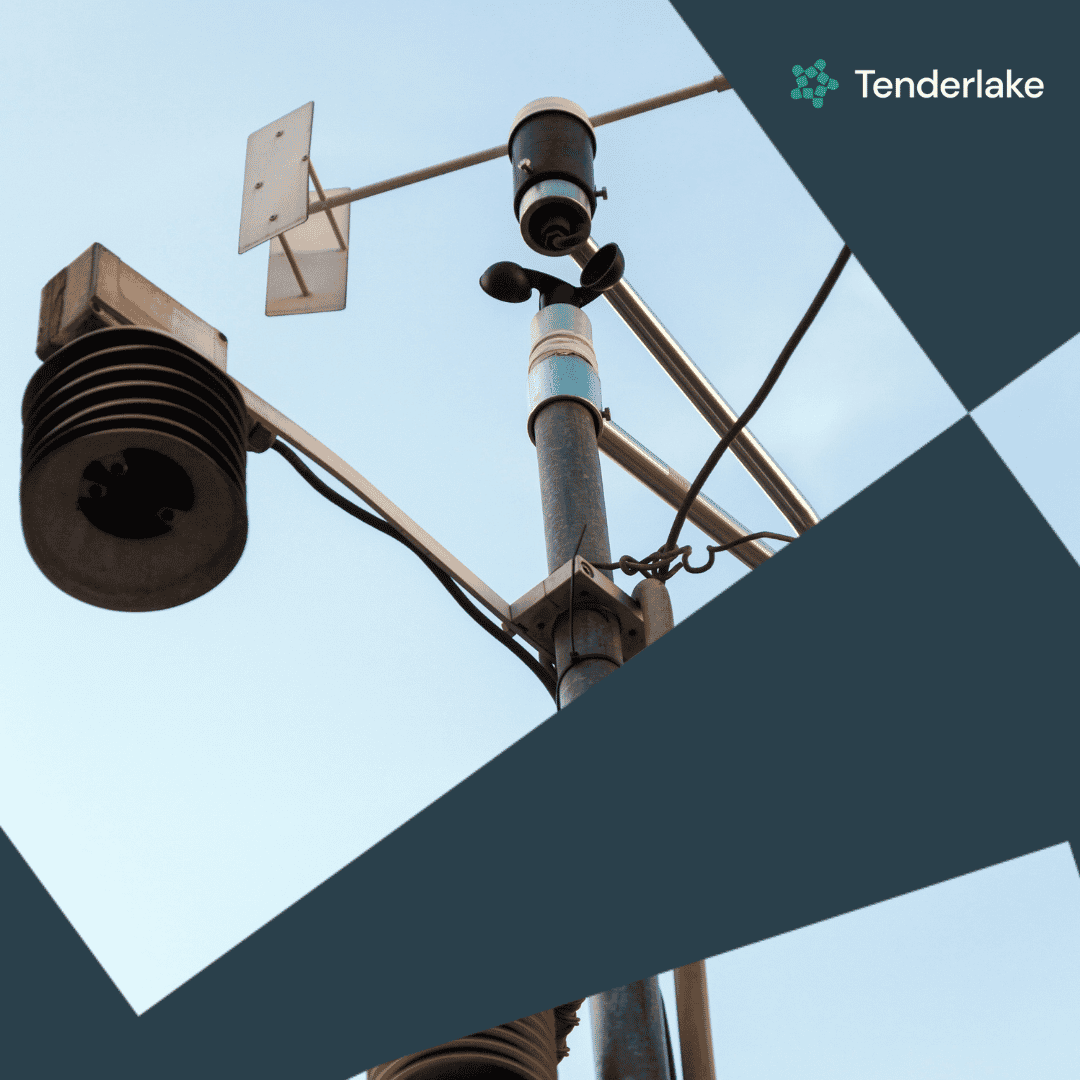
In June 2026, the Secretaría General de la Consejería de Desarrollo Sostenible de la Junta de Comunidades de Castilla-La Mancha issued a prior information notice for Air Quality Monitoring Equipment, signalling plans to buy a new station and ambient analysers for the CLM Air Quality Network in Tarancón and highlighting the growing role of regional authorities in tracking air pollution.
Published on 24th June 2026, the notice sets out a straightforward objective: the supply of an air quality monitoring station and ambient air analysers for the Castilla-La Mancha Air Quality Network, to be located in Tarancón. As a prior information notice rather than a full tender, it does not yet detail specifications, contract value or timescales, but it alerts the market to an upcoming investment in fixed monitoring capacity.
In March 2026, the region’s environmental quality directorate signalled a parallel need on the analytical side, flagging upcoming work on Air Quality Sample Analysis for the Castilla-La Mancha Air Quality Surveillance Network. Taken together, the two notices point to a joined-up effort to strengthen both field measurements and laboratory support.
For Tarancón, the new station will plug directly into this wider regional infrastructure, with data feeding into the CLM network rather than remaining a standalone asset. For suppliers, that network context matters: a single station order can be an entry point into a broader ecosystem that also encompasses calibration, spare parts, data validation and information services, many of which are now being sourced through separate, specialist contracts.
Across Europe, recent procurements show that public buyers increasingly see monitoring not just as hardware, but as a long-term service. In May 2026, National Highways Limited trailed a re-procurement for Air Quality Monitoring Services, covering maintenance and support for a national network measuring nitrogen dioxide and particulate matter concentrations to enhance air quality management.
At city level, the London Borough of Camden is seeking a supplier to run its Air Quality Diffusion Tube Monitoring Programme, including provision, collection and analysis of nitrogen dioxide tubes, with explicit emphasis on data quality and regulatory compliance. In a similar vein, the Environmental Protection Agency plans to appoint an external resource for Air Quality Technical Support, assisting its National Ambient Air Quality Monitoring Unit with laboratory analysis and operational support in line with EU regulations.
Spain’s central administration is also focusing on what happens to the data once collected. A contract for Air Quality Information Management aims to manage and verify information from Spanish ambient air quality networks, ensuring that datasets are kept up to date and made accessible for the Directorate-General for Quality and Environmental Assessment, while the City of Melilla has gone to market for Air Quality Data Services that combine analysis and validation of measurement data with maintenance and calibration of its monitoring stations.
Seen against this backdrop, Castilla-La Mancha’s move to add a station and ambient analysers in Tarancón sits at the start of a wider value chain: from instruments in the field, through specialist laboratories, to central information portals. Rather than rely on a single all-encompassing contract, many authorities now stitch these elements together through distinct procurements, effectively assembling air-quality-monitoring-as-a-service from multiple providers.
Several other regions are following a similar pathway of early market engagement followed by full tenders for network upgrades. In March 2026, the environment ministry in the Region of Murcia flagged plans for Air Quality Network Enhancement, covering the supply and integration of a new fixed station and the adaptation of existing sites; by June 2026, those intentions had matured into a contract notice for the same Air Quality Network Enhancement, signalling concrete investment in both new infrastructure and upgrades to older parts of the system.
Further east, the Valencian administration has gone to market for extensive Equipment for Air Quality Monitoring, including mobile units, low-volume particulate matter collectors, portable particulate matter control devices and atmospheric pollution control stations, all aimed at updating the Valencian Network for Atmospheric Pollution Monitoring and Control. Elsewhere, the Ministry of Environment and Physical Planning is procuring a single Automatic Air Quality Monitoring Station for municipalities that currently lack equipment, coupled with training on its use and maintenance.
National networks are also upgrading their instrumentation. In January 2026, the Education Procurement Service launched a framework for Automatic Particulate Matter Monitoring, covering the supply, delivery, installation, servicing and maintenance of up to thirty-two analysers for a national ambient air monitoring network in compliance with CAFE Directive requirements. The Slovak Hydrometeorological Institute is procuring Instrumentation Equipment for Air Quality to integrate a technological unit for monitoring ambient air pollutants, including analysers and calibration equipment, explicitly to strengthen the National Air Quality Monitoring Network’s compliance with new EU directives and to ensure accurate data processing and public reporting. Regional agencies such as the Commission for Coordination and Regional Development of Lisbon and Vale do Tejo and Belgium’s Institut Scientifique de Service Public are likewise investing in Atmospheric Pollutant Analyzers Acquisition and Air Quality Analyzers Supply respectively, adding equipment for ozone, nitrogen oxides and particulate matter to their fixed networks.
Together with the Castilla-La Mancha investment in Tarancón, these projects show how sub-national and national authorities are gradually thickening their monitoring webs, adding capacity and updating equipment so that networks can track key pollutants such as particulate matter, nitrogen oxides and ozone with greater reliability.
Many of the 2026 procurements link directly to regulatory obligations. Camden’s diffusion tube contract is explicitly framed around ensuring data quality and regulatory compliance. The Education Procurement Service’s analyser framework references compliance with the CAFE Directive, while the Slovak Hydrometeorological Institute’s instrumentation project is designed to align the national network with new EU directives. The Environmental Protection Agency’s call for external technical support likewise emphasises compliance with EU regulations, and the Spanish Directorate-General for Quality and Environmental Assessment expects its information-management contractor to keep datasets from ambient air quality networks verified, current and accessible.
Those regulatory pressures shape not only what equipment is bought, but how monitoring is organised. Buyers are bundling laboratory services, data validation, maintenance and calibration into structured contracts, recognising that reliable, timely data underpins environmental health decisions and public confidence. Better-sited stations, more robust analysers and clearer information flows together mean that authorities can identify pollution hotspots more accurately and demonstrate, through transparent data, whether air quality is improving.
In this context, the Tarancón station will add another node to Castilla-La Mancha’s surveillance network, feeding into reporting systems that are themselves in the midst of digital and regulatory upgrades. The accompanying focus on sample analysis, and the broader trend towards long-term service contracts, suggest that suppliers of both equipment and expertise will have a continuing role in shaping how the region understands its air.
As a prior information notice, the Air Quality Monitoring Equipment announcement offers only a brief description: a station and ambient air analysers for the CLM Air Quality Network in Tarancón. The formal tender will need to spell out technical specifications, monitoring objectives, data-handling requirements and any associated maintenance or support expectations.
Murcia’s progression from an initial prior information notice on network enhancement in March 2026 to a full contract notice in June 2026 shows how quickly programmes can move once objectives are fixed. Suppliers watching Castilla-La Mancha will be alert not only to the hardware requirements in Tarancón, but also to whether separate competitions emerge for longer-term services, as has happened in other regions, as regional and local authorities steadily invest in more granular monitoring, more capable analysers and more structured data services.
Tenderlake Monitor reads every public sector notice published across the UK, the EU and the EEA, in the language it was published in, and tells you which ones match what your company sells and why. It works from a plain description of your business, not from keywords or CPV codes.
Follow Tenderlake on LinkedIn for concise insights on public-sector tenders and emerging procurement signals.