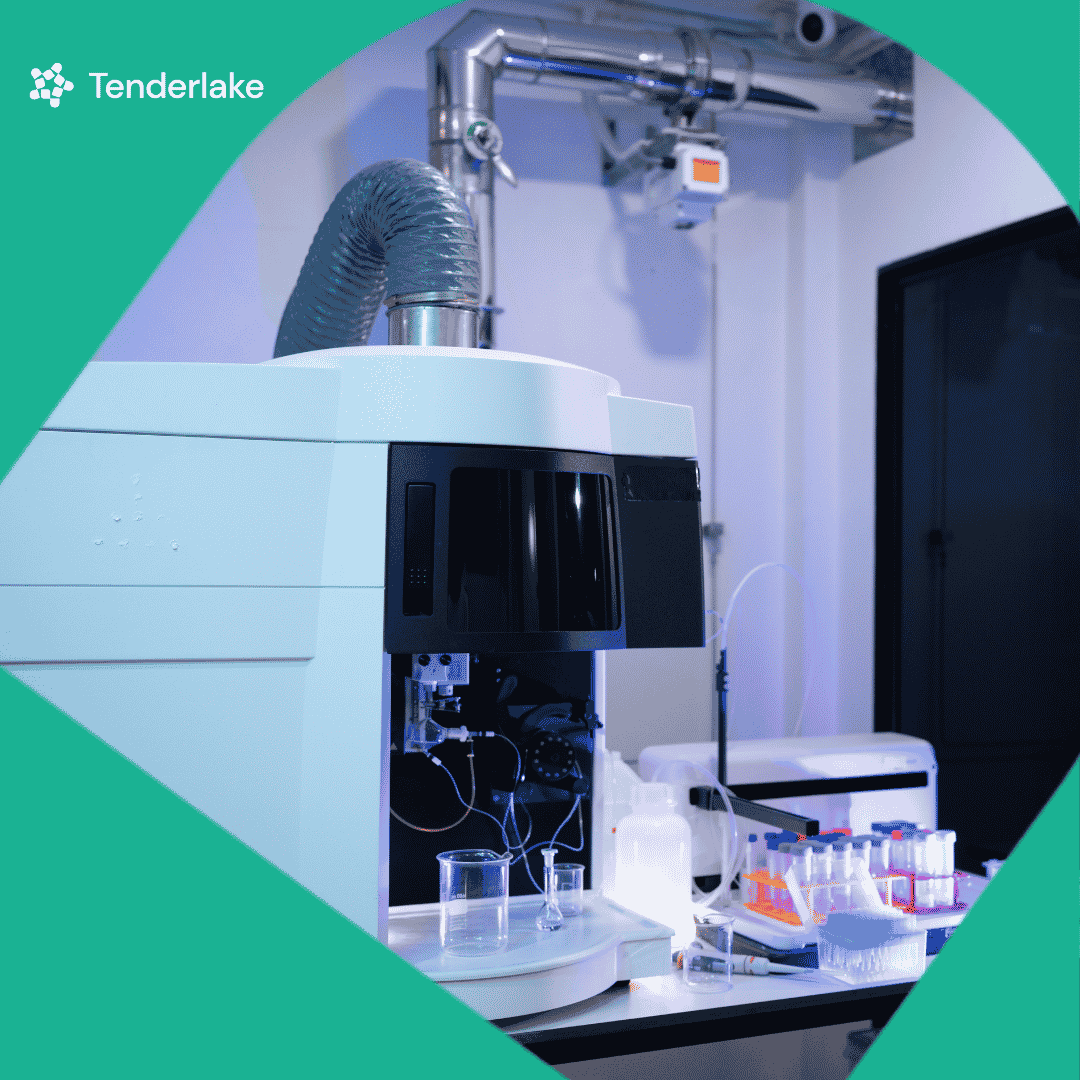
Research institute launches tender for multi-lot lab equipment
A research body is buying lab equipment across 21 lots with European funding, signalling further investment in research infrastructure and suppliers.
A research body is buying lab equipment across 21 lots with European funding, signalling further investment in research infrastructure and suppliers.
Follow Tenderlake on LinkedIn for concise insights on public-sector tenders and emerging procurement signals.
A Romanian research institute has gone to market for a major upgrade of its laboratories, launching a 21-lot purchase of general equipment to bolster research and innovation, backed by European funding.
INSTITUTUL DE CERCETARI PRODUSE AUXILIARE ORGANICE SA has published a general laboratory equipment procurement that covers a broad spread of devices for sample preparation, analysis and storage. The contract is divided into 21 lots, signalling a wide-ranging refresh of the institute’s scientific infrastructure rather than a narrow, single-technology buy.
The notice highlights the role of the new equipment in supporting research and innovation activities. That points to everyday, workhorse instruments needed to move samples efficiently through the research pipeline, from preparation at the bench through to analytical read-out and secure storage. While the technical detail sits in the tender documents, the emphasis on sample preparation, analysis and storage suggests the institute is looking to strengthen every step of its experimental workflow.
The scale of the tender will interest both major manufacturers and smaller niche suppliers. A multi-lot structure often enables different segments of the market to compete for specific categories of equipment, and it allows buyers to tailor purchases to distinct laboratories or research themes. Here, the institute appears to be using procurement as a tool to align its physical infrastructure more closely with its scientific ambitions.
The procurement is explicitly financed from European resources. That places it alongside a growing list of research infrastructure projects where European funding streams are underwriting modernisation of laboratories, often with a strong innovation or skills angle.
In April 2026, the University of Bucharest set out similar aims in its own laboratory equipment procurement, seeking high-performance instruments for lipid and nucleic acid research. That project aims both to advance scientific development and to provide advanced learning opportunities for doctoral candidates and young researchers. Equipment there is not just a research asset but also a teaching and training platform.
European funding is also being used to connect research infrastructure with skills in applied sectors. On 8th April 2026, Universitatea pentru Stiintele Vietii "Ion Ionescu de la Brad" din Iasi published a laboratory equipment supply notice for a project focused on dual education in the food industry, explicitly linking new appliances and lab kit to education in agrifood technologies.
Cross-border development work is drawing on the same pattern. The Czech Development Agency’s laboratory equipment supply for EU4Moldova, published in April 2026, divides analytical and laboratory equipment into seven categories to enhance research capacity in sustainable agriculture. Taken together, these projects show European funds flowing into laboratories that sit at the intersection of research, innovation, skills and regional development.
The institute’s 21-lot tender lands in a busy year for laboratory procurement across Europe. Universities, health agencies and specialist institutes are all refreshing equipment, often via multi-lot contracts that bundle different types of instrument and service.
On 7th April 2026, Universität Heidelberg launched a substantial laboratory equipment procurement to outfit four washing kitchens and four S2 cell culture laboratories. The package spans safety workbenches, incubators, centrifuges, autoclaves, dishwashers, ice machines, cryotechnology and water systems, and includes delivery, installation and operational handover. It illustrates how buyers increasingly treat equipment, commissioning and handover as a single integrated requirement.
A similar approach appears in Szegedi Tudományegyetem’s QC laboratory equipment procurement, published on 10th April 2026. That contract, spread across multiple lots, requires delivery, installation, user training and documentation, with a clear focus on brand new products that meet specified technical requirements. For suppliers, these bundled expectations of equipment plus support are becoming the norm.
Technical universities are also active. Tallinna Tehnikaülikool’s laboratory equipment procurement, published in August 2026, calls for various items for Tallinn University of Technology, including transportation, installation and training, with separate evaluations for multiple lots. Instituto Politécnico da Guarda’s procurement of laboratory equipment from 21st April 2026 similarly groups multimodal plate readers, molecular biology tools and safety equipment into lots.
Regulatory and public health bodies are following suit. The Romanian National Agency for Medicines and Medical Devices has advertised a laboratory equipment supply contract dated 27th August 2026, which includes installation, testing, training and technical support at specified premises. In Poland, the University of Warsaw’s laboratory equipment supply for its Faculty of Biology, published on 7th July 2026, lists a refrigerated centrifuge, UV-Vis spectrophotometer, refrigerated shaker, PCR chamber and real-time PCR analysis system, again within a multi-part procedure.
For suppliers, this landscape means that a single year can bring dozens of overlapping opportunities across research institutes, universities, regulators and development agencies – many with similar expectations around installation, commissioning, training and documentation. The institute’s 21-lot tender sits squarely within this pattern.
The new procurement by INSTITUTUL DE CERCETARI PRODUSE AUXILIARE ORGANICE SA confirms several trends in European laboratory spending:
HCEMM Nonprofit Korlátolt Felelősségű Társaság’s general laboratory equipment procurement from 30th April 2026 illustrates this clearly, specifying autoclaves, centrifuges, microscopes and pipettes, and requiring delivery, installation, functional testing and training. Buyers no longer see instruments in isolation; they commission complete capabilities.
Against that backdrop, the Romanian institute’s plan to acquire a wide set of devices for sample preparation, analysis and storage, funded by European resources, looks like a strategic attempt to future-proof its laboratories. Once awarded, the contract should give the organisation a more robust platform for its research and innovation work, from day-to-day experiments through to more complex projects that depend on reliable, modern equipment.
The key questions now are which suppliers will secure the 21 lots, how the institute balances competition across categories, and how quickly the new equipment can be brought into service. For the wider market, the tender is another indicator that European-backed funding for research infrastructure is translating into concrete orders for laboratory equipment – a trend that shows little sign of slowing.
Tenderlake Monitor reads every public sector notice published across the UK, the EU and the EEA, in the language it was published in, and tells you which ones match what your company sells and why. It works from a plain description of your business, not from keywords or CPV codes.
Follow Tenderlake on LinkedIn for concise insights on public-sector tenders and emerging procurement signals.