Water utility launches tender for static and remote-output meters
Contract seeks suppliers of varied water meters, including remotely readable models, highlighting how utilities are upgrading metering and data systems.
Contract seeks suppliers of varied water meters, including remotely readable models, highlighting how utilities are upgrading metering and data systems.
Follow Tenderlake on LinkedIn for concise insights on public-sector tenders and emerging procurement signals.
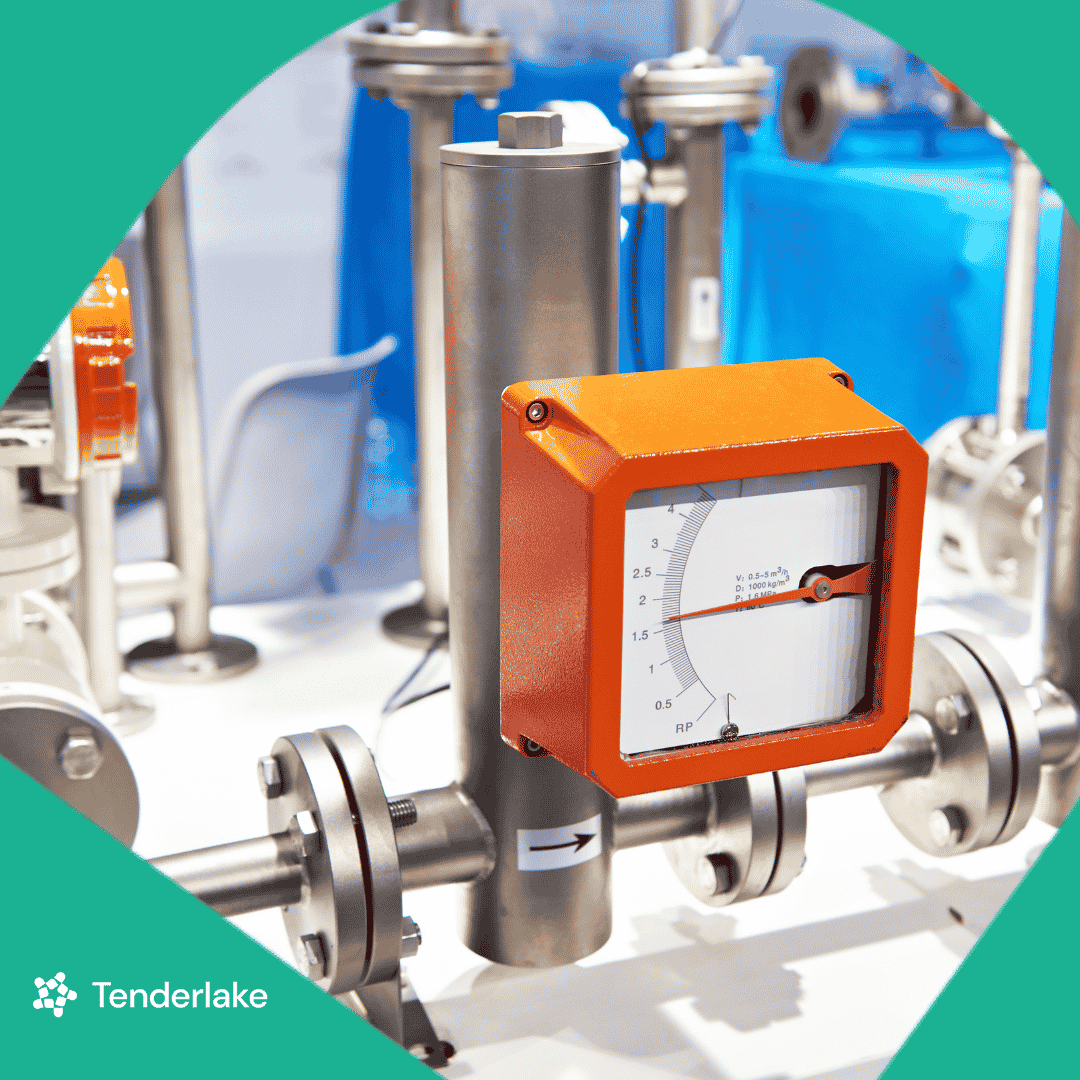
A regional water and sewerage company is seeking suppliers for a mix of static water meters and models with remote output, split into three contract parts. The move illustrates how water utilities are sharpening their specifications as they renew and modernise metering across their networks.
On 11th November 2026, Vodovody a kanalizace Pardubice, a.s. published the Supply of Water Meters contract notice. The company plans to buy various types of water meters, including static models in several sizes and meters with remote output systems. The contract is divided into three distinct parts.
The summary is concise, but it signals a buyer that wants both conventional units and meters that can feed data into remote-reading or data-collection systems. The three-part split points to a more granular approach to demand, instead of treating all meter types as a single commodity lot.
While further technical detail sits in the tender documentation, the outline already aligns with a broader pattern in 2026: water-sector buyers refreshing their meter fleets and adding capabilities for remote reading and data use.
In May 2026, Water Supply and Sewerage EOOD Haskovo set out a clear digital direction in its Water Meters and Remote Reading Components notice. That contract calls for periodic deliveries of various water meters together with components for a remote reading system, making the communications layer as explicit a requirement as the meters themselves.
By June 2026, Wodociągi i Kanalizacja w Opolu sp. z o.o. was looking in a similar direction. Its Supply of Water Meters and Accessories contract seeks a gradual supply of ultrasonic meters DN 15–40 and elements for remote reading of mechanical meters. That combination of newer ultrasonic units and add-on devices for legacy meters shows how some buyers are mixing wholesale replacement with incremental upgrades.
Remote communication features become even more prominent in the Wasserverband Oleftal framework, published in August 2026. Its Supply of Ultrasonic Water Meters notice specifies ultrasonic meters with NB-IoT communication units, data processing software and a central management platform for meter data. Here, the metering hardware, connectivity and analytics platform are treated as a single integrated requirement.
Other utilities are focusing on communication modules as a route to efficiency. In September 2026, Vodosnabdyavane i Kanalizatsiya Dobrich AD issued a Water Meter Supply for V and K Dobrich tender covering various types of water meters and communication modules for remote meter reading, with the explicit goal of enhancing operational efficiency.
Set against these examples, the requirement in Vodovody a kanalizace Pardubice, a.s.’s tender for meters with remote output systems places it squarely within a mainstream move towards remotely readable devices, even where the summary does not yet describe a full smart-metering platform.
The three-part structure in the Supply of Water Meters notice mirrors a wider pattern. Water utilities and related bodies are increasingly segmenting meter procurement into several parts, tasks or framework lots.
In July 2026, Tiszamenti Regionális Vízművek Zártkörűen Működő Részvénytársaság published a three-part Water Meter Replacement project. The work involves replacing expired residential meters across three main directorates, with estimated quantities for each part and clear references to an overarching framework agreement and regulatory requirements. Geography, governance and regulation all help drive the lot structure.
Also in July 2026, Rejonowe Przedsiębiorstwo Wodociągów i Kanalizacji w Tychach Spółka Akcyjna launched Water Meters Supply for RPWiK, divided into three tasks focusing on different types of meters with integrated technology. Running one procedure but splitting out the tasks lets the buyer tailor specifications and evaluation to distinct meter categories.
In May 2026, Water Supply and Sewerage EOOD Haskovo combined periodic delivery of meters with components for a remote reading system in a single Water Meters and Remote Reading Components notice. By July 2026, another company, Vodosnabdyavane i Kanalizatsiya OOD, had structured its Supply of Water Meters procurement into two lots: one for new drinking water meters and another for components to enable remote reading on existing meters. The distinction between new installations and retrofit work is written directly into the lotting.
A broader framework approach appears in October 2026 with Severomoravské vodovody a kanalizace Ostrava a.s. Its Water Meters Supply Agreement sets up a framework for various meter types, including static and residential wet-run models, as well as capsules and components, all required to comply with health regulations. Frameworks of this kind give buyers flexibility over timing and volumes while locking in technical and compliance standards.
Multi-part structures are not limited to water meters. The Instytut Meteorologii i Gospodarki Wodnej – Państwowy Instytut Badawczy divided its September 2026 Supply of Sensors for IMGW-PIB into ten distinct parts, explicitly allowing partial submissions for different sensors and measuring instruments. For suppliers, such designs create space to bid only for those segments where they are strongest.
Recent notices also show meters being procured as one element in larger infrastructure and data projects, rather than as stand-alone items.
In June 2026, Svazek vodovodů a kanalizací Ivančice launched a Smart Metering Water Supply tender for 7,501 mechanical water meters with defined technical parameters, including features for remote reading. The aim is clearly framed around installing smart metering on a water network, even though the devices themselves are mechanical.
A month later, Statutární město Havířov followed with a Supply of Water Meter Modules contract. Rather than replacing meters wholesale, the city is buying new remotely readable modules for existing meters, together with training and technical support. The procurement links hardware upgrades with building internal skills to use and maintain the new technology.
Local authorities in several municipalities are tying meter projects to wider network improvements. Gmina Lipno’s Water Supply Infrastructure Project, published in October 2026, combines meter replacement with a new geographic information system (GIS) and upgrades to hydrants and valves. In the same month, Gmina Cegłów’s Water Supply System Modernization notice links meter replacement to network modernisation and the roll-out of an intelligent management system.
Gmina Dziadkowice, in a Water Infrastructure Improvement project from September 2026, is procuring hydrants alongside remote water meter systems, again treating consumption measurement and core distribution hardware as part of the same upgrade. Gmina Wiskitki’s October 2026 Water Supply Monitoring System contract goes further, combining a remote meter reading system with equipment for detecting failures and uncontrolled leaks, plus long-term maintenance.
Some projects blend metering with wider public-realm changes. Gmina Szumowo’s October 2026 Water Supply System Modernization includes the delivery and installation of water meters, sluice valves and drinking fountains, as well as tree planting. Here, the same contract covers both hidden network components and visible amenities.
Others are separating devices from services. Serviços Intermunicipalizados de Água e Saneamento dos Municípios de Oeiras e Amadora, for example, published a Water Meter Reading Services notice in August 2026 for 2027 readings under a continuous supply regime. Hardware supply is handled separately, as seen in the Supply of Water Meters contract published by Águas de Gaia, EM, SA in October 2026.
Across these 2026 notices, metering is becoming both more specialised and more connected. Specialised, because buyers are breaking demand into parts that distinguish new meters, retrofit modules, communication equipment and services. Connected, because the meters are increasingly expected to link to remote-reading platforms, intelligent management systems and leak-detection tools.
Within this context, Vodovody a kanalizace Pardubice, a.s.’s three-part Supply of Water Meters contract from November 2026 looks less like a simple replenishment order and more like one step in a broader shift towards data-ready assets. Even a brief specification — static meters in different sizes, plus models with remote output — will influence how easily the utility can connect future remote-reading or monitoring solutions.
For manufacturers, technology providers and service firms, the published material points to a metering market that spans mechanical engineering, communications and software. The run of tenders in 2026 suggests utilities and municipalities will continue refining both technical requirements and contract structures as they develop their own route towards more remote, integrated meter fleets.
Tenderlake Monitor reads every public sector notice published across the UK, the EU and the EEA, in the language it was published in, and tells you which ones match what your company sells and why. It works from a plain description of your business, not from keywords or CPV codes.
Follow Tenderlake on LinkedIn for concise insights on public-sector tenders and emerging procurement signals.