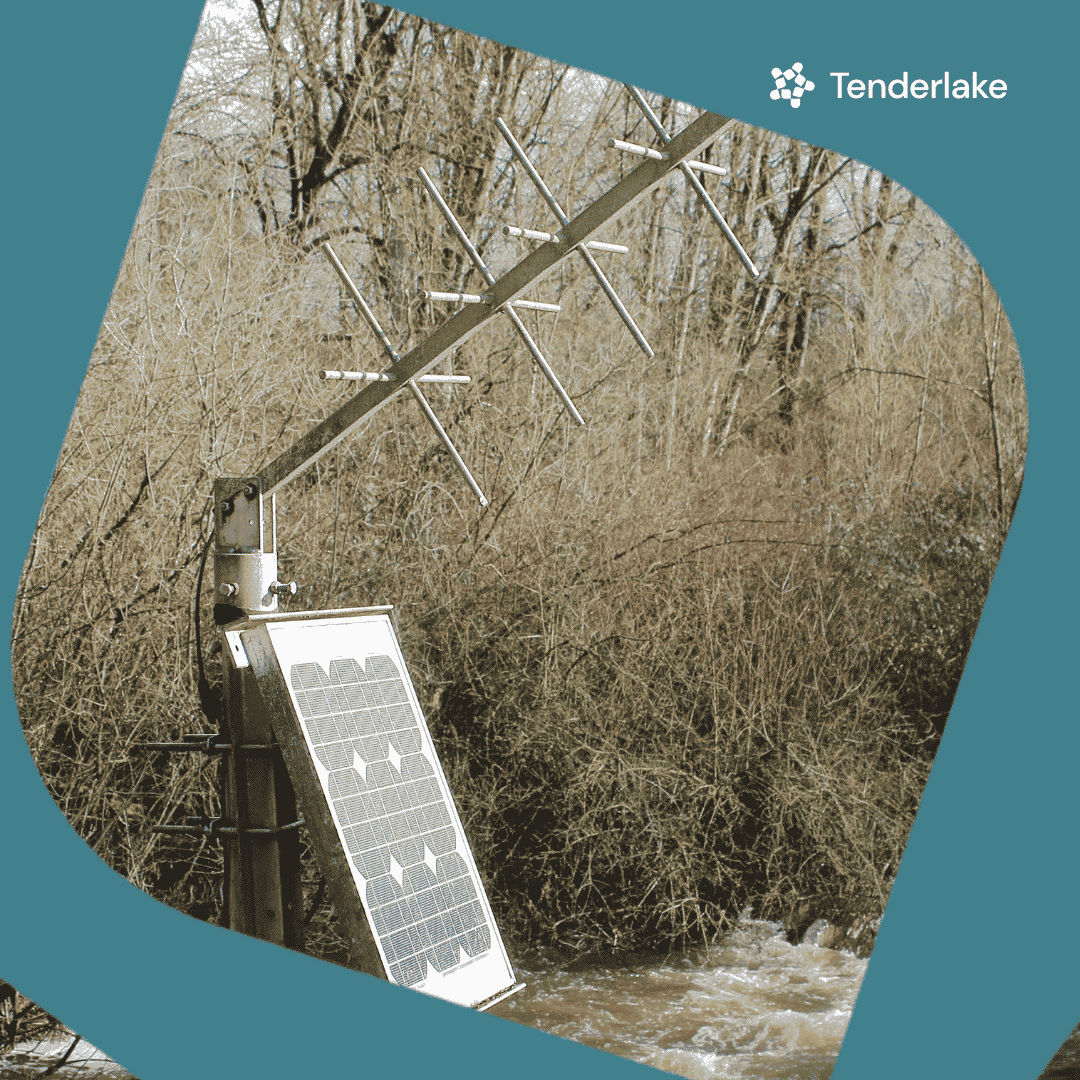
Environment body opens market engagement on river flow instruments
A new market engagement on hydroacoustic river flow tools signals rising demand for data-rich flood risk, climate resilience and compliance monitoring.
A new market engagement on hydroacoustic river flow tools signals rising demand for data-rich flood risk, climate resilience and compliance monitoring.
Follow Tenderlake on LinkedIn for concise insights on public-sector tenders and emerging procurement signals.
The Environment Agency has opened an early market engagement to set up commercial agreements for hydroacoustic river flow instruments, aiming to strengthen flood risk management, climate resilience and regulatory compliance through better discharge monitoring.
Published on 30th September 2026, the Prior Information Notice titled Hydroacoustic River Flow Instrumentation signals the agency's intent to work with suppliers on specialist equipment that can measure water discharge. The notice sets out a clear link between this instrumentation and the agency’s wider responsibilities for flood risk management, climate resilience and regulatory compliance.
Rather than launching a full competition at this stage, the agency is inviting expressions of interest from potential suppliers. That approach gives the market an early indication of upcoming demand and opens space for dialogue on technology options before detailed specifications and pricing structures are fixed.
The notice focuses specifically on hydroacoustic instruments for monitoring water discharge in rivers. While it does not list particular technologies, similar procurements elsewhere point to strong interest in acoustic and Doppler-based current profilers for river flow measurement.
In May 2026, the National Hydrological Service under the Department of the Environment (ECCC) launched a Prior Information Notice for Doppler Acoustic Current Profilers to measure river flow. In July 2026, the Lithuanian Hydrometeorological Service, working through the national environment ministry, went to market for hydrological equipment that includes mobile rafts and flow measurement devices using the acoustic Doppler principle. Together these notices underline a shared move towards hydroacoustic tools for quantifying discharge.
The Environment Agency presents discharge monitoring as a foundation for three interconnected aims: flood risk management, climate resilience and regulatory compliance. Accurate measurements of how much water is moving through a river underpin decisions across these areas, from day‑to‑day operations to longer-term planning.
Elsewhere, recent procurements echo this emphasis on risk and resilience. In September 2026, Valenciana d'Estrategies i Recursos per a la Sostenibilitat Ambiental issued a contract notice for hydrological monitoring stations providing real-time measurements of water levels and flow, explicitly aimed at flood management and decision support. In May 2026, REGIA AUTONOMA "ADMINISTRATIA FLUVIALA A DUNARII DE JOS" GALATI went to tender for equipment to rehabilitate and extend its hydrometric station network to maintain navigation on the Danube.
These examples suggest that improved river flow data is being treated not as a narrow technical upgrade but as infrastructure that supports safety, transport and environmental regulation. The Environment Agency's focus on commercial agreements for discharge monitoring equipment sits squarely within that broader pattern.
Several recent tenders move beyond single instruments to full monitoring networks. In April 2026, Agencija Republike Slovenije za Okolje sought bids for a mix of hydrometric equipment, including acoustic Doppler flow meters, point meters, small boats, electric drives, portable winches, internal cable connections and Bluetooth kits. By August 2026, the same ministry had issued another procurement to modernise the wider hydrological and meteorological measuring network with new water level and velocity meters, meteorological instruments, radiation and precipitation monitoring and web cameras.
Also in May 2026, Riigi Tugiteenuste Keskus in Estonia published a notice to buy a range of meteorological and hydrological measuring devices, from sensors and elevation marks to profiling buoy stations and radar stations for water level and flow measurement. In August 2026, the Slovenský hydrometeorologický ústav sought automatic instruments for continuous monitoring of groundwater and surface water, including rain gauges and cameras with online measurement capabilities and dedicated software.
Service-based contracts are emerging alongside equipment purchases. In July 2026, Waterways Ireland established a framework for servicing, maintenance and web-hosting of its hydrometric measurement network. In August 2026, Wasserverband Oleftal launched a framework agreement for ultrasonic water meters with NB‑IoT communication units and data processing software, alongside a central management platform for meter data.
Together with the Environment Agency's plans, these projects point towards a monitoring landscape built around automated measurements, connectivity and software platforms rather than occasional standalone readings. For suppliers, the expectation is increasingly that instruments must fit into larger systems and data architectures, not operate in isolation.
There is also a noticeable emphasis on training and long-term reliability in recent hydrometric tenders. In September 2026, the Český hydrometeorologický ústav sought hydrometric instrumentation and related devices with equipment delivery, documentation, operator training and at least 24 months of warranty service, funded by the European Union. In August 2026, Service public de wallonie tendered maintenance and control services for hydrological measurement sections, including gauging, surveys and improvements to measuring stations.
In July 2026, the Flemish government launched a framework agreement for flow meters to support operational flow measurements at its Hydrological Information Center, emphasising continuous monitoring and high-quality data for effective water management. In September 2026, research organisation DST e.V. set out to procure a hydrographic measurement system with a multibeam echo sounder and an unmanned survey vehicle, including delivery, commissioning and training.
Seen alongside these examples, the Environment Agency's intention to establish commercial agreements for hydroacoustic river flow instruments looks less like a one-off purchase and more like a step towards long-term, system-wide capabilities. Buyers are not just acquiring devices; they are seeking assurance on integration, servicing, training and warranty support so that measurement infrastructure can deliver consistent results over many years.
Because the Environment Agency is at a Prior Information Notice stage and is inviting expressions of interest, suppliers still have scope to help shape the eventual specification. Early engagement of this kind allows potential bidders to highlight different hydroacoustic approaches, deployment models and support packages before commercial terms are finalised.
The notice makes clear that flood risk management, climate resilience and regulatory compliance are the core policy drivers. Across comparable procurements, buyers highlight continuous monitoring, dependable data and long service lives as priorities. Suppliers responding to the Environment Agency's engagement may therefore want to explain how their hydroacoustic instruments support these outcomes and connect into wider hydrometric networks.
The Environment Agency has not yet set out volumes, detailed technical standards or contract structures for its hydroacoustic river flow agreements. The key question now is whether this Prior Information Notice will lead to a formal procurement notice that reveals the scale of investment and the type of commercial model the agency prefers.
What is already clear from this and other recent notices is that hydroacoustic and hydrometric technology is moving closer to the centre of how authorities manage water. For suppliers of river flow instrumentation, the Environment Agency's market engagement is likely to be seen as one of several notable opportunities emerging across regulation, flood risk management and climate resilience work.
Tenderlake Monitor reads every public sector notice published across the UK, the EU and the EEA, in the language it was published in, and tells you which ones match what your company sells and why. It works from a plain description of your business, not from keywords or CPV codes.
Follow Tenderlake on LinkedIn for concise insights on public-sector tenders and emerging procurement signals.