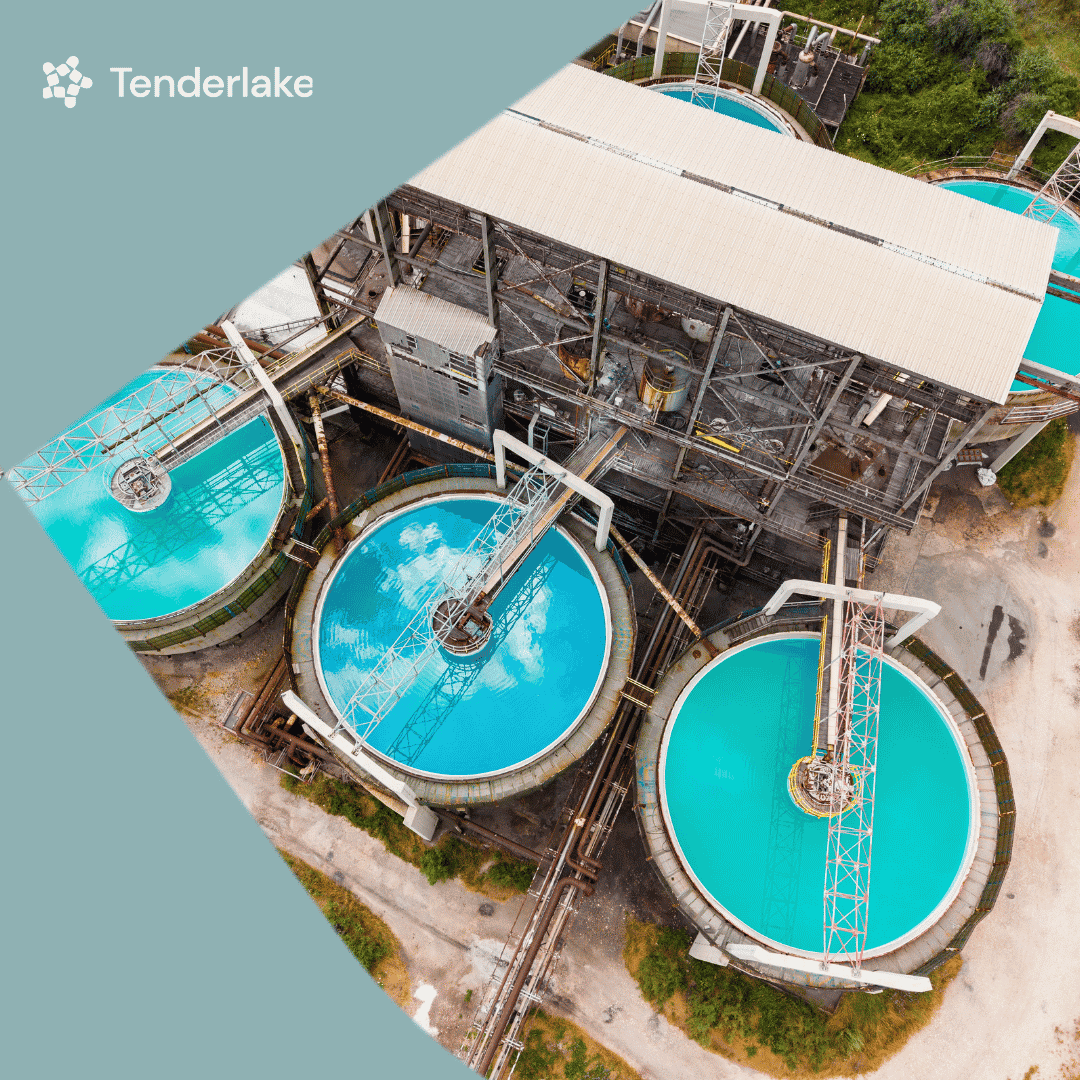
Water utility launches tender for treatment plant modernisation
Major upgrade to a key water treatment station aims to improve supply safety, reliability and energy efficiency, signalling wider investment in network resilience.
Major upgrade to a key water treatment station aims to improve supply safety, reliability and energy efficiency, signalling wider investment in network resilience.
Follow Tenderlake on LinkedIn for concise insights on public-sector tenders and emerging procurement signals.
A municipal water and sewerage company in Kalisz has gone to market for the comprehensive modernisation of its Lis Water Treatment Station. The programme is framed around three outcomes: safer drinking water, more reliable processes and better energy performance, signalling how water utilities are reshaping core assets and supporting infrastructure.
On 13th November 2026, Przedsiębiorstwo Wodociągów i Kanalizacji z siedzibą w Kaliszu published a contract notice for the Modernization of Water Treatment Station. The notice describes a project of “comprehensive upgrades” to the Lis Water Treatment Station in Kalisz. The works are intended to enhance water supply safety, strengthen the reliability of treatment processes and improve the station’s energy efficiency through a mix of construction and technological improvements.
The description points to a wide scope that will blend civil works with process engineering. While the notice summarises the scheme in broad terms, the emphasis on both construction and technology suggests attention to structures, process lines and control equipment, rather than a narrow repair job. For residents, the benefits are framed in direct terms: safer water, fewer disruptions and a treatment plant that uses less energy to deliver the same service.
The November contract notice sits alongside an earlier tender from the same utility. In October 2026, Przedsiębiorstwo Wodociągów i Kanalizacji Spółka z o.o. z/s w Kaliszu issued a notice for LIS Water Treatment Station Modernization, which also set out goals of improved water supply safety, process reliability and energy efficiency.
Taken together, the two notices confirm that Lis is a priority asset for the Kalisz utility. The focus in both is on “comprehensive modernization” rather than piecemeal work, signalling an intention to bring the station up to current technical and operational expectations in a single programme.
The Lis project is part of a dense run of 2026 tenders from water companies and municipalities targeting treatment plants, pumping stations and water networks. These schemes vary in scale but share a common direction: upgrading core assets to meet current health, environmental and operational standards.
Together, these projects illustrate how utilities are pairing traditional construction tasks with process upgrades and new capacity. The Lis scheme in Kalisz fits that pattern, even though the exact works package is summarised only as construction and technological improvements.
Several 2026 notices extend modernisation out from treatment plants into water networks, intakes and control infrastructure. The focus is on end-to-end system performance as much as on single assets.
This context shows that the Lis station tender is one of several projects where treatment assets, raw water intakes, pumping facilities and distribution networks are being tackled in parallel, often through bundled contracts.
The Kalisz notice puts energy efficiency alongside safety and reliability as a core objective for the Lis station. That mirrors a wider push in 2026 procurements to cut energy use and tap on-site generation.
The Olesno and Kucoby scheme explicitly aims to “enhance operational efficiency, meet health regulations, and integrate renewable energy solutions” at its treatment and pumping stations. Gmina Łubnice’s October 2026 notice for Water Supply Infrastructure Modernization also mentions photovoltaic installation alongside works on the water treatment plant, deep wells, network nodes and hydrants.
In August 2026, Gmina Andrzejewo went further, issuing a contract notice for Water Supply System Modernization that combines modernisation of water intake, treatment and supply with installation of monitoring devices, software and photovoltaic systems across several plants.
For suppliers, these notices underline that energy questions now sit at the heart of water treatment investment, rather than being treated as add-ons.
Digital control and monitoring are another consistent thread. The Chełm central control room project brings together new buildings, modernised structures and system installations to give operators a single point of oversight for water and sewerage assets.
Telemetry and smart metering are appearing in network projects. The Hrubieszów wastewater pumping station modernisation, advertised by Przedsiębiorstwo Gospodarki Komunalnej i Mieszkaniowej Sp. z o.o. in October 2026, includes electrical installations and telemetry and control systems. Gmina Szumowo’s October 2026 tender for Water Supply System Modernization covers the delivery and installation of water meters, sluice valves and drinking fountains.
Some buyers are targeting cyber security directly. On 6th November 2026, Przedsiębiorstwo Wodno-Kanalizacyjne Wołów Spółka z o. o. published a notice for Cyber Resilience Improvement for Water Company, seeking IT equipment, software and training to strengthen cyber resilience and operational continuity.
The Lis station modernisation does not spell out its control philosophy, but its focus on technological improvements places it within this shift towards more instrumented, data-rich plants and networks.
Resilience in a broader sense also features in the 2026 pipeline. Several tenders are framed around recovering from environmental events or adapting to changing conditions.
"Wodociagi Gminy Kłodzko" sp. z o.o. is procuring Reconstruction of Water and Sewage Infrastructure damaged by floods, including modernisation of a wastewater treatment plant, water treatment stations and sewage pumping stations, with explicit emphasis on environmental compliance and contractor qualifications.
In Bukowno, Przedsiębiorstwo Wodociągów i Kanalizacji Spółka z ograniczoną odpowiedzialnością has advertised construction works for Wastewater Treatment Plant Modernization, aimed at addressing technical deficiencies and adapting the plant to new groundwater conditions.
Gmina Podgórzyn’s November 2026 project for Wastewater Treatment Plant Expansion in Marczyce, with a new facility sized at 12,500 RLM while keeping the existing plant in operation during the transition, highlights the need to build extra capacity without service interruptions.
Against this backdrop, the Kalisz Lis station upgrade can be seen as part of a resilience agenda: raising safety and reliability at a key treatment asset so that the wider system can handle future demands and shocks more effectively.
Across these notices, buyers are asking for more than straightforward construction. Many tenders combine design documentation, building works, installation of mechanical, electrical and control systems, and sometimes investor supervision or training. Gmina Iwanowice’s October 2026 notice for Sewerage Facility Modernization is a clear example, requiring comprehensive design documentation, construction works and the necessary administrative approvals.
Other buyers, such as Gmina Łubnice, are procuring investor supervision for complex infrastructure schemes, while projects like the Andrzejewo system modernisation and the Wołów cyber resilience programme bring software, monitoring devices and IT equipment into scope. Several tenders, including those in Gliwice, Hrubieszów, Kłodzko and Rzeszów, place strong emphasis on specific contractor qualifications and experience.
The Lis Water Treatment Station contract in Kalisz lands in a market where suppliers with integrated civil, mechanical, electrical, automation and IT capabilities are in demand. Its explicit goals of safety, reliability and energy efficiency align closely with themes running through water and wastewater procurements during 2026.
The Lis station modernisation will be one to follow as utilities continue to renew ageing treatment assets. With multiple projects underway on plants, networks, pumping stations and control systems, the volume of 2026 notices suggests that modernisation of water and wastewater infrastructure will remain a central theme for contracting authorities in the near term.
Tenderlake Monitor reads every public sector notice published across the UK, the EU and the EEA, in the language it was published in, and tells you which ones match what your company sells and why. It works from a plain description of your business, not from keywords or CPV codes.
Follow Tenderlake on LinkedIn for concise insights on public-sector tenders and emerging procurement signals.