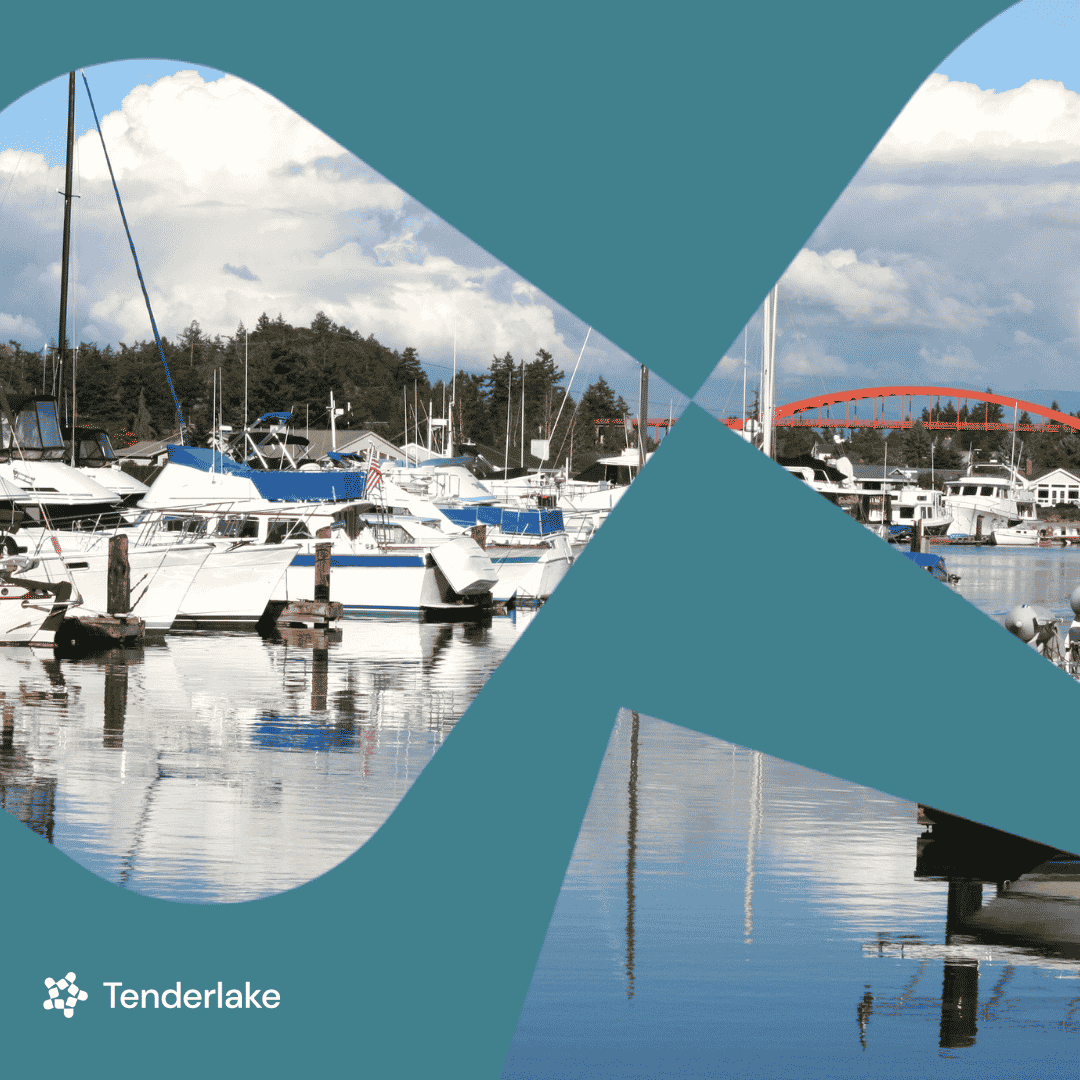
Local authority opens market engagement on marina branding project
A local authority is seeking market insight on creating a new brand and digital presence for a marina scheme, highlighting the role of marketing in place-making.
A local authority is seeking market insight on creating a new brand and digital presence for a marina scheme, highlighting the role of marketing in place-making.
Follow Tenderlake on LinkedIn for concise insights on public-sector tenders and emerging procurement signals.
A coastal council is inviting early input from brand and digital specialists on how to position a new marina project, underlining the importance of identity and marketing in turning infrastructure into a visitor destination.
On 21st July 2026, Dumfries and Galloway Council issued a pre-procurement notice for the Stranraer Marina brand development and digital presence commission. The council is seeking experienced suppliers to create a brand and digital presence for the Stranraer Marina Project, with a brief focused on enhancing its identity and supporting marketing efforts.
The notice is structured as a PreProcurement (UK-LV) exercise, signalling that the council is sounding out the market before launching any full tender. It points to a combined need for branding and digital capability, rather than commissioning these elements in isolation.
By putting identity and marketing at the forefront, the council is treating the marina not only as an infrastructure scheme but as a place that needs a clear proposition for visitors, residents and investors. The work could shape how the project is perceived for years to come, from visitor communications to how the wider waterfront offer is presented.
The Stranraer commission sits within a wider programme of waterfront investment across the UK, where authorities are coupling physical works with efforts to reposition harbours and marinas as destinations.
In April 2026, Ards and North Down Borough Council went to market for an integrated consultancy team for the redevelopment of Bangor Marina and Harbour Wetside Facilities. That Bangor Marina redevelopment aims to enhance Bangor Waterfront and establish it as a “premier destination”, making explicit the link between harbour upgrades and visitor appeal.
Likewise, in July 2026 Argyll and Bute Council procured works to demolish an existing sailing club and construct a new seasports facility. The seasports facility project is framed around enhancing local water-based activities, supporting community use and promoting sustainable economic growth.
Beyond marinas, other waterfront areas are being repositioned as mixed-use quarters. In July 2026, Somerset Council set out its ambition to revitalise Bridgwater Docks by developing a new residential, leisure and tourism quarter. The Bridgwater Docks regeneration scheme is explicitly intended to enhance community connectivity and stimulate local business opportunities.
Alongside these destination-led schemes, harbour authorities are investing in the basics that keep marine assets functioning. In May 2026, Angus Council tendered for the replacement of dock gates at Arbroath Harbour, noting that the existing gates had reached the end of their service life and that temporary works would be needed to maintain water levels in the marina.
In June 2026, Orkney Islands Council (Harbour Authority) sought capital dredging and bathymetric surveys for the Stromness approach channel and Sutherland Pier berthing area, ensuring access for vessels. A few weeks earlier, Aberdeenshire Council had gone to market for concrete repairs at Macduff Harbour’s fishmarket pier, with an emphasis on sustainable practices and community benefits.
Taken together, these notices show a continuum: from heavy marine engineering through to visitor facilities and, in Stranraer’s case, the brand and digital layer that helps audiences understand and choose a destination.
The Stranraer Marina commission’s focus on “enhancing identity” places it firmly in the emerging field of place-branding, where councils invest in narrative, interpretation and digital tools to shape how people experience a location.
Some authorities are starting with the experience on the ground. In March 2026, Inverclyde Council launched pre-procurement for redesign and heritage interpretation services at the Greenock Cut Visitor Centre. That exercise is about rethinking both the physical space and how its heritage is told.
In February 2026, the Museum of Scottish Lighthouses procured works to create a new visitor exhibition area. The exhibition upgrade project covers structural updates and installation of display features, illustrating how even relatively small sites are refreshing their offer to stay relevant to visitors.
Wayfinding and on-site information are another part of the picture. In June 2026, Renfrewshire Council began pre-procurement for the creation and installation of wayfinding signage at Paisley Museum, using designs from international designers to improve navigation across the campus.
Digital channels are increasingly central. In April 2026, Tweed Forum tendered for a partner to design, develop, maintain and host a new website. The web development contract aims to showcase the organisation’s environmental work in the River Tweed catchment, using online storytelling to connect people with a landscape.
In July 2026, Moray Council opened pre-procurement for a Rural Tourism Infrastructure project focused on creating a “smart and informed destination”. That language suggests an emphasis on digital information, data and visitor guidance as core infrastructure, not add-ons.
Some places are going further upstream, investing in understanding perceptions before committing to a narrative. In June 2026, Derry City and Strabane District Council began preliminary market engagement for a Place Based Perception Research and Strategic Alignment Study. The goal is to gather insights and test feasibility before designing a procurement strategy.
Engagement with communities is another recurring strand. In May 2026, Denbighshire County Council sought support for community and stakeholder engagement to develop its next Corporate Plan and a long-term vision for 2050. That same month, North East Scotland Preservation Trust commissioned a consultant to produce and implement a Community Engagement and Activity Plan for the Marble Creative Hub Project, which involves restoring historic buildings in Portsoy.
Within this landscape, the Stranraer Marina brand and digital commission looks like part of a broader shift: authorities see place identity, story and user journey – both on site and online – as integral to tourism infrastructure.
For potential suppliers, the Stranraer notice is clear on one point: Dumfries and Galloway Council wants “experienced” partners who can handle both brand creation and digital presence for the marina project. That combination suggests an appetite for integrated thinking across visual identity, messaging and online channels, rather than a narrow design-only commission.
Although the notice does not spell out detailed deliverables, tenders of this type typically require a blend of insight work, creative development and practical digital execution. Suppliers active in tourism, cultural or place-based projects may see the commission as aligning with their existing portfolios, particularly if they can demonstrate how branding and digital tools have supported economic and visitor outcomes elsewhere.
As a pre-procurement exercise, the current notice is about shaping the eventual brief and gauging market capacity. If the council moves ahead to a full tender, the scope, budget and evaluation criteria will provide a clearer view of how central marketing and digital engagement are to the overall marina investment.
Across the country, recent procurements show that councils now treat branding, interpretation and digital infrastructure as core components of tourism and waterfront schemes, alongside engineering works and building projects. How Dumfries and Galloway Council translates that philosophy into a concrete commission for Stranraer Marina will be one to watch for agencies and local businesses alike.
Tenderlake Monitor reads every public sector notice published across the UK, the EU and the EEA, in the language it was published in, and tells you which ones match what your company sells and why. It works from a plain description of your business, not from keywords or CPV codes.
Follow Tenderlake on LinkedIn for concise insights on public-sector tenders and emerging procurement signals.