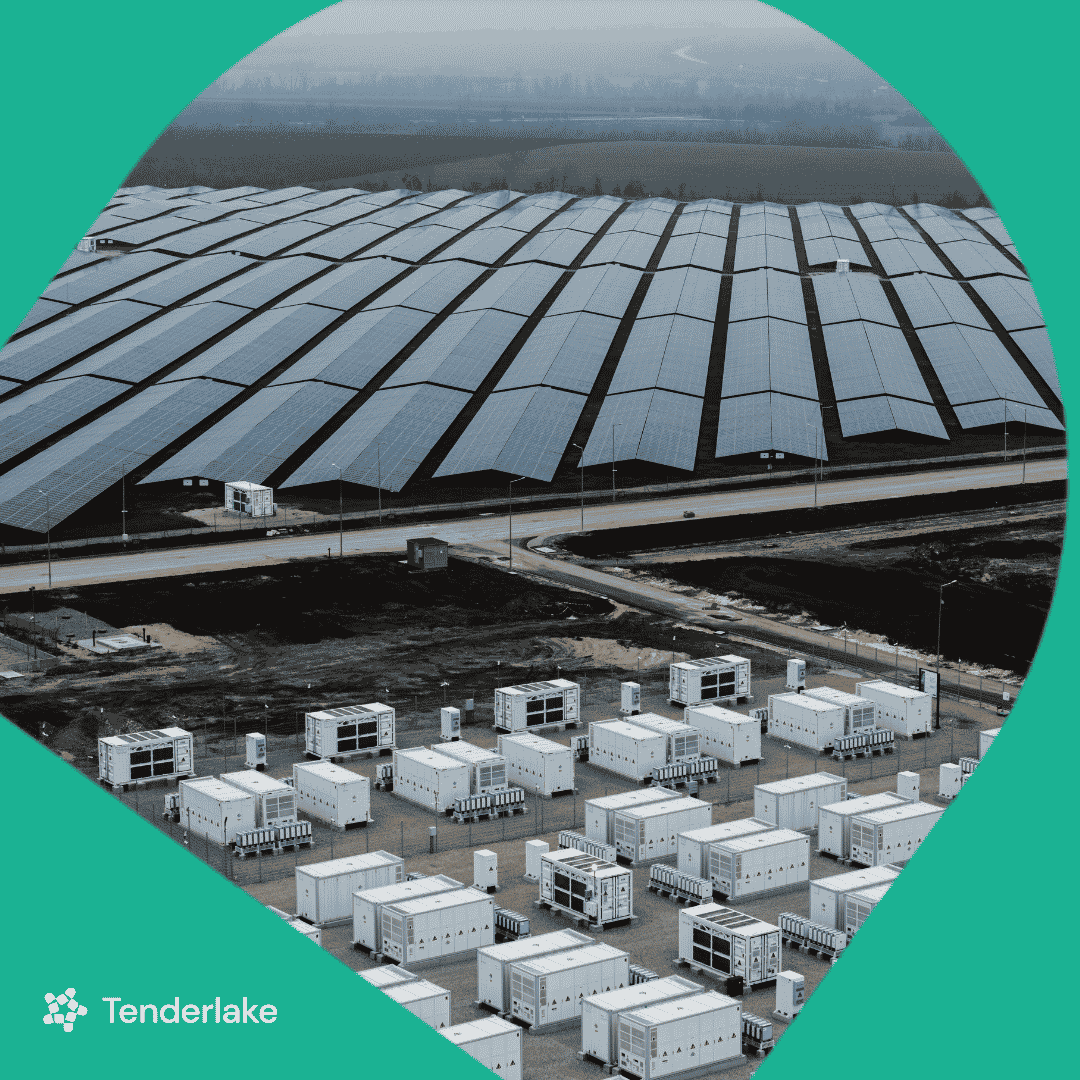
Energy company launches tender for 39 MW battery storage system
Design-and-build contract for a 39 MW, 165 MWh grid-connected storage plant highlights accelerating demand for large battery systems across the energy sector.
Design-and-build contract for a 39 MW, 165 MWh grid-connected storage plant highlights accelerating demand for large battery systems across the energy sector.
Follow Tenderlake on LinkedIn for concise insights on public-sector tenders and emerging procurement signals.
A new contract notice from STPower Spółka z ograniczoną odpowiedzialnością sets out plans for a large battery energy storage facility, pairing 39 MW of power with 165 MWh of capacity. The design-and-build project, linked directly to the electricity grid and bundled with permitting obligations, is a clear signal of how quickly battery energy storage systems are moving into the mainstream of Poland’s power sector.
Published on 23rd October 2026, the electric energy storage system project calls for the design and construction of an installation with:
The scope goes well beyond supplying batteries. The contractor will be responsible for building all necessary infrastructure, delivering the connections to the electricity grid and ensuring the system meets defined operational requirements. The selected supplier must also obtain all necessary permits, making this a full project lifecycle contract from design through to handover.
The “design and build” formula places technical, construction and regulatory responsibilities with a single delivery partner. That structure mirrors other recent storage and grid projects, where buyers seek one contractor to manage engineering design, equipment procurement, civil works, electrical integration and final commissioning.
The STPower tender sits within a cluster of October 2026 notices that adopt similar turnkey or near-turnkey models for battery projects of varying sizes.
On 6th October 2026, JF ENERGIA DOBROŃ SPÓŁKA Z OGRANICZONĄ ODPOWIEDZIALNOŚCIĄ issued a contract notice for a battery energy storage system in Pabianice. That project also seeks a contractor to design, construct and commission a complete installation, including necessary infrastructure and operations and maintenance services. As with the STPower scheme, the buyer wants one supplier accountable for the whole package rather than assembling multiple specialist contracts.
In a similar vein, on 13th October 2026 Energy Solution EPC SP. z o.o. went to market for a complete Battery Energy Storage System under the title BESS Chalupki. That contract combines design and delivery of a system meeting specified power and capacity requirements, together with all associated components and services. Italmetal Sp. z o.o. is following a similar path: its 13th October 2026 notice seeks delivery, installation, commissioning and implementation of two electric energy storage units forming a modular BESS with an energy management system and a hybrid control room.
Outside Poland, the pattern is much the same. On 20th July 2026 SWE Energie GmbH published a notice for the planning, delivery, construction, commissioning and acceptance of a 20 MW, 40 MWh battery energy storage system. Again, a single supplier is expected to handle the entire chain, while meeting specific operational requirements.
Together, these examples underline how buyers of storage projects increasingly treat design, construction, integration and grid compliance as a single procurement lot. For STPower’s 39 MW / 165 MWh project, that approach should give the buyer a clearer line of accountability on technical performance and delivery risk.
The STPower scheme is one of the larger stand‑alone storage projects currently in procurement, but it is far from unique. Notices issued since July 2026 show battery systems being bought for uses ranging from grid reinforcement to municipal facilities and small businesses.
At the utility end of the spectrum, ENEA Nowa Energia sp. z o.o. launched a contract on 22nd July 2026 for the delivery of components for a BESS‑type electrical energy storage system. The aim is to supply new devices ready for assembly and commissioning, with a target usable capacity of 840 MWh distributed across various locations in specified provinces. That points to a portfolio approach, using multiple storage sites rather than a single, central plant.
In Ukraine, PRIVATE JOINT STOCK COMPANY UKRHYDROENERGO is procuring the design, supply and installation of Battery Energy Storage Systems with energy management systems and ancillary equipment at several hydropower plants. Published on 16th September 2026, that contract explicitly forms part of the “Improving power system resilience for European power grid integration project”, and also includes staff training services. The focus here is on resilience and integration with the wider European power system rather than local energy savings.
Battery storage is also starting to support electric vehicle charging. On 15th September 2026, PUB GAS s.r.o. published a notice for supplying, assembling and installing a battery energy storage system with a capacity between 1.2 MW and 1.54 MW, designed for a discharge duration of 2.5 to 3 hours at nominal power, specifically for EV charging stations.
Further down the scale, municipalities and local bodies are adding storage to their buildings and infrastructure. On 13th October 2026 Gmina Mińsk Mazowiecki launched a contract for designing, delivering and installing nine electrical energy storage systems at various municipal facilities. These systems will be integrated with existing or planned photovoltaic installations and come with operation manuals, warranty service and staff training.
Kindergarten No. 81 in Warsaw is taking a similar route. Its 21st September 2026 contract notice covers the design, delivery, installation and commissioning of an electric energy storage system at the facility, along with the necessary documentation and formal compliance.
Energy communities are entering the picture as well. On 14th October 2026, “Spółdzielnia Energetyczna Meander” sought delivery and installation of photovoltaic panels and energy storage systems at specified locations, including documentation and meeting grid connection requirements. The same day, Osada Trzy Siostry Spółka Cywilna announced a project to improve the energy efficiency of its facility through a comprehensive system that combines photovoltaic installations, energy storage and related infrastructure.
Small and medium‑sized enterprises are following suit. Projects include vertical micro wind power with storage to enhance energy efficiency for a shot blasting chamber, procured by „SADEX” Spółka z ograniczoną odpowiedzialnością on 8th October 2026, and a series of contracts from companies such as HARTIKA Sp. z o.o., MAX-POL Sp. z o.o. and USŁUGI GASTRONOMICZNE Anna Czarkowska, which pair photovoltaic systems with behind‑the‑meter batteries.
Together, these notices show battery storage being deployed at every level of the system: as grid‑scale assets, as part of hydropower modernisation, as flexibility for EV charging, and as support for local self‑generation in municipal and commercial buildings.
For projects like STPower’s, integrating a high‑capacity storage asset into the grid requires more than installing batteries and inverters. Several of the recent notices highlight how storage roll‑out is closely tied to broader electrical infrastructure work.
The INEX contract published on 10th September 2026 illustrates this. It covers design and build of a 950 kWp photovoltaic system with 200 kWh of energy storage, combined with modernisation of medium voltage electrical switchgear and the implementation of measurement and monitoring systems at a facility in Krynica-Zdrój. That package recognises that existing switchgear and monitoring may need upgrading to handle new generation and storage assets.
Research and development work is also under way on the equipment side. ELEKTROMETAL ENERGETYKA SPÓŁKA AKCYJNA issued a notice on 7th October 2026 for testing medium voltage switchgear fields, focusing on arc, short‑circuit and switching tests to enhance system safety and performance. While not a storage project in itself, it speaks to the same system‑wide shift: more flexible and complex power flows demand more capable and thoroughly tested grid equipment.
Many of the photovoltaic‑plus‑storage projects echo this emphasis on grid compliance and documentation. Contracts from buyers such as MAX-POL Sp. z o.o., EKOMER Spółka z ograniczoną odpowiedzialnością, BOGMAR BB SPÓŁKA Z OGRANICZONĄ ODPOWIEDZIALNOŚCIĄ SPÓŁKA KOMANDYTOWA and Anmed Sp. z o.o. all combine delivery and installation with design documentation, necessary approvals and adherence to grid connection requirements. The STPower battery project follows the same pattern by explicitly tying construction to the achievement of a compliant grid connection and all required permits.
The STPower tender is notable both for its scale and for the responsibilities embedded in a single contract. With 39 MW of power and 165 MWh of storage, it stands between the largest portfolio‑scale schemes, such as ENEA Nowa Energia’s 840 MWh component procurement, and the many sub‑megawatt projects serving individual buildings or small sites.
For suppliers, the notice underlines several themes that recur across recent procurements:
In that context, STPower’s decision to procure a complete, grid‑connected storage system in a single package is consistent with how both Polish and wider European buyers are structuring their battery projects in 2026.
The contract now on the market could become a reference point for future large‑scale storage tenders in the region, particularly in how it combines capacity, grid integration and permitting responsibilities. Alongside parallel projects for hydropower‑linked storage in Ukraine, multi‑site portfolios within Poland and a spread of municipal and commercial schemes, it suggests that battery energy storage is moving from pilot status to a core part of power and infrastructure planning.
Once the contract is awarded and work begins, the progress of STPower’s 39 MW / 165 MWh installation will be worth tracking, both for lessons on delivery and for the role it plays in shaping the next wave of storage procurements across the energy system.
Tenderlake Monitor reads every public sector notice published across the UK, the EU and the EEA, in the language it was published in, and tells you which ones match what your company sells and why. It works from a plain description of your business, not from keywords or CPV codes.
Follow Tenderlake on LinkedIn for concise insights on public-sector tenders and emerging procurement signals.