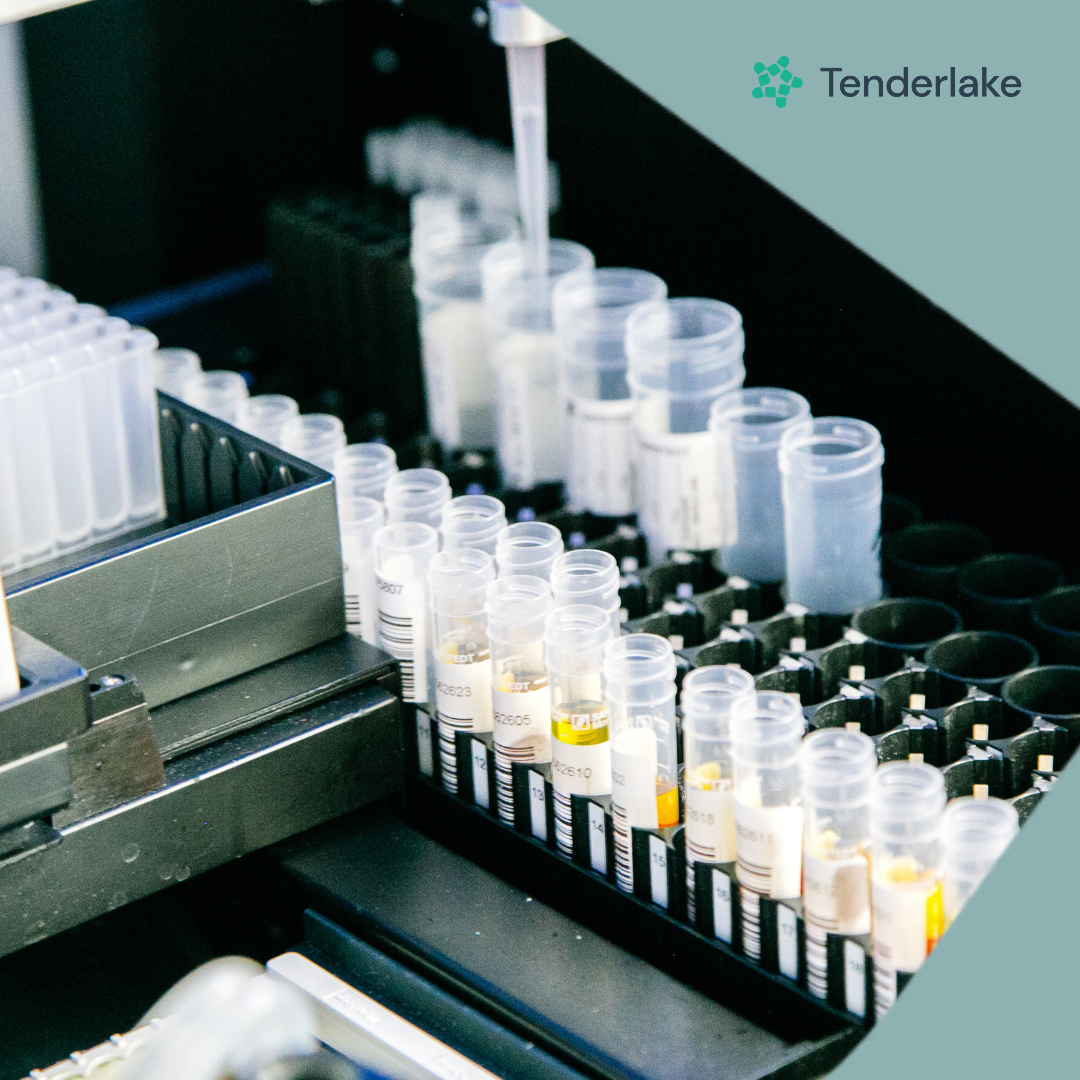
Health body launches tender for high-throughput DNA extraction
High-throughput DNA extraction platform to support expanding diagnostic services highlights growing investment in genomic infrastructure across the sector.
High-throughput DNA extraction platform to support expanding diagnostic services highlights growing investment in genomic infrastructure across the sector.
Follow Tenderlake on LinkedIn for concise insights on public-sector tenders and emerging procurement signals.
NHS Blood and Transplant has launched a tender for High Through Put DNA Extraction Systems, aiming to maintain and enhance its DNA-based diagnostic services and underlining how high-throughput genomics equipment is now treated as core diagnostics infrastructure.
The contract notice, published on 11th September 2026, focuses on procuring a “high throughput DNA extraction solution” to “maintain and enhance DNA-based diagnostic services”. That language places the new system firmly within the organisation’s routine service provision rather than in a purely research setting. The emphasis is on sustaining existing capacity while improving performance, reliability or scale.
The tender text is concise and does not spell out technical specifications, but its focus on high throughput is significant. DNA extraction sits at the front of diagnostic workflows; if this step becomes a bottleneck, downstream sequencing or genotyping capacity cannot be fully used. Investing in higher-throughput systems is therefore a way of shoring up the whole diagnostic chain.
Across Europe and beyond, other public buyers have been making similar moves. In June 2026, Region Uppsala issued a contract notice for two instruments for DNA isolation from biological samples for molecular diagnostics and clinical genetics, bundled with reagent kits, training, consumables and an option for a full service contract post-warranty, through its Molecular Diagnostics Instruments procurement. A month later, Cliniques universitaires Saint Luc’s DNA/RNA Extractor Supply notice sought a dedicated extractor for a molecular biology platform. These examples reinforce the point that DNA isolation hardware is now seen as the backbone of clinical molecular services.
A strong trend emerging from comparable procurements is the move towards automated, integrated systems supported by long-term service arrangements. In April 2026, Azienda ospedaliera Novara issued Analytical Systems for Genetics, a contract covering the full service supply of integrated and automated analytical systems for nucleic acid extraction and genetic variant research, along with a complete automatic extractor including instrumentation, reagents and consumables. Later that month, Institut Curie’s Nucleic Acid Extractors Supply procurement sought not just extractors but their supply, installation, commissioning, qualification, guarantee and maintenance for the genetics service and biological resources centre.
Automation and bundled support are also prominent in high-throughput extraction for clinical and research laboratories. Region Skåne’s corporate procurement function, for example, published the Pipetting and Extraction Robot notice in September 2026, seeking equipment and consumables for a pipetting and extraction robot handling DNA/RNA samples from tissue and tumour. In April 2026, the Agriculture, Department of requested quotations for a premier service contract for an oKtopure High Throughput DNA Extraction Robot in its oKtopure DNA Extraction Robot Service tender, underlining the value placed on sustained maintenance and performance.
Further up the testing chain, the DEPT OF DEFENSE signalled similar expectations in August 2026 with its DNA Sequencing Equipment Procurement for the DLA Product Test Center in Philadelphia. That contract covers a new DNA sequencing laboratory test equipment ensemble, including hardware, consumables, installation, training and optional maintenance. Taken together, these notices show buyers increasingly asking suppliers for complete solutions that combine instruments, reagents and long-term technical support.
Against this backdrop, NHS Blood and Transplant’s search for a high-throughput DNA extraction solution sits within a wider market shift. High-throughput, often automated extraction platforms are becoming the standard way to deliver consistent, scalable DNA-based diagnostics, underpinned by service agreements that keep systems running and validated over time.
Many recent procurements focus not just on extraction but on the sequencing and analysis platforms that depend on high-quality DNA input. In May 2026, NPL Management Limited opened a market engagement on a DNA Sequencer Engagement, seeking a medium to high-throughput sequencer that can support routine molecular genetics workflows, with a clear emphasis on reliable performance, ease of use and comprehensive service support. Later that month, Université de Montpellier’s High-Throughput Sequencer Supply notice sought a long fragment sequencer for the MGX-NGS platform at Biocampus, funded by CPER DiAMs.
Hospital networks are following suit, investing in both instruments and consumables. AGEPS-APHP, for example, published Molecular Biology Equipment Supply in May 2026, covering the supply, delivery and installation of various molecular biology equipment and consumables for AP - HP establishments. A separate June 2026 procurement, Genomic Sequencing Platform Supply, covers the supply, installation, commissioning and operation of a sequencing platform for the Public Assistance - Hospitals of Paris. In July 2026, ASST DEGLI SPEDALI CIVILI DI BRESCIA issued its Supply of NGS Analytical Systems, seeking diagnostic systems for genome and exome analysis and internal Next Generation Sequencing analysis services.
Consumables for high-volume sequencing are also entering long-term frameworks. Gerencia de Atención Especializada de Burgos, for instance, published Materials for Sequencing Tests in July 2026, covering reagents, panels, chips, sequencing reagents and other consumables for massive sequencing tests on solid tumours and liquid biopsies. As these downstream capabilities expand, the importance of robust, high-throughput DNA extraction systems like those sought by NHS Blood and Transplant only increases.
Some buyers are going further, procuring not just instruments and consumables but also the data infrastructure needed for large-scale genomics. In May 2026, Deutsches Zentrum für Neurodegenerative Erkrankungen e.V. issued Genome Database for Long-Read Genomes, covering the planning and implementation of a scalable genome database for neurodegenerative diseases, including data processing and sequencing services for up to 25,000 long-read genomes. In June 2026, the Secretaría General de la Agencia Estatal Consejo Superior de Investigaciones Científicas launched Genetic Analysis Equipment Supply for the National Museum of Natural Sciences, combining an automated digital quantitative PCR analysis system with two robotic platforms for nucleic acid extraction and sequencing library preparation.
Clinical laboratories are echoing this end-to-end thinking. In June 2026, Fakultní nemocnice Olomouc published HLA Genotyping Diagnostics Supply, covering the continuous supply of diagnostics, consumables and operational materials, along with equipment lending for HLA genotyping using the RT-PCR method. In August 2026, A.O.U. CITTA' DELLA SALUTE E DELLA SCIENZA DI TORINO followed with its Automated Diagnostic System tender, seeking a complete automated system for nucleic acid extraction, purification and PCR setup.
University and research infrastructures are being reshaped in similar ways. Univerzita Komenského v Bratislave’s July 2026 Technical Infrastructure Procurement aims to support projects on extracellular DNA biology and cardiac regeneration through stem cell therapy and pharmacological intervention. In the same month, UNIVERZA V LJUBLJANI, MEDICINSKA FAKULTETA issued Laboratory Equipment Supply, covering a wide range of equipment including systems for DNA sequencing, nucleic acid quantification, nitrogen production, centrifuges for DNA isolation and cold storage. This demonstrates how extraction, sequencing and storage are increasingly procured as a coherent infrastructure package.
Across these notices, several common priorities emerge:
NHS Blood and Transplant’s tender for high-throughput DNA extraction slots into this pattern. By explicitly linking the procurement to the maintenance and enhancement of DNA-based diagnostic services, the organisation signals that extraction capacity is not a peripheral concern but part of its core diagnostics infrastructure.
The NHS Blood and Transplant notice leaves many technical details unstated, but the surrounding landscape of comparable procurements offers useful context. Suppliers active in this space are increasingly expected to deliver high-throughput, automated systems, tied to robust service and consumable supply, and capable of integrating into broader sequencing and data environments.
The eventual contract award and implementation will show how far NHS Blood and Transplant chooses to follow these trends in automation, service bundling and integration with downstream DNA-based diagnostics. For instrument manufacturers, reagent suppliers and service providers, the tender is another indicator that genomics infrastructure is becoming a long-term, strategic investment area for health and research institutions.
Tenderlake Monitor reads every public sector notice published across the UK, the EU and the EEA, in the language it was published in, and tells you which ones match what your company sells and why. It works from a plain description of your business, not from keywords or CPV codes.
Follow Tenderlake on LinkedIn for concise insights on public-sector tenders and emerging procurement signals.