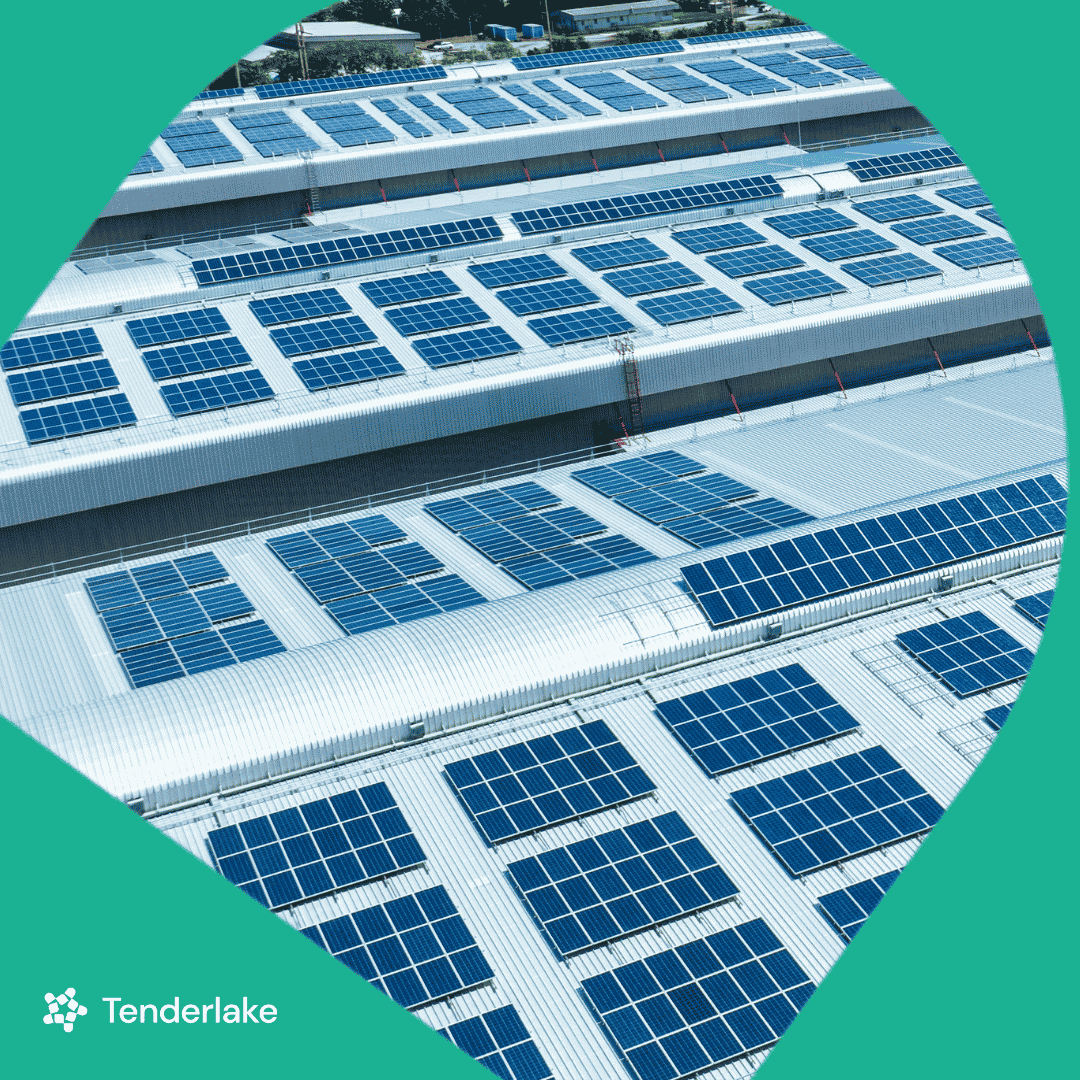
Municipality launches tender for solar and energy storage
Contract covers photovoltaic micro-installations, energy storage and monitoring across public buildings, signalling a broader shift to integrated renewables.
Contract covers photovoltaic micro-installations, energy storage and monitoring across public buildings, signalling a broader shift to integrated renewables.
Follow Tenderlake on LinkedIn for concise insights on public-sector tenders and emerging procurement signals.
An EU-funded contract from Gmina Bieruń will add photovoltaic micro-installations, energy storage systems and centralised monitoring to public buildings in the municipality. The project underlines how local authorities are procuring integrated solar-and-storage packages, rather than standalone rooftop schemes.
In a contract notice titled Green Energy Installations in Bieruń, published on 2nd November 2026, Gmina Bieruń, represented by the Mayor of Bieruń, sets out plans to equip its public buildings with new on-site energy systems. The summary describes a package of delivery, installation and construction works supported by EU funding.
According to the notice, the contract covers:
This combination goes beyond basic panel installation. Energy storage systems allow electricity from the photovoltaic micro-installations to be used more flexibly, while an energy monitoring system should give the municipality closer insight into how its buildings generate and consume power. Presenting the various elements together in one package suggests an integrated approach, rather than separate contracts for works, equipment and data.
The short summary does not specify how many buildings are covered, the capacity of the planned systems or the contract value. Even so, the decision to include storage and monitoring alongside generation shows that the municipality is thinking about how individual sites perform as part of a wider local energy system, not just as isolated rooftop schemes.
Bieruń’s plans sit within a growing pipeline of similar projects from other municipalities. In June 2026, Gmina Myszków published a notice for a project titled Renewable Energy Installation in Myszków, covering the purchase and installation of photovoltaic systems and electrical energy storage facilities in seven public buildings. That contract spans design, delivery, installation and commissioning, indicating that buyers expect suppliers to take responsibility from concept through to operation.
In July 2026, GMINA JEZIORA WIELKIE went to market with Photovoltaic Installation Construction, seeking the design and construction of 23 photovoltaic micro-installations with energy storage. The scope includes documentation, installation, monitoring systems and connection to the power grid, alongside explicit requirements around environmental protection. Later, in October 2026, Gmina Sosnowiec issued Renewable Energy Installations in Sosnowiec for renewable energy sources on public utility buildings, including educational facilities and a Joint Services Center, with specific technical requirements for photovoltaic and energy storage systems. Together, these notices point to a standard toolkit: rooftop or site-based photovoltaics paired with electrical storage, structured around clear monitoring and documentation duties.
Some authorities are going further by bundling multiple technologies and working across several municipalities. In September 2026, GMINA PRZYGODZICE advertised Energy Cluster Infrastructure Development, a programme of photovoltaic systems and energy storage units for public utility buildings in specified municipalities. Its scope runs from technical design and material supply to assembly, testing, user training and maintenance services. In July 2026, Gmina Nowe Brzesko’s Renewable Energy Installations Project combined photovoltaic micro-installations and energy storage with air source heat pumps and a hydrogen technology installation for energy production and storage in specific municipalities. A similar breadth appears in Gmina Domaniewice’s Renewable Energy Installation Project, published in September 2026, which calls for photovoltaic systems, energy storage units, heat pumps and solar collectors.
Other buyers are applying the same approach beyond typical administrative buildings. In June 2026, Zakład Komunikacji Miejskiej Zawiercie sp. z o.o. launched the Photovoltaic Systems Installation Project for the Municipal Communication Plant, covering design, supply and installation of photovoltaic systems with energy storage, plus necessary upgrades, permits and staff training. In July 2026, Miasto Bełchatów issued Renewable Energy Installations in Bełchatów for the development of documentation and installation of photovoltaic systems and heat pumps in residential buildings, co-financed by the European Regional Development Fund. These examples show how similar technologies are now being deployed across public utility, transport and residential settings.
Bieruń’s project is described as being supported by EU funding, echoing Bełchatów’s reliance on the European Regional Development Fund. Across the wider set of notices, requirements for detailed documentation, monitoring systems and environmental protection appear frequently, indicating that funding conditions and technical delivery are being aligned from the outset.
Delivery expectations are also expanding. The projects in Jeziora Wielkie, Przygodzice and Zawiercie, for example, all combine hardware supply with design work, grid connection, testing, staff training and, in some cases, ongoing maintenance. That kind of end-to-end scope moves these contracts beyond straightforward equipment purchases and towards longer-term infrastructure arrangements in which suppliers remain responsible for performance and operability, not just installation.
Although the Bieruń notice summarises its requirements in only a few lines, the inclusion of construction works and an energy monitoring system places it squarely in this category of integrated delivery. The municipality is not only buying panels and storage units; it is also procuring the means to track how those assets behave over time.
Once awarded and delivered, the Green Energy Installations in Bieruń contract will add another reference point for how municipalities structure projects that combine generation, storage and monitoring. Observers will be watching how widely the micro-installations are deployed across the public estate, and how the monitoring system is used to manage those assets in practice.
Taken together, the 2026 notices suggest that many public-sector buyers now view their building portfolios as platforms for distributed energy, rather than just consumers of grid power. Storage units and monitoring systems are becoming core components of these plans, and the Bieruń project is the latest signal that integrated renewable energy infrastructure is moving from pilot status into routine procurement.
Tenderlake Monitor reads every public sector notice published across the UK, the EU and the EEA, in the language it was published in, and tells you which ones match what your company sells and why. It works from a plain description of your business, not from keywords or CPV codes.
Follow Tenderlake on LinkedIn for concise insights on public-sector tenders and emerging procurement signals.