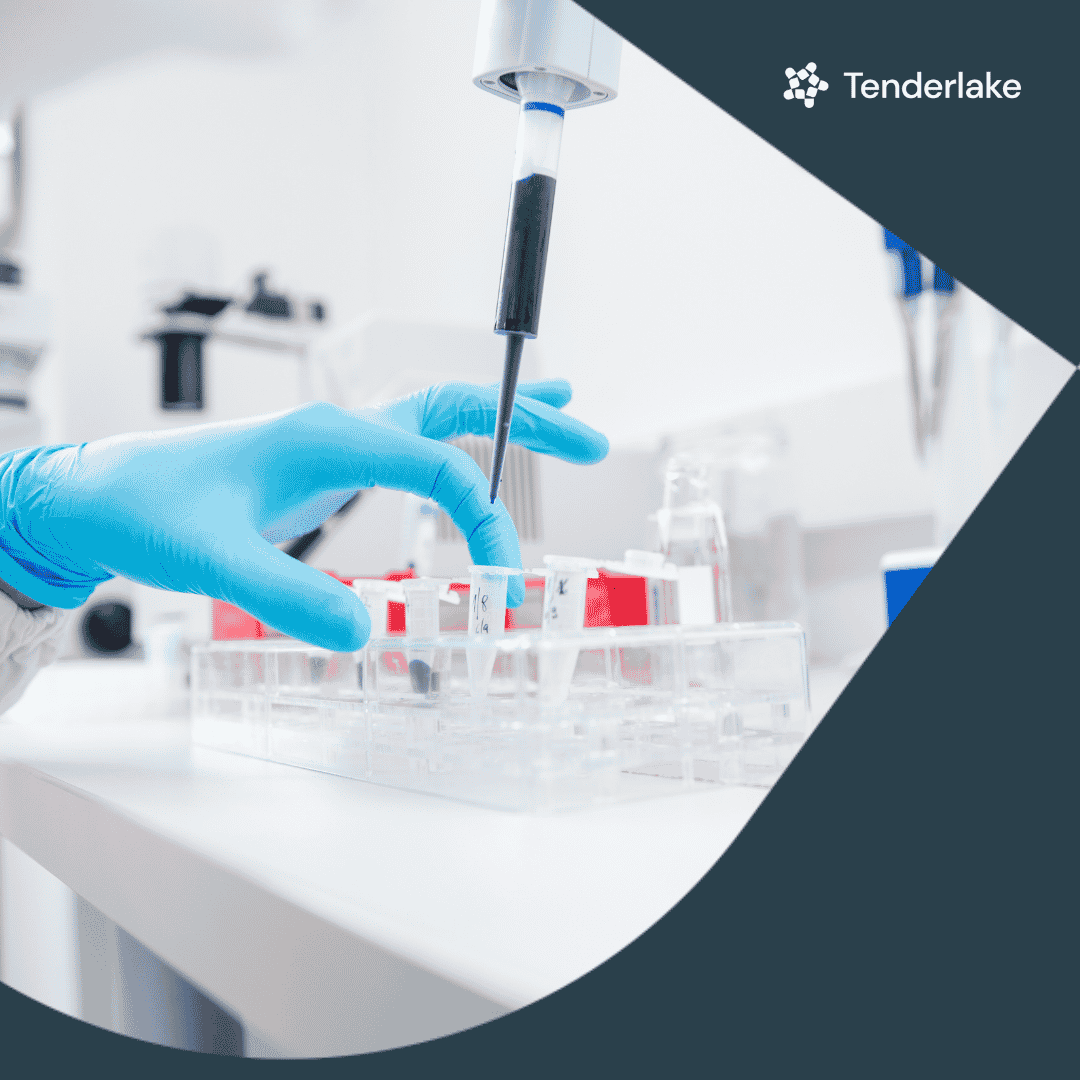
Research body launches tender for integrated sequencing system
Tender seeks an integrated next generation sequencing platform with consumables, signalling sustained demand for genomic research infrastructure.
Tender seeks an integrated next generation sequencing platform with consumables, signalling sustained demand for genomic research infrastructure.
Follow Tenderlake on LinkedIn for concise insights on public-sector tenders and emerging procurement signals.
An open contract notice from Universita' degli Studi di Trento calls for an integrated next generation sequencing system providing both high- and low-throughput capacity, plus associated consumables, to support a new research infrastructure project. The purchase highlights how universities are consolidating sequencing activity onto versatile platforms and looking for long-term supply partnerships in genomics.
Published on 11th November 2026, the contract notice is succinct but clear: the university wants an integrated sequencing platform capable of both high- and low-throughput operation, to sit at the core of a shared research infrastructure. Even without detailed technical parameters in the summary text, the intention is to anchor future projects around a flexible system that can adapt to different scales of work.
Pairing high- and low-throughput modes on one platform allows laboratories to switch between large studies and smaller exploratory runs without changing technology. High-throughput configurations can support population-scale or multi-centre projects, while lower-throughput options are suited to pilot work, method development or teaching, where cost and turnaround time may matter more than maximum capacity.
The explicit inclusion of consumables in the procurement suggests the university is seeking not just an instrument but a stable supply chain for the reagents and materials that underpin reproducible sequencing. For suppliers, that turns the competition into a multi-year relationship opportunity, with performance measured as much in continuity of supply and technical support as in the initial sale.
Trento’s plans sit alongside a series of recent investments in next generation sequencing across universities and research institutes. In July 2026, the Helmholtz Centre for Environmental Research (Helmholtz-Zentrum für Umweltforschung GmbH - UFZ) published a contract notice for a system to deliver high-resolution genetic analysis, spanning targeted, amplicon, microbiome and exome sequencing, with an additional requirement for CO2-neutral delivery. This combines breadth of application with explicit environmental criteria.
In August 2026, Sapienza Universita' di Roma set out plans to acquire a high-throughput platform based on nanopore sequencing, designed for direct sequencing of native DNA and RNA, real-time data processing and multiple independent experiments, and supported by warranty and maintenance services. By contrast, Sieć Badawcza Łukasiewicz - PORT Polski Ośrodek Rozwoju Technologii, in a November 2026 tender, is seeking a short-read next generation sequencer for a genetic and microbiological diagnostics laboratory, while Warszawski Uniwersytet Medyczny is looking for a high-throughput sequencer whose detailed specifications are defined in a technical requirements form.
Some research programmes continue to rely on outsourced capacity rather than new instruments. In October 2026, the University of Gdańsk invited proposals for next generation sequencing services using Illumina NovaSeq technology, including library preparation, for the International Center for Cancer Vaccine Research. A month earlier, C.N.R. - Istituto di Genetica e Biofisica issued a contract notice for whole-genome sequencing of about 600 subjects under the Regina Project for precision medicine, awarding on the basis of the best quality-price ratio. Together, these notices show that ownership and service models are developing in parallel.
In parallel with new sequencers, buyers are investing in the less visible parts of the workflow. In June 2026, Fondazione Ri.MED sought an automated liquid handling system for next generation sequencing library preparation, including installation, testing, training and assistance, funded by Casa Italia. Around the same time, Instituto de Biologia Molecular e Celular (IBMC) launched a procurement for a robotic system for genomic library preparation to support next generation sequencing. Both aim to automate labour-intensive preparation steps and lift throughput before samples reach the sequencer.
Downstream, several buyers are specifying end-to-end solutions. Azienda Ospedaliera-Universitaria di Modena is procuring systems for genomics and molecular pathology across four lots, covering nucleic acid extraction, quality control and library preparation. Masarykův onkologický ústav is going to market for a system to profile tumour tissue using next generation sequencing, coupled with ongoing consumables for a molecular tumour board. Wojewódzka Stacja Sanitarno-Epidemiologiczna w Katowicach, in October 2026, focused its tender on delivery, installation and commissioning of a complete next generation sequencing system at an interdisciplinary molecular diagnostics laboratory.
Consumables and maintenance are increasingly being formalised in long-term agreements. Universitätsklinikum Halle (Saale) has issued a contract notice for a sequencing device for molecular diagnostics that includes software, installation and training, alongside a 48‑month framework for reagent kits and optional maintenance. IRCCS FONDAZIONE PASCALE is tendering for reagents for next generation sequencing analysis in onco-haematological investigations, divided into three lots that cover a range of molecular investigations and the creation of custom assays. These arrangements illustrate how public buyers are trying to secure predictable operating costs and technical support over several years.
Hospital and cancer centres are drawing on the same technologies, often with more explicit links to patient care. ASST degli Spedali Civili di Brescia is running a procurement for diagnostic systems for genome and exome analysis together with an internal next generation sequencing analysis service. Wojewódzkie Wielospecjalistyczne Centrum Onkologii i Traumatologii im. M. Kopernika w Łodzi is acquiring reagent kits for next generation sequencing and preparation of DNA and RNA libraries compatible with MiSeq and NextSeq 550dx devices, bundled with sequencing analysis software for a molecular diagnostics laboratory. Azienda Ospedaliera Universitaria Policlinico Gaetano Martino di Messina is seeking a complete system for next generation sequencing analysis focused on targeted resequencing of clinical and complete exomes.
Infectious disease and broader laboratory diagnostics are following a similar path. I.N.M.I. Lazzaro Spallanzani has launched an open procedure for integrated systems for advanced molecular diagnostics, multiplex PCR and high-throughput screening of infectious agents and resistance markers. IRCCS “S. De Bellis” is procuring laboratory diagnostic systems for coagulation tests and molecular virology investigations on a service basis, while ASST Melegnano e della Martesana wants automatic systems for preparing cytological samples collected in liquid phase, plus consumables, reagents and full-risk maintenance across several healthcare institutions. Together, these contracts show how integration, service models and bundled reagents are becoming standard expectations in clinical as well as research genomics.
Across these notices, public buyers are choosing between long-read platforms such as the nanopore system planned at Sapienza Universita' di Roma and short-read sequencers like those sought by Sieć Badawcza Łukasiewicz - PORT and specified in service tenders using Illumina NovaSeq technology. At the same time, they are weighing instrument ownership against outsourced sequencing, and simple hardware purchases against broader packages that include automation, software, reagents and maintenance.
For suppliers and partner laboratories, the Universita' degli Studi di Trento competition will offer another signal of how research institutions want to organise their sequencing capacity: around a versatile, shared platform with assured consumables supply. As awards are made across this cluster of procurements, the balance that emerges between flexibility, throughput, environmental performance and long-term support is likely to influence the next wave of genomics infrastructure investments.
Tenderlake Monitor reads every public sector notice published across the UK, the EU and the EEA, in the language it was published in, and tells you which ones match what your company sells and why. It works from a plain description of your business, not from keywords or CPV codes.
Follow Tenderlake on LinkedIn for concise insights on public-sector tenders and emerging procurement signals.