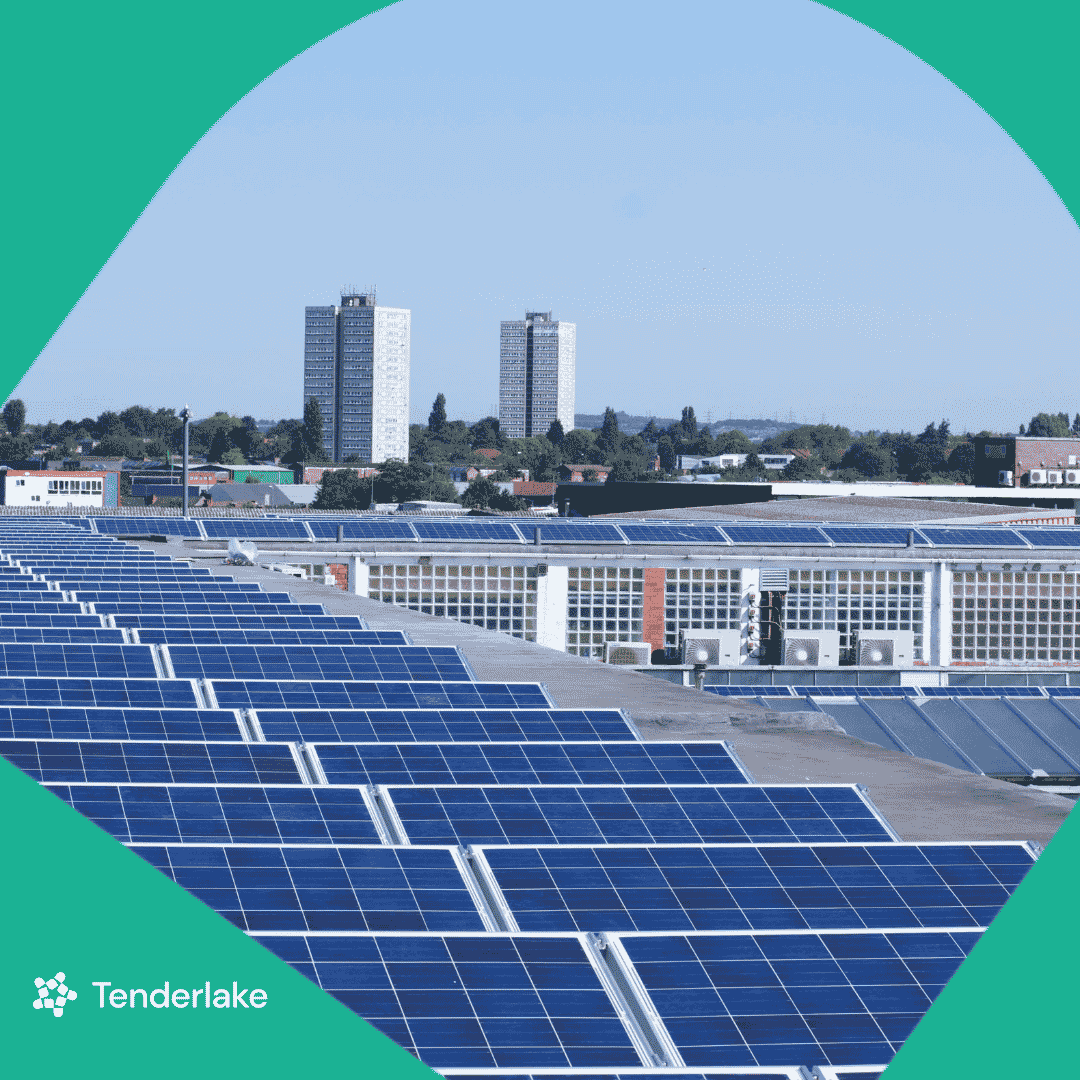
Municipality launches tender for solar, storage and hydrogen
Tender seeks an integrated package of solar, energy storage and demonstration hydrogen systems on public buildings, signalling a shift to multi-technology projects.
Tender seeks an integrated package of solar, energy storage and demonstration hydrogen systems on public buildings, signalling a shift to multi-technology projects.
Follow Tenderlake on LinkedIn for concise insights on public-sector tenders and emerging procurement signals.
A contract notice from GMINA TUREK sets out plans to design, deliver and commission solar installations, on-site energy storage and a demonstration hydrogen system on public buildings, highlighting how local authorities are pairing established renewables with emerging technologies.
Published on 5th November 2026, the contract notice for Renewable Energy Installations Project sets out a comprehensive programme of works on public utility buildings.
The scope brings together three main elements: the design, delivery and commissioning of photovoltaic installations; the installation of energy storage systems; and the creation of a demonstration hydrogen technology installation. Throughout, the authority expects compliance with defined sustainability and environmental standards.
By combining design, physical delivery and commissioning in a single contract, GMINA TUREK is seeking an integrated solution rather than a series of separate works packages. The successful contractor will need to handle engineering design, equipment supply, installation on live public sites and final commissioning.
The explicit reference to a demonstration hydrogen technology installation is notable. While photovoltaic systems and electrical energy storage are now common features of public-building upgrades, the addition of hydrogen positions this project as a testbed for how different types of energy storage can work together within a single estate.
The Turek scheme is one of a series of recent local authority tenders that link solar generation with on-site energy storage and supporting infrastructure. Several contract notices published in 2026 point in the same direction.
These projects show local authorities specifying not only photovoltaic generation, but also on-site electrical storage, monitoring and integration with existing infrastructure. The emphasis on complete packages — from design and permits through to commissioning, training and ongoing services — is becoming a recurring feature.
Within this pattern, GMINA TUREK’s tender stands out by adding a dedicated demonstration hydrogen component alongside mainstream solar and storage, pointing to a next phase in local energy procurement.
Hydrogen installations appear across several 2026 notices, typically framed as demonstration or pilot elements rather than fully commercial systems. In June 2026, Gmina Raba Wyżna launched a Renewable Energy Infrastructure Project divided into two parts: one covering classic renewable energy sources such as photovoltaic systems, energy storage units and heat pumps, and a separate hydrogen installation.
In July 2026, Gmina Nowe Brzesko issued a contract notice for a Renewable Energy Installations Project that combines photovoltaic micro-installations, energy storage systems and air source heat pumps with a hydrogen technology installation for energy production and storage in specific municipalities.
Other authorities have focused squarely on hydrogen energy storage. In August 2026, Gmina i Miasto Odolanów sought a contractor for Hydrogen Energy Storage System Construction, describing a pilot installation powered by renewable energy sources to evaluate how hydrogen storage can be integrated with local energy infrastructure.
In September 2026, GMINA RYKI went to market for a Hydrogen Energy Storage Facility Construction, covering the design, delivery, assembly, integration and commissioning of a hydrogen energy storage installation intended to produce and store hydrogen from electrical energy for demonstration and operational assessment. In October 2026, Powiat Sokólski published a contract notice for a Hydrogen Energy Storage Installation that will produce and store hydrogen exclusively from renewable energy sources.
Some projects add further layers of innovation. In October 2026, Gmina Rabka-Zdrój tendered for a Hydrogen Energy Storage Project involving a mobile hydrogen energy storage installation powered by renewable energy sources, including a photovoltaic system. In November 2026, Gmina Szczurowa advertised an Energy Cluster Infrastructure Development scheme that spans multiple municipalities and combines photovoltaic installations, energy storage systems, heat pumps and a hydrogen installation.
Also in November 2026, Gmina Stary Sącz launched a Hydrogen Energy Storage Project to design, supply, install and commission a hydrogen energy storage system integrated with an existing photovoltaic installation.
Against this backdrop, GMINA TUREK’s plan for a demonstration hydrogen technology installation fits a clear pattern: hydrogen is being introduced alongside mature renewable technologies, primarily in demonstrator or pilot configurations linked to public buildings and local energy infrastructure.
Across these notices, the public sector is asking the market to deliver more than hardware. Contract scopes repeatedly link technical design, delivery, assembly or installation, integration, commissioning and post-installation services such as training and maintenance.
For instance, GMINA PRZYGODZICE’s energy cluster contract explicitly includes testing, user training and maintenance alongside the installation of photovoltaic systems and energy storage units. The municipal communication project in Zawiercie combines photovoltaic and storage deployment with the necessary upgrades, permits and staff training. Gmina Porąbka’s tender wraps design, construction and documentation around the installation of energy storage systems, while Gmina Bieruń’s project folds in construction works and an energy monitoring system.
Compliance is another recurring theme. Powiat Janowski highlights adherence to technical specifications and legal requirements as part of its multi-facility photovoltaics-and-storage rollout. GMINA TUREK places sustainability and environmental standards at the centre of its renewable energy installations project. Together, these notices underline that experience with complex regulatory, environmental and safety frameworks is now integral to winning local energy contracts.
Suppliers able to link photovoltaic generation, electrical energy storage, heat pumps, hydrogen systems, monitoring platforms and existing building services into coherent, grid-aware solutions are likely to be best placed to respond to this type of tender. The breadth of services required also opens space for consortia bringing together civil works, electrical engineering and specialist hydrogen or control-system expertise.
The contract notice from GMINA TUREK confirms that public-building estates are becoming key sites for integrating photovoltaic generation, on-site energy storage and early-stage hydrogen technology within a single procurement.
Future tenders from gminas and powiats will show whether hydrogen remains primarily a demonstrator element or starts to appear as a mainstream operational storage option. For now, the current wave of contracts suggests that local authorities are steadily building more capable, storage-rich energy systems around their public assets, creating a sustained pipeline of opportunities for suppliers across the solar, storage and hydrogen value chain.
Tenderlake Monitor reads every public sector notice published across the UK, the EU and the EEA, in the language it was published in, and tells you which ones match what your company sells and why. It works from a plain description of your business, not from keywords or CPV codes.
Follow Tenderlake on LinkedIn for concise insights on public-sector tenders and emerging procurement signals.