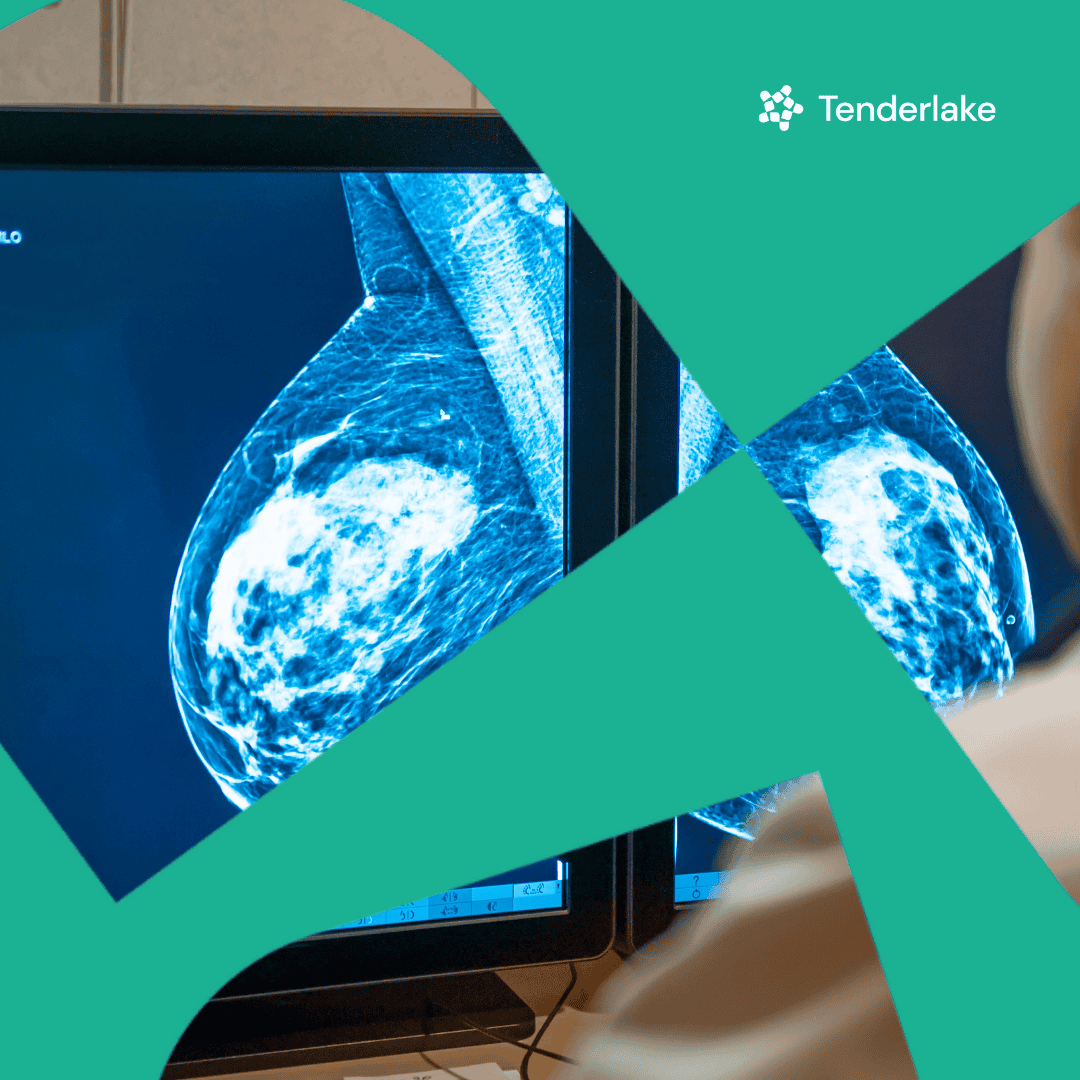
Health Authority Launches Tender for AI Mammography Platform
A new procurement for AI mammography aims to ease workforce pressure and speed up breast cancer screening, reflecting a wider shift in digital diagnostics.
A new procurement for AI mammography aims to ease workforce pressure and speed up breast cancer screening, reflecting a wider shift in digital diagnostics.
Follow Tenderlake on LinkedIn for concise insights on public-sector tenders and emerging procurement signals.
The regional authority in Southern Denmark has issued a contract notice for an AI mammography solution to support breast cancer screening and, optionally, to be deployed in neighbouring Region Midtjylland. The system is intended to improve diagnostic efficiency and help tackle a shortage of mammographers. Set against concern about rising breast cancer incidence and mounting screening workloads, the move shows how regional health systems in Denmark and neighbouring countries are beginning to use AI not just to buy new machines, but to reshape how imaging work is organised.
Published on 3rd December 2025, Region Syddanmark's AI mammography procurement covers the acquisition of an AI-based solution for breast cancer screening in Region Southern Denmark, with an option for implementation in Region Midtjylland. According to the notice, the aims are to enhance diagnostic efficiency and address the shortage of mammographers. The summary gives little technical detail, but it points to software that will sit alongside existing mammography services and support screening workflows rather than replace them.
For the two regions, the capacity challenge is explicit. Screening programmes generate large volumes of images that must be read quickly and consistently. When there are too few mammographers, backlogs grow and waiting times lengthen. By making workforce concerns central to the tender, the buyer is framing AI as a practical tool to help clinicians manage workload and maintain access to early detection, rather than as a purely experimental technology.
Workforce and capacity issues surface in several recent imaging procurements. In November 2025, the Lapland Welfare Area launched a tender for a full digital mammography device for Länsi-Pohja Hospital, specifying that it must support clinical operations including tomosynthesis imaging and guided biopsies. Later that month, Länsi-Uudenmaan hyvinvointialue sought providers for mammography screenings for Espoo and Kauniainen, with examinations due to start by April 2026. Both notices indicate sustained investment in breast imaging capacity to keep pace with screening obligations.
Also in November 2025, procurement agency Sansia Oy issued a notice for mammography screening studies for the Central Ostrobothnia Well-Being District, covering several municipalities and dividing services into two areas. Rather than expanding its own imaging fleet, the district is buying in screening as a service, another way to maintain coverage when local capacity is stretched.
Elsewhere, hospitals are replacing older equipment with more capable systems. In August 2025, Arad County Emergency Clinical Hospital in Romania began procuring a digital mammography system with tomosynthesis and contrast agent for its radiology and medical imaging laboratory, including transport, installation, staff training and maintenance. Later that month, the Clinical Hospital Centre Osijek in Croatia went to market for a digital mammograph with a stereotactic option, again bundled with delivery, installation, user training and warranty support. These projects underline how providers are upgrading imaging rooms so they can handle more complex diagnostic work.
Alongside new hardware, AI is starting to permeate the imaging chain. In July 2025, authorities in Malta published a contract notice for the supply of artificial intelligence diagnosis systems in mammography, together with licences, energy-efficient computers and monitors for hospitals in Malta and Gozo. The project couples AI software with the hardware needed to run it in clinical settings, signalling an intention to integrate automated support into routine reporting. In September 2025, the Medical University of Varna in Bulgaria advertised an injector system for contrast-enhanced mammography to support research into innovative breast screening technologies, including supply, installation, commissioning, training and consumables.
In August 2025, Universitätsklinikum Leipzig Anstalt des öffentlichen Rechts released a tender for a digital mammography system that combines advanced imaging features, a biopsy unit, tomosynthesis and stereotactic functions with AI-supported diagnostic support. The hospital stresses that the system must integrate into existing workflows and meet defined quality standards. That emphasis on workflow and quality echoes the Danish focus on diagnostic efficiency, even if the chosen technical solutions may differ.
AI investment is not limited to breast imaging. On 5th November 2025, a prior information notice from NHS England set out plans for AI software to analyse chest X-rays for suspected lung cancer in primary care referrals, with the market consultation intended to inform the commercial strategy. And in September 2025, Klinikum Magdeburg gGmbH launched a procurement for an AI-powered clinical decision support system for inpatient care, aimed at enhancing treatment quality and patient safety through data-driven decision support and optimised clinical processes. Together, these projects show AI moving from pilots into core diagnostic and care pathways.
Nordic health systems are also experimenting with digital tools outside imaging departments. In August 2025, Region Nordjylland launched a prior information notice for a telemedicine wound assessment solution intended to support both health professionals and citizens and to integrate with existing infrastructure. The Danish regions behind the new mammography tender are also working on the governance side of imaging. On 11th December 2025, Region Midtjylland is holding a market dialogue ahead of a procurement for a dose monitoring system for patient dosimetry across imaging specialties. The aim is to align with upcoming regulatory requirements and give potential bidders a chance to demonstrate solutions and discuss needs. In September 2025, Norwegian procurement body Sykehusinnkjøp HF similarly invited suppliers to a market dialogue on mammography apparatuses before finalising its approach, underlining a trend towards earlier engagement with industry.
Broader imaging strategies are also visible in neighbouring countries. In June 2025, a Finnish welfare region issued a framework tender for department imaging machines to serve several welfare regions, with devices selected according to a ranked list but with scope for justified deviations. In November 2025, Region Värmland in Sweden went to market for imaging ultrasound equipment for anaesthesia, operating theatre and intensive care services, estimating a need for about 15 units. Such procurements focus attention on interoperability, standardisation and cost-effectiveness across large fleets, the same issues that will shape deployment of AI tools.
With the Southern Denmark AI mammography tender still in progress, key points to watch will include the choice of supplier, any decision to extend the system to Region Midtjylland and the degree to which the final contract specifies integration with existing screening workflows. The parallel work on patient dose monitoring in Region Midtjylland, and the emphasis on workflow integration in tenders such as the Leipzig digital mammography system, suggest that connectivity, quality assurance and regulatory alignment will be central to evaluation.
Taken together, recent procurements in Denmark, Finland, Sweden, Germany, Malta, Norway and the UK indicate that AI-assisted imaging is shifting from isolated projects towards a more systematic role in public health screening and diagnostics. The new Danish contract notice stands out for putting workforce shortages and diagnostic efficiency at the heart of the specification. How effectively the chosen solution addresses those pressures will be watched by health systems across Europe that face similar constraints.
Tenderlake Monitor reads every public sector notice published across the UK, the EU and the EEA, in the language it was published in, and tells you which ones match what your company sells and why. It works from a plain description of your business, not from keywords or CPV codes.
Follow Tenderlake on LinkedIn for concise insights on public-sector tenders and emerging procurement signals.