International body launches tender for modular battery systems
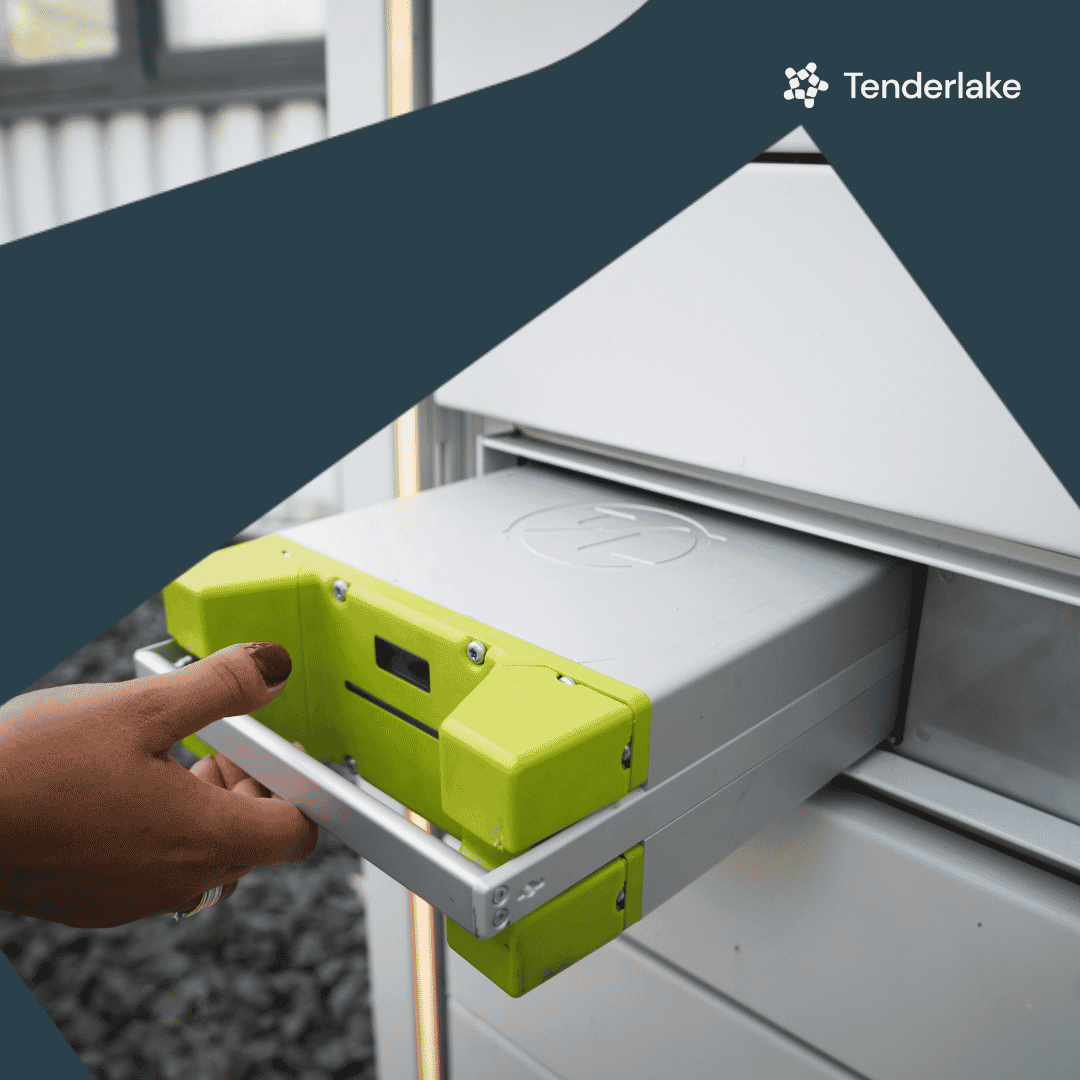
Tender seeks suppliers for 300 identical 60 kWh battery systems, reflecting how storage units are becoming standard features across modern energy projects.
Tender seeks suppliers for 300 identical 60 kWh battery systems, reflecting how storage units are becoming standard features across modern energy projects.
Follow Tenderlake on LinkedIn for concise insights on public-sector tenders and emerging procurement signals.
Deutsche Gesellschaft für Internationale Zusammenarbeit (GIZ) GmbH has gone to market for 300 battery systems of 60 kWh each, split across three lots and destined for multiple locations within 200 kilometres of Eschborn. The contract, published on 12th October 2026, adds a substantial order for modular storage to a year already marked by new battery projects for utilities, transport operators, public bodies and emergency services.
The new battery systems procurement covers three lots, each for 100 identical battery systems rated at 60 kWh. Taken together, the lots represent storage capacity of 18,000 kWh if all units are delivered, spread across up to 300 individual installations.
The notice specifies that delivery and assembly instructions will be defined by GIZ, and that the systems are intended for locations within a 200 km radius of Eschborn. This structure means suppliers will have to coordinate the supply and installation of identical systems across multiple locations.
The size of each unit contrasts with several utility-scale projects advertised this year. In June 2026, Liechtensteinische Kraftwerke launched a battery storage system for Balzers with a grid-connected capacity of at least 25 MW / 50 MWh, while in July 2026 SWE Energie GmbH sought a battery energy storage system with a preferred power of 20 MW and at least 40 MWh of storage.
Municipal utilities have also entered the market with grid-connected schemes. In June 2026 Stadtwerke Neumarkt i.d.OPf. Energie GmbH advertised the turnkey realisation and financing of three battery storage systems totalling around 22 MW, while in July 2026 Stadtwerke Flensburg GmbH sought a contractor to build and operate an 8 MW grid-connected storage system designed for reserve energy, energy trading and providing start-up energy for gas turbines.
Against that backdrop, GIZ's decision to procure a large number of 60 kWh systems highlights an alternative approach: distributing capacity across many smaller systems rather than concentrating it in a single high-power facility.
The GIZ notice gives prominence to delivery and assembly, stating that instructions for both will be defined by the organisation for sites within 200 km of Eschborn. This structure means suppliers will have to coordinate the supply and installation of identical systems across multiple locations.
Elsewhere in 2026, many buyers have treated batteries as long-term infrastructure rather than simple equipment purchases. In June 2026 Stadtwerke Duisburg AG tendered for the construction and maintenance of a battery storage system at the Rheinkai Nord site, combining build and service in one contract. In July 2026 Stadtwerke Mössingen planned the construction and maintenance of two 1 MW / 2 MWh battery storage systems, again pairing delivery with ongoing upkeep.
Some utilities have gone further by bundling design, permissions and financing into their storage procurements. The June 2026 notice from Stadtwerke Neumarkt i.d.OPf. Energie GmbH covers planning, delivery, construction, financing and maintenance of three grid-connected systems, while in July 2026 EWR GmbH sought a contractor to design, permit, supply, install and maintain up to three stand-alone storage systems in Remscheid, with options for different capacities and the possibility of transferring part of the contract to other clients.
Technical performance and compliance also feature prominently. Netze ODR GmbH's July 2026 procurement for an industrial lithium-ion battery energy storage system seeks a turnkey solution with specified power, capacity, efficiency and operational requirements, while STAWAG Energie GmbH's July 2026 battery system at Aachen-Eilendorf is designed to enhance renewable energy supply while meeting legal standards and providing long-term maintenance services.
Across these notices, the role of the supplier extends well beyond hardware delivery, taking in planning, construction, commissioning, compliance and years of operation. GIZ's battery procurement sits within that broader pattern, even though its current description remains focused on the number and size of systems rather than the long-term service model.
A notable feature of the 2026 pipeline is how often battery storage appears alongside photovoltaic installations and building works. Rather than stand-alone assets, many systems are specified as part of integrated energy upgrades.
In April 2026, the city of Dresden's building and property office tendered a new east-west oriented PV system with battery storage for a kindergarten roof, complete with maintenance requirements and detailed documentation for bid evaluation. In June 2026 the Landratsamt Kyffhäuserkreis sought installation of a comprehensive electrical system for GS Hohenebra, including photovoltaic units, distribution boards, cabling, lighting, safety systems and data connections.
Municipal and regional utilities are also pairing solar with storage. Kemptener Kommunalunternehmen's June 2026 photovoltaic system procurement bundles solar modules, cabling, inverters, battery storage and a battery inverter in a single package. In August 2026 badenova AG & Co. KG went further with its South Baden energy network project, which combines ground-mounted and agri-photovoltaic systems, battery storage, a substation and logistics coordination.
Multi-site deployments are emerging as well. In August 2026 SVENDBORG FORSYNINGSSERVICE A/S issued a tender for the delivery and installation of battery storage systems for solar power plants at five locations, and in September 2026 Enabel launched a framework for rooftop solar PV with battery storage for schools in Kyiv Oblast, Ukraine. In July 2026 Veiligheidsregio Rotterdam-Rijnmond sought suppliers to design, supply, install and maintain solar panels and energy storage across five of its locations, with full engineering and documentation.
GIZ's decision to procure standardised 60 kWh systems that can be placed at many sites fits alongside these building and site-based schemes, even though the brief notice does not set out detailed use cases.
Battery storage is also intertwining with electric transport and emergency operations. Several 2026 tenders connect batteries directly to charging infrastructure or reserve power for critical services.
On 2nd July 2026, Stadtverkehr GmbH & Co. KG advertised the delivery of five battery-electric buses, while a July 2026 notice from Busbetrieb Josef Ettenhuber GmbH covers charging infrastructure for three depots, including photovoltaic systems and battery storage as part of a multi-lot package.
Earlier, in April 2026, RVK | Regionalverkehr Köln GmbH advertised the development of a depot for hydrogen fuel cell and battery-electric buses in Bensberg, including installation of a grid-connected photovoltaic system with a battery storage system and the necessary infrastructure.
Beyond depots, PUB GAS s.r.o.'s September 2026 project focuses on battery storage for electric vehicle charging stations, specifying output and discharge capacity, while TIWAG-Tiroler Wasserkraft AG's August 2026 framework agreement for DC charging systems for e-mobility shows charging hardware being procured in parallel.
Emergency and security services are taking a similar interest in reliable power. In September 2026, the Logistik Zentrum Niedersachsen Landesbetrieb issued a notice for a mobile battery storage system for the police, intended to provide temporary power for emergency services, including charging infrastructure and essential systems. Around the same time, the Landesverwaltungsamt's October 2026 project for e-mobility charging infrastructure at a police station includes DC and AC charging points plus a battery storage system to optimise energy use and provide backup power.
These examples show batteries being procured both as fixed infrastructure and as mobile assets that support operations in critical situations. GIZ's current tender does not spell out comparable roles, but it sits alongside this wider set of storage projects linked to transport, charging and emergency facilities.
The 12th October 2026 notice from Deutsche Gesellschaft für Internationale Zusammenarbeit (GIZ) GmbH is concise, but it signals a clear intent to secure a significant fleet of 60 kWh battery systems for use within reach of Eschborn. With three lots of 100 units, the tender structure makes scheduling and multi-site logistics an inherent part of the contract.
Set against high-capacity projects such as the 25 MW / 50 MWh system planned for Balzers or the 20 MW battery energy storage system sought by SWE Energie GmbH, GIZ's procurement highlights the role of modular equipment that can be deployed in many different settings. Taken together, the 2026 notices from utilities, transport operators, city administrations and emergency services show battery storage being specified as a regular element in a wide range of infrastructure investments.
The detailed delivery and assembly instructions that GIZ plans to define will shape the eventual requirements on logistics, installation and safety. For suppliers active in batteries, solar, charging infrastructure or grid services, this tender sits alongside a growing list of 2026 opportunities, spanning everything from large utility projects to smaller, standardised systems around Eschborn.
Tenderlake Monitor reads every public sector notice published across the UK, the EU and the EEA, in the language it was published in, and tells you which ones match what your company sells and why. It works from a plain description of your business, not from keywords or CPV codes.
Follow Tenderlake on LinkedIn for concise insights on public-sector tenders and emerging procurement signals.