Municipality launches tender for solar and battery rollout
Multi-site contract seeks design and installation of photovoltaic systems with energy storage on public buildings, signalling growing demand for BESS solutions.
Multi-site contract seeks design and installation of photovoltaic systems with energy storage on public buildings, signalling growing demand for BESS solutions.
Follow Tenderlake on LinkedIn for concise insights on public-sector tenders and emerging procurement signals.
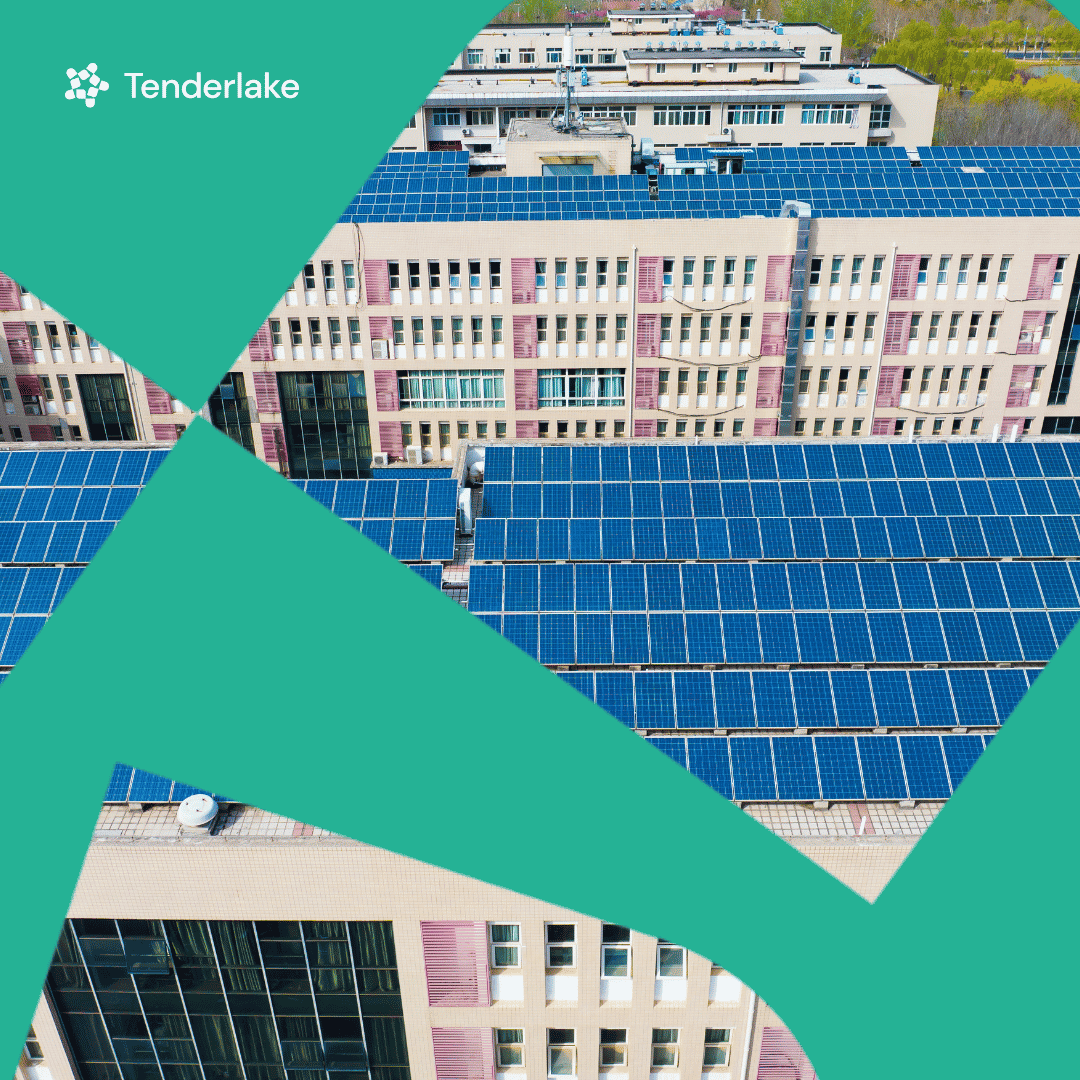
A new contract from Gmina Myszków sets out a combined solar and energy storage programme across public buildings. The municipality is looking for a contractor to design, supply, install and commission photovoltaic systems and energy storage units on multiple facilities. By specifying storage alongside rooftop solar, the tender shows how battery energy storage systems (BESS) are becoming a standard feature of local renewable projects, not a niche add-on.
Published on 16th July 2026, the renewable energy installation in Myszków notice covers the purchase and installation of photovoltaic systems and energy storage units on public facilities in the municipality. The scope runs end-to-end: design, supply, installation and commissioning across several buildings.
This structure means the winning contractor will not simply deliver hardware. They will be expected to develop a coherent technical design for each building, match storage capacity to photovoltaic output, install the systems safely and bring them into operation. The inclusion of energy storage units points to a desire to manage on-site generation more effectively, shifting solar output to times when buildings need it most.
Although the notice is brief, it places storage on an equal footing with solar. For BESS suppliers, that signals that municipal buyers now see batteries as core infrastructure for their estates, rather than experimental technology.
The Myszków scheme sits within a wave of municipal procurements that bundle storage with other clean energy technologies. In February 2026, Gmina Rudnik issued a renewable energy project for public buildings covering documentation and the installation of heat pumps, photovoltaic systems and energy storage solutions in public utility buildings in the Krzanowice and Rudnik communes. Here, batteries are specified alongside both solar and heat pumps.
In April 2026, Miasto i Gmina Włodowice went to market with a renewable energy project that specifies the installation of 51 photovoltaic units and 51 energy storage units, together with project documentation and construction works. The one‑to‑one pairing of PV systems and batteries underlines how closely the two technologies are now linked in public-sector specifications.
Also in April 2026, Gmina Świebodzice published a community energy partnership programme for photovoltaic systems and energy storage systems on public utility buildings, explicitly framed around improving energy efficiency. And in July 2026, Miasto Radlin’s renewable energy project likewise combines photovoltaic systems and energy storage units across public buildings in several municipalities.
Together, these notices suggest that for many local authorities, the “standard package” for public buildings now consists of solar generation plus batteries, often along with heat pumps. Storage is being embedded from the outset, rather than deferred to a later phase.
Some municipalities are going further and tying battery-backed renewables into formal energy clusters. In May 2026, Gmina Stary Sącz launched a construction of RES infrastructure project that covers project documentation and the build-out of photovoltaic installations, energy storage and heat pumps in both private and public buildings within the Południe Energy Cluster in Nowosądecki County.
In July 2026, GMINA RYKI issued a renewable energy installations project that will design, deliver, install and commission photovoltaic installations, energy storage units and heat pumps across multiple municipalities “to enhance the Energy Cluster infrastructure of Ryki County”. Here, BESS is explicitly part of a wider, county‑level system rather than a building‑by‑building upgrade.
Other procurements show how clusters can blend decentralised building systems with larger shared assets. Gmina Żarki’s March 2026 solar farm construction project covers a photovoltaic power plant with energy storage, alongside associated infrastructure and a transformer station. This kind of central plant can sit alongside building‑level installations such as those planned in Myszków.
There are also signs of more complex storage mixes emerging. In July 2026, Gmina Nowe Brzesko went to market for a renewable energy installations project spanning photovoltaic micro‑installations, energy storage systems, air source heat pumps and a hydrogen technology installation for energy production and storage in specific municipalities. And in April 2026, GMINA NIEGOWA’s renewable energy installation project added a renewable energy monitoring system and network‑connection documentation to its mix of photovoltaic systems and heat pumps, highlighting the importance of integrating new assets with the electricity network.
Myszków’s tender, focused on batteries and solar in public buildings, fits neatly into this picture of coordinated local energy planning, even if it does not spell out cluster arrangements in detail.
A common thread in these notices is the breadth of responsibilities placed on suppliers. Gmina Myszków expects the contractor to take the scheme from design through to commissioning. Many peers are demanding similarly comprehensive services.
In February 2026, GMINA KAWĘCZYN’s renewable energy installation notice combined delivery and installation of photovoltaic systems and solar collectors with full project documentation and quality guarantees lasting at least 72 months. Gmina Białaczów’s March 2026 renewable energy installations contract similarly covers the design, delivery and installation of systems – including heat pumps and photovoltaic equipment – plus the necessary infrastructure upgrades.
Gmina Porąbka’s March 2026 supply and installation contract for photovoltaic systems and air heat pumps in public utility buildings also brings “necessary legal and operational activities” into scope. Gmina Kornowac’s June 2026 renewable energy project adds another layer of complexity, combining documentation and implementation of photovoltaic systems, heat pumps and energy storage in public buildings, and allowing partial bids across three defined parts.
Design‑and‑build expectations extend beyond public‑sector estates. In April 2026, Gmina Stare Miasto’s renewable energy installations project for residents of the municipality uses a “design and build” system for photovoltaic micro‑installations and heat pumps, with the stated aims of generating renewable energy, reducing electricity costs and decreasing harmful emissions. Gmina Wierzbinek’s April 2026 project for photovoltaic micro‑installations and heat pumps is similarly framed around generating electricity while reducing energy costs and carbon emissions.
Financing structures can add further requirements. In July 2026, MIASTO BEŁCHATÓW’s renewable energy installations contract for residential buildings, co‑financed by the European Regional Development Fund, emphasises the preparation of documentation alongside the installation of photovoltaic systems and heat pumps. Gmina Aleksandrów’s July 2026 renewable energy projects likewise adopt a design‑and‑build model.
For storage suppliers, the pattern is clear: battery systems are rarely being procured in isolation. They are part of integrated packages where buyers expect:
Against that backdrop, Gmina Myszków’s contract is another indication that municipal demand for BESS is tied to wider decarbonisation and cost‑reduction goals. Even where those goals are not spelled out in the notice, they are explicit in comparable tenders that link renewable installations to lower electricity costs and reduced emissions.
Suppliers looking at the Myszków opportunity will be competing in a market where local authorities are already commissioning dozens of battery‑paired systems, as in Włodowice’s 51 units, and building out cluster‑wide infrastructure, as in Ryki County and the Południe Energy Cluster. The bar is being set not just on technology, but on the ability to manage complex, multi‑site programmes with clear, measurable outcomes.
The Myszków tender, together with recent procurements that embed batteries in building upgrades, solar farms and energy clusters, shows storage moving from trial to routine element in municipal energy planning. Further notices may reveal whether counties continue to extend cluster‑based schemes, whether more authorities adopt mixed storage approaches like Nowe Brzesko’s hydrogen‑plus‑battery model, and how often projects tap external funding streams such as the European Regional Development Fund. For now, BESS has firmly entered the mainstream of local procurement alongside photovoltaic and heat‑pump technologies.
Tenderlake Monitor reads every public sector notice published across the UK, the EU and the EEA, in the language it was published in, and tells you which ones match what your company sells and why. It works from a plain description of your business, not from keywords or CPV codes.
Follow Tenderlake on LinkedIn for concise insights on public-sector tenders and emerging procurement signals.