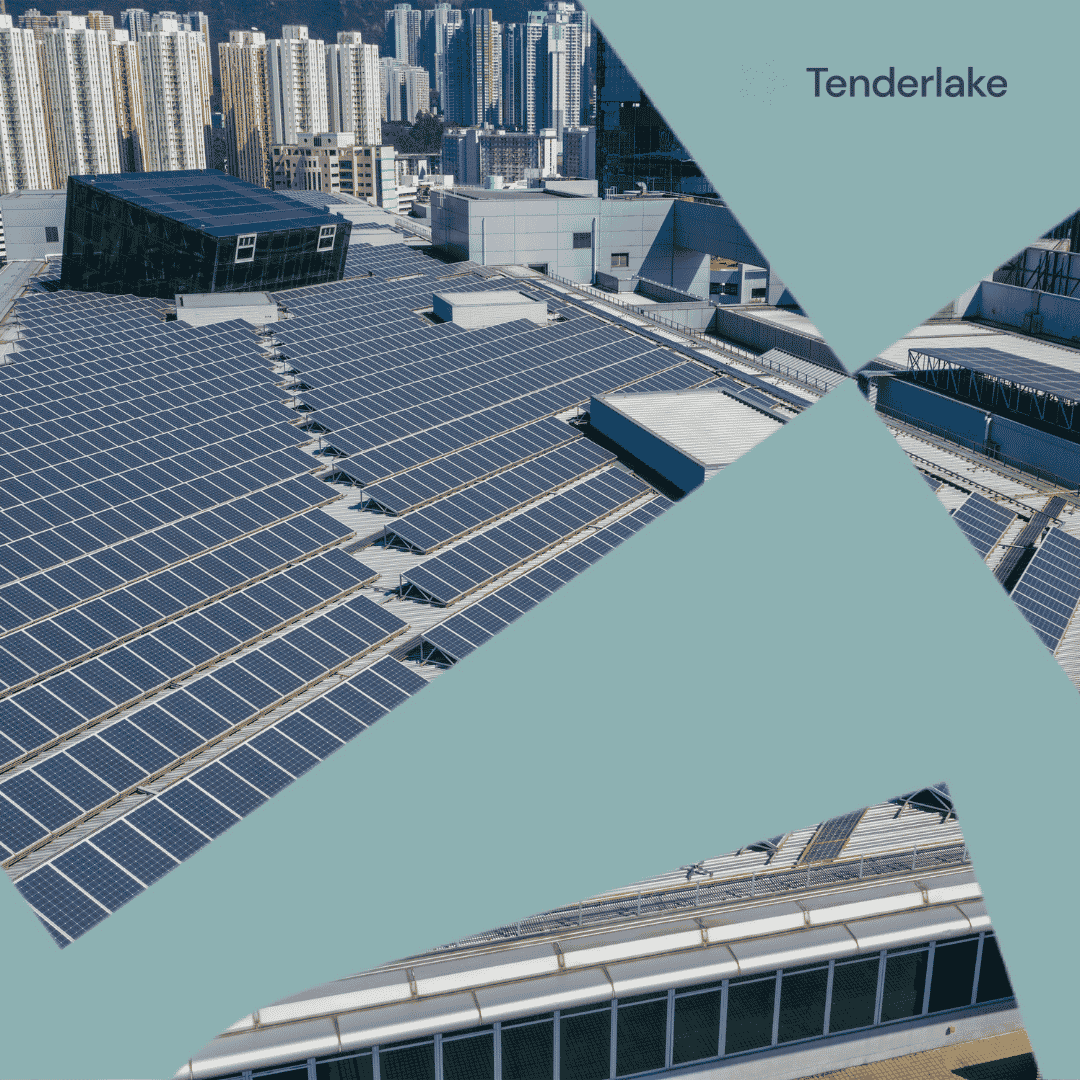
Local authority launches tender for solar and energy storage
A municipality is seeking suppliers to install solar panels and electricity storage across civic buildings, reflecting rising demand for flexible local energy.
A municipality is seeking suppliers to install solar panels and electricity storage across civic buildings, reflecting rising demand for flexible local energy.
Follow Tenderlake on LinkedIn for concise insights on public-sector tenders and emerging procurement signals.
On 25th August 2026, Gmina Myszków published a contract notice for the purchase and installation of photovoltaic systems and electric energy storage units at seven public facilities. The Renewable Energy Installation in Myszków project signals another step in the shift from simple rooftop solar to integrated generation-and-storage schemes on municipal estates, with public bodies increasingly looking to manage their own electricity use, cut exposure to volatile prices and support wider decarbonisation aims.
At the core of the Renewable Energy Installation in Myszków notice is a clear, if concise, objective: equip seven public facilities in the Myszków Municipality with photovoltaic systems and electric energy storage units. The scope covers both the purchase of equipment and its installation, so the chosen contractor will deliver complete systems rather than only supplying hardware.
By pairing generation with on-site storage, the municipality is moving beyond earlier public-sector schemes that focused only on rooftop solar. Electric energy storage units allow buildings to retain surplus power produced during sunny periods and release it later, typically flattening demand peaks and improving the share of self-consumed renewable electricity. For public facilities with fixed opening hours and predictable loads, this approach can help stabilise budgets while maintaining service levels.
The notice does not specify which public facilities are in scope. Across other recent procurements, municipalities have concentrated on public utility buildings, public buildings and, in some cases, mixed portfolios that include private premises. By targeting seven public sites, Myszków is following the same broad pattern of using the municipal estate as a platform for renewable energy projects.
Several recent procurements show how quickly electric energy storage is becoming a standard feature of local renewable energy investments. In March 2026, Gmina Żarki issued the Solar Farm Construction Project, covering the construction of a photovoltaic power plant with energy storage, associated infrastructure and a transformer station. That utility-scale project sits alongside a wave of building-level schemes where storage is installed directly on public premises.
On the civic-building side, Gmina Świebodzice set out plans in April 2026 under its Community Energy Partnership Program for the delivery and installation of photovoltaic systems and energy storage systems in public utility buildings, aimed at improving their energy efficiency. In June 2026, the Municipality of Kornowac went further in its Renewable Energy Project in Kornowac, combining documentation and implementation for photovoltaic systems, heat pumps and energy storage across public buildings, organised into three defined parts.
Multi-municipality schemes are also becoming more common. In July 2026, Miasto Radlin published the Renewable Energy Project in Radlin, covering the design and implementation of photovoltaic systems and energy storage units in public buildings across several municipalities. Around the same time, Gmina Ryki’s Renewable Energy Installations Project sought a contractor to design, deliver, install and commission photovoltaic installations, energy storage units and heat pumps across multiple municipalities to strengthen the Energy Cluster infrastructure of Ryki County.
Together, these notices point to a shift in expectations. Public buyers increasingly seek suppliers that can handle the full chain from design through installation and commissioning, and can integrate storage with both solar generation and heating technologies. The Myszków project, though smaller in scale, aligns with this direction by specifying both photovoltaic systems and electric energy storage units for its seven public facilities, rather than limiting the scope to panels alone.
Energy clusters are another consistent feature of the current procurement round. In May 2026, Gmina Stary Sącz’s Construction of RES Infrastructure notice called for project documentation and construction of renewable energy infrastructure, including photovoltaic installations, energy storage and heat pumps in both private and public buildings within the Południe Energy Cluster in Nowosądecki County. Here, storage is not an isolated add-on but part of a coordinated package intended to support the functioning of a broader local energy system.
The Dynów Foothills Energy Cluster appears in a similar role in the notice from Miasto i Gmina Jawornik Polski, published in August 2026 under the title Dynów Foothills Energy Cluster. That project covers the design, delivery, assembly and commissioning of photovoltaic installations and energy storage systems in private and public buildings, together with a hydrogen installation that uses excess electricity from existing photovoltaic systems. The emphasis on utilising surplus generation underlines how local authorities are starting to think about storage, hydrogen and solar as linked assets rather than separate investments.
Hydrogen technology also features in the July 2026 procurement from Gmina Nowe Brzesko, whose Renewable Energy Installations Project brings together photovoltaic micro-installations, energy storage systems, air source heat pumps and a hydrogen technology installation for energy production and storage in several municipalities. While most current municipal projects still focus on more familiar combinations of solar, storage and heat pumps, these hydrogen elements indicate that some buyers are already planning for more complex, hybrid systems.
Alongside these clusters and pilot hydrogen schemes, a broader base of projects continues to build out the fundamentals. Gmina Niegowa’s Renewable Energy Installation Project, published in April 2026, combines the design, purchase and installation of photovoltaic systems and heat pumps with a renewable energy monitoring system and the preparation of documentation for network connection. Gmina Stare Miasto, in its April 2026 Renewable Energy Installations Project, highlights the goal of generating renewable energy, reducing electricity costs and cutting harmful emissions through photovoltaic micro-installations and heat pumps. Together they show how monitoring, grid integration and clear environmental objectives are becoming standard features of local energy procurements, even where storage is not yet included.
Motivations for these projects are consistent across notices. Reducing electricity costs and harmful emissions stands out explicitly in the Renewable Energy Installations Project in Stare Miasto, while Gmina Świebodzice’s Community Energy Partnership Program stresses energy efficiency gains from combining solar and storage in public utility buildings. Cluster-based projects in Ryki, such as the Renewable Energy Installations Project, Stary Sącz’s Construction of RES Infrastructure and Jawornik Polski’s Dynów Foothills Energy Cluster add another layer, seeking not only cheaper and cleaner power but also more resilient local energy systems that can manage flows between multiple sites.
Funding structures vary, but at least some initiatives draw on external support. The July 2026 notice from Miasto Bełchatów, Renewable Energy Installations in Bełchatów, covers documentation and installation of photovoltaic systems and heat pumps in residential buildings and is explicitly co-financed by the European Regional Development Fund. Alongside this, schemes such as Kornowac’s Renewable Energy Project in Kornowac and the multi-municipality Renewable Energy Project in Radlin focus on public buildings or mixed public-private portfolios, underlining how local authorities are using a range of project models to deliver low-carbon energy upgrades.
For suppliers, the direction of travel is clear. Across these procurements, public buyers are looking for integrated offerings that combine photovoltaic generation, electric energy storage, heating technologies and, increasingly, monitoring and control systems. Quality guarantees and adherence to technical standards, highlighted in projects such as Gmina Kawęczyn’s Renewable Energy Installation in Kawęczyn, reinforce the expectation that installations must perform reliably over the long term as core elements of the civic energy infrastructure.
Against this backdrop, Gmina Myszków’s focus on photovoltaic systems and electric energy storage units at seven public facilities may be modest in scale but sits firmly within a wider shift towards local, flexible power. As further documentation and contract awards emerge across this group of tenders, the balance between straightforward rooftop solar and more complex storage-centred schemes will provide a useful indicator of how quickly battery-based solutions are becoming embedded in the public-sector estate.
Tenderlake Monitor reads every public sector notice published across the UK, the EU and the EEA, in the language it was published in, and tells you which ones match what your company sells and why. It works from a plain description of your business, not from keywords or CPV codes.
Follow Tenderlake on LinkedIn for concise insights on public-sector tenders and emerging procurement signals.