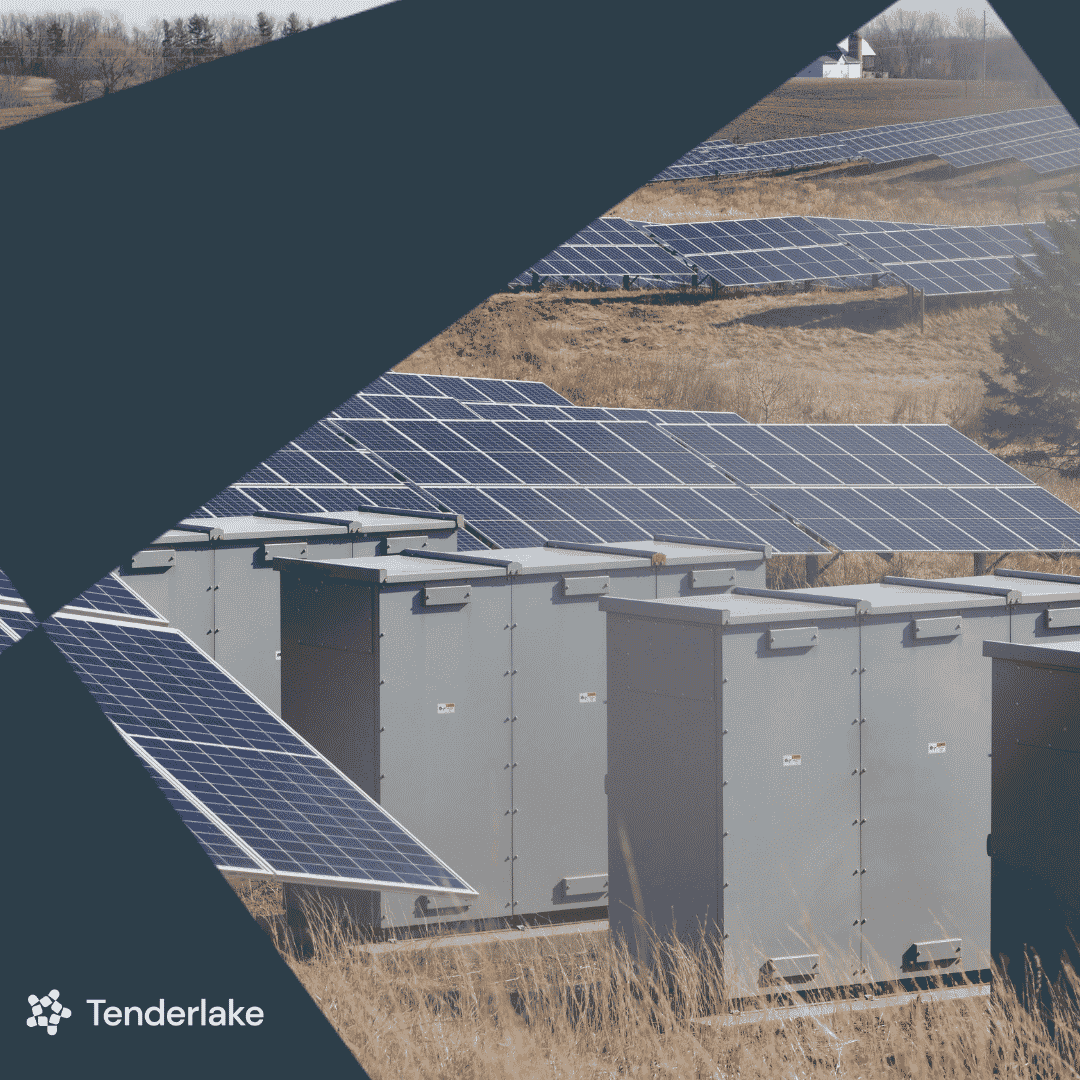
Energy company launches tender for battery energy storage system
Tender seeks construction of a new battery energy storage facility at an existing grid site, mirroring a wider shift towards storage in power infrastructure.
Tender seeks construction of a new battery energy storage facility at an existing grid site, mirroring a wider shift towards storage in power infrastructure.
Follow Tenderlake on LinkedIn for concise insights on public-sector tenders and emerging procurement signals.
A new tender from GEN OVE, proizvodnja in shranjevanje električne energije d.o.o., for the Construction of BHEE Labore project sets out plans for a battery energy storage system at the RTP Labore site. The brief notice, published on 7th August 2026, joins a growing wave of storage procurements that are reshaping how power systems are planned, operated and financed.
The contract description is strikingly short: the project involves constructing a battery energy storage system at the RTP Labore site. No capacity, technology choice, contract structure or operational role is disclosed in the text.
In May 2026, GORENJSKE ELEKTRARNE, proizvodnja elektrike, d.o.o., published a contract notice titled Construction of BHEE Labore, described in identical terms as “constructing a battery energy storage system at the RTP Labore location”. Taken together, the two notices confirm that battery storage at Labore is a recurring procurement priority in 2026, even if key technical parameters remain undisclosed.
While the Labore tender does not spell out what the system will do, other 2026 battery projects show the range of functions buyers now expect from storage. These span backup power, grid support, renewable integration, participation in electricity markets and cost optimisation.
Across notices published between February 2026 and August 2026, utilities, municipal operators and industrial companies are all procuring battery systems, often as core parts of their networks rather than experimental add-ons.
In February 2026, Lippeverband issued a contract notice for Battery Storage System Installation, seeking the turnkey delivery and installation of a complete battery storage system, including power electronics and low-voltage connections, with integration capabilities to central control technology. The emphasis on turnkey delivery and integration echoes through the rest of the year.
In March 2026, Verdo went to market with its Battery Energy Storage System for Verdo project, covering the delivery and installation of a battery energy storage system at Verdo Produktion A/S in Denmark to provide backup power, enhance grid support, and optimise energy costs. Here storage is framed explicitly as a way to strengthen reliability while improving the economics of plant operation.
In April 2026, Municipiul Craiova launched an Electric Energy Storage System Project for a photovoltaic power plant in Craiova, covering design and execution of battery-based storage aimed at enhancing renewable energy integration and optimising energy operations. By June 2026, Želivská rozvojová a.s. was procuring Supplies of FVE, BESS, and EMS for the Želivka Water Treatment Plant, combining a floating photovoltaic power plant, battery energy storage system and control system, along with associated services. Both projects place storage at the heart of renewable and critical infrastructure schemes.
Scale is also increasing. In April 2026, ENEA Nowa Energia sp. z o.o. tendered for Battery Energy Storage System Components, covering delivery of components for a system with a target usable capacity of 840 MWh and a guaranteed purchase of at least 600 MWh within 24 months. In the same month, HOLDING SLOVENSKE ELEKTRARNE d.o.o. launched a framework-style procurement for Battery Systems Construction, spanning design, supply, installation, commissioning and maintenance of battery storage systems for the HSE Group, including project documentation and outdoor installations near existing electrical infrastructure, with project orders triggered by client needs.
Several city and regional utilities are now treating batteries as active market assets. The July 2026 tender from Stadtwerke Winsen (Luhe) GmbH for Battery Storage System Construction in Buxtehude, Germany, covers construction and operation of a grid-connected stand-alone battery storage system, focused on turnkey delivery and innovative solutions for energy market participation. Later that month, SWE Energie GmbH’s Battery Energy Storage System Construction called for the planning, delivery, construction, commissioning and acceptance of a system with a preferred capacity of 20 MW and a minimum of 40 MWh, subject to specific operational requirements.
In June 2026, Hamburger Energiewerke Energie Hub Moorburg GmbH sought an EPC contractor for Battery Storage Construction at the former Moorburg power plant site, specifying a large-scale battery energy storage system to stabilise the power grid and support renewable energy integration, with responsibility for the entire EPC process and long-term operational safeguards. By August 2026, Stadtwerke Flensburg GmbH had published a tender for Battery Storage System Construction at its premises, covering a 70 MW grid-connected battery storage system designed for energy trading and for providing secondary control reserves. Stadtwerke Rostock AG’s July 2026 notice for Battery Storage System Procurement goes further in spelling out the commercial ambition: a two-hour battery storage system with turnkey delivery, installation and commissioning to generate profits through battery marketing and use of various electricity markets.
Not all 2026 tenders are about building new assets. In July 2026, Energy cells UAB (PV) launched an Electricity Procurement for Energy Cells process, buying electricity for the operation of its battery energy storage system, including services for isolated work reserve, with evaluation based on a price-quality ratio alongside price. This points to a maturing landscape in which storage is both an infrastructure investment and an operational service that depends on continuous energy procurement.
Taken together, these notices highlight several patterns that help place the Labore project in context.
The Construction of BHEE Labore notice does not yet say whether its new battery system will follow these models, nor does it disclose its intended role in markets or system operations. But the fact that Labore now appears in more than one 2026 procurement, and that other buyers in the same period are investing in comparable assets, suggests that the buyer is aligning with a broader shift towards storage as standard grid and plant equipment.
Similar design-and-build competencies are also evident in non-storage energy projects, such as the May 2026 procurement by Mondi Štětí a.s. for Electrical Works for EcoEnergy Project, which covers the design, supply, installation and commissioning of an electrical system, including outdoor electrical installations and fuel preparation systems. For contractors, this clustering of tenders means that engineering, procurement and construction capacity — particularly for grid-connected electrical works — is likely to be in sustained demand.
For now, the Labore documentation offers only the bare outline of a battery project: location and technology type. Further contract documents may fill in the missing technical and commercial detail, including any requirements around integration with control systems, participation in electricity markets or long-term maintenance.
What is clear from 2026’s storage tenders is that batteries are being procured at many scales and for many purposes, from backing up individual plants to anchoring large trading strategies and grid-stability services. The Labore project sits within that trend, signalling that battery energy storage is moving from the margins into the centre of power-sector investment decisions.
Tenderlake Monitor reads every public sector notice published across the UK, the EU and the EEA, in the language it was published in, and tells you which ones match what your company sells and why. It works from a plain description of your business, not from keywords or CPV codes.
Follow Tenderlake on LinkedIn for concise insights on public-sector tenders and emerging procurement signals.