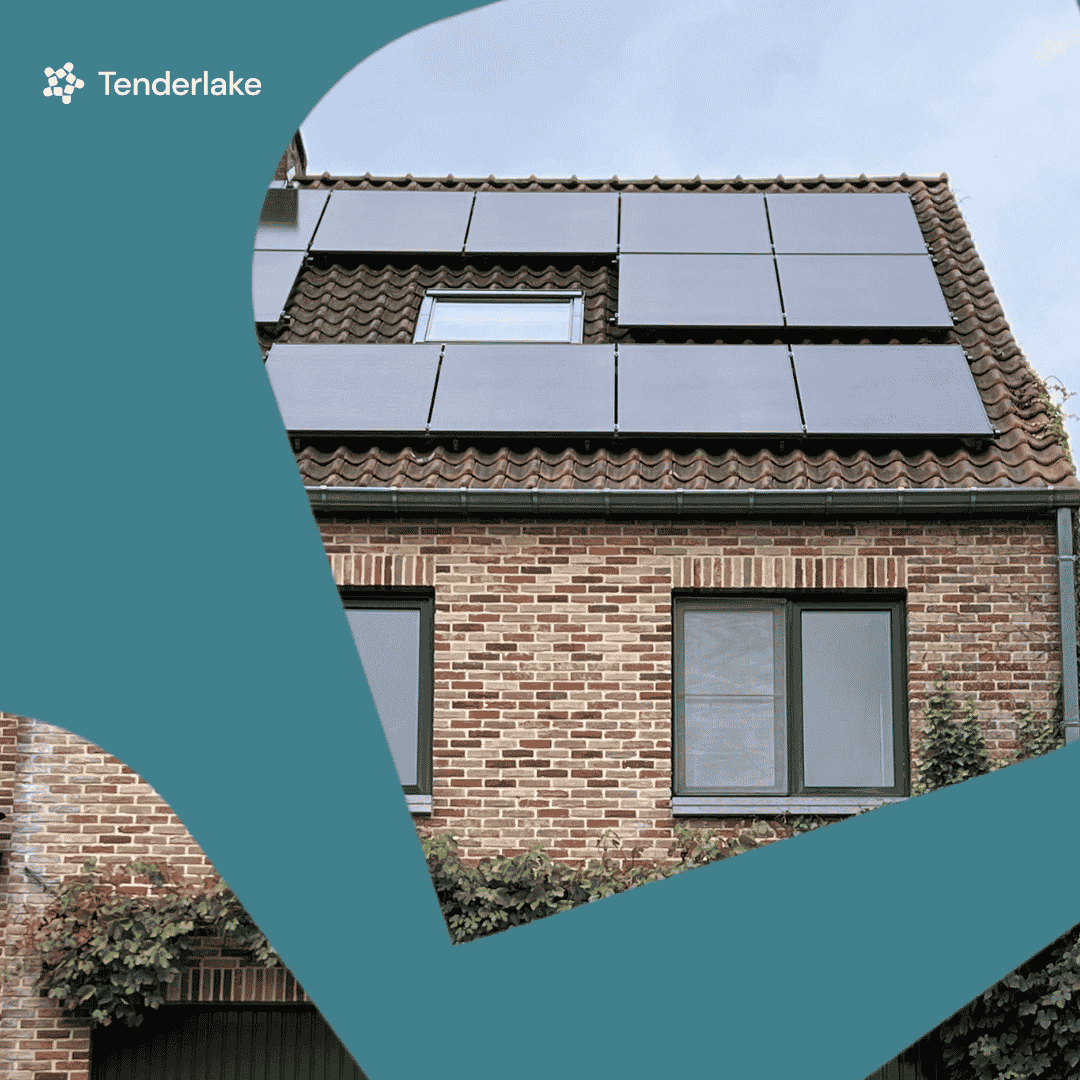
Municipality launches tender for solar and battery installations
Contract seeks design, construction and training for solar and energy storage systems across homes and public buildings, signalling a shift to integrated projects.
Contract seeks design, construction and training for solar and energy storage systems across homes and public buildings, signalling a shift to integrated projects.
Follow Tenderlake on LinkedIn for concise insights on public-sector tenders and emerging procurement signals.
Households and public buildings in Gmina i Miasto Odolanów are in line for new solar-plus-storage systems under a four-part contract that combines design, construction and training. By pairing photovoltaic panels with energy storage, the municipality can deepen its use of renewable energy and support more flexible local demand. Published on 17th September 2026, the notice sits within a fast-growing wave of public-sector tenders that now treat battery storage as a standard element of energy upgrades.
The contract from Gmina i Miasto Odolanów covers the supply and installation of renewable energy sources for both households and public utility buildings across the municipality. It focuses on photovoltaic panels and energy storage systems, moving beyond simple rooftop solar towards more integrated local energy systems.
The work is divided into four parts, each based on a different area of the municipality. Each part brings together installations for households and public utility buildings in its defined zone, creating a structured roll-out across the territory rather than isolated single-building projects.
The scope goes beyond equipment delivery. Contractors are expected to handle design, construction and training. This points to expectations that bidders will not only supply photovoltaic panels and energy storage units, but also configure systems, carry out the associated works and provide user training so that the installations can be operated safely and effectively.
Training obligations are notable. They underline that the municipality expects households and public-sector staff to engage with how the storage systems work. As users understand when to draw on stored electricity and when to use direct solar output, the installations can support more efficient local energy use and help smooth demand.
As with similar programmes elsewhere, the contract brings together private homes and public facilities under a single procurement. Such a mixed portfolio can offer economies of scale in design and installation, but it also raises demands on project management, health and safety, and communication with residents.
From March 2026 onwards, a series of contract notices shows how public buyers are increasingly commissioning photovoltaic and storage systems together, often on a design-and-build basis.
In March 2026, Gmina Kawęczyn published a tender for the delivery and installation of photovoltaic systems and solar collectors in the Kawęczyn Commune. That project adopts a clear design-and-build approach and sets out specific quality and warranty standards for contractors, underscoring how buyers are tightening expectations around long-term performance rather than focusing solely on upfront capital cost.
In April 2026, Miasto i Gmina Włodowice followed with a renewable energy project that combines the design and implementation of 51 photovoltaic units with 51 energy storage units. The one-to-one pairing of panels and batteries, backed by project documentation and construction works, shows how storage is now treated as an integral companion to rooftop generation rather than a niche add-on.
By May 2026, Gmina Stary Sącz was procuring renewable energy infrastructure for the Południe Energy Cluster in Nowosądecki County. Its contract combines project documentation and construction for photovoltaic installations, energy storage and heat pumps in both private and public buildings, pointing to a more holistic approach to local energy systems.
A similar pattern appears in the transport sector. In June 2026, Zakład Komunikacji Miejskiej Zawiercie sp. z o.o. issued a contract notice for the design, delivery and installation of photovoltaic systems with energy storage for the Municipal Communication Plant in Zawiercie. The scope includes securing permits, modernising electrical installations, and meeting defined warranty and service response requirements, underlining the operational importance now attached to storage assets that support core public services.
Some authorities are concentrating almost entirely on storage. In July 2026, Gmina Zabrodzie launched a procurement to design and install energy storage systems for existing photovoltaic installations in 50 residential houses and four public utility buildings. The notice specifies new electrical energy storage units tailored to established renewable sources, illustrating how retrofitting batteries is becoming a dedicated workstream in its own right.
The healthcare sector is also moving in this direction. A July 2026 contract from Uniwersytecki Szpital Kliniczny covers the design, purchase, installation and integration of an energy storage facility into the existing energy network, including renewable energy sources, for the District Hospital in Radomsko. Here the focus is on integrating storage with a complex electrical system typical of a large hospital site.
In September 2026, Gmina Bieruń, represented by the Mayor, advertised a green energy project to supply and install photovoltaic micro-installations and energy storage systems for public utility buildings. The contract bundles in construction works and monitoring systems and is supported by EU funding. A June 2026 notice from Powiat Bielski for the delivery and installation of photovoltaic systems across multiple public utility buildings is also co-financed by European Funds, indicating that external finance is helping to normalise storage as part of standard public-sector energy upgrades.
The Odolanów contract also sits alongside a stream of energy-cluster projects that tie together multiple municipalities and technologies.
In June 2026, Gmina Ryki went to market for a renewable energy installations project spanning three municipalities. That contract covers the delivery, installation and commissioning of photovoltaic installations, energy storage units and heat pumps to enhance Energy Cluster infrastructure in Ryki County.
The same month, Gmina Myszków advertised a cluster-based scheme to purchase and install photovoltaic systems and electrical energy storage facilities in seven public buildings. The scope runs from design through to installation and commissioning, showing how clusters are being used to coordinate investment across several sites under a single procurement.
A July 2026 notice from Miasto Radlin extends this logic across several municipalities, combining the design and implementation of photovoltaic systems and energy storage units in public buildings in Gmina Gorzyce, Godów, Kornowac and Radlin under one project.
Some clusters are broadening the technology mix. Also in July 2026, Gmina Nowe Brzesko launched a renewable energy installations project that brings together photovoltaic micro-installations, energy storage systems, air source heat pumps, and a hydrogen technology installation for energy production and storage in specific municipalities. Hydrogen’s inclusion highlights how, once clusters are in place, authorities can experiment with additional forms of long-duration storage alongside batteries.
Two September 2026 tenders make the cluster connection with Gmina i Miasto Odolanów explicit. Gmina Miejska Sulmierzyce is procuring photovoltaic systems and energy storage units in households and public buildings as part of an energy cluster initiative linking the municipalities of Odolanów, Przygodzice and Sulmierzyce. A separate notice from Gmina Przygodzice covers comprehensive design and installation of photovoltaic systems and energy storage units for public utility buildings in the same cluster, including technical design, supply of materials, assembly, testing, user training and maintenance services.
Taken together, these procurements indicate that Gmina i Miasto Odolanów’s own solar-and-storage programme is likely one pillar of a wider cluster strategy, even if the Odolanów notice itself does not spell that out. For suppliers, this suggests that winning work in one municipality can open opportunities in neighbouring areas linked by the same energy-cluster framework.
Across these notices, several requirements recur that are relevant to bidders considering the Odolanów contract.
First is the emphasis on integrated design and documentation. Projects in Włodowice, Stary Sącz, Myszków and Janów Lubelski all require detailed project documentation alongside the physical works. The Odolanów notice, with its call for design services, fits the same pattern: authorities want contractors who can translate renewable energy objectives into site-specific photovoltaic and storage configurations, with clear records that can support future maintenance and auditing.
Second is the breadth of construction and legal responsibilities. The Zawiercie municipal transport project includes necessary permits and modernisation of electrical installations. Powiat Janowski’s June 2026 contract for photovoltaic systems with energy storage at several locations in Janów Lubelski bundles in construction works, legal formalities and documentation, alongside user training, in its contract notice. Bidders on the Odolanów contract should therefore be ready for comparable expectations around planning, civil works and compliance, even if the notice summarises these only as construction.
Third is system integration. The 450 kWp photovoltaic installation being procured by Gmina Zawiercie in September 2026 must be integrated with existing energy infrastructure and cogeneration units, according to its photovoltaic installation project. The hospital storage project in Radomsko must connect into an established energy network with renewable sources. And Gmina Zabrodzie’s storage tender is explicitly tailored to existing rooftop installations. For Odolanów, where new photovoltaic panels and storage systems will appear across diverse buildings, similar integration challenges can be expected.
Finally, warranties, monitoring and service response times are increasingly prominent. Gmina Kawęczyn’s notice highlights quality and warranty standards. The Zawiercie transport tender points to service response requirements. Gmina Bieruń’s EU-funded project specifies monitoring systems alongside the core installations. As storage becomes more central to everyday operations in homes, schools, offices and hospitals, buyers are tightening their demands on long-term support.
Training recurs in several tenders, including those from Odolanów, Janów Lubelski and the Przygodzice cluster project. This suggests that authorities see user behaviour as a significant factor in real-world performance and want installers who can communicate clearly with residents and staff, not just wire equipment.
The Odolanów contract is relatively concise, but its combination of rooftop solar, battery storage, mixed residential-public portfolios and training obligations captures several wider shifts now visible across municipal procurement.
Over the coming months, observers of this market will be looking at how far storage moves from pilot status to default expectation in new rooftop projects, and whether energy-cluster frameworks such as those around Odolanów, Przygodzice and Sulmierzyce start to generate larger, aggregated tenders. They will also be watching whether requirements on monitoring, warranties and user training grow more prescriptive as authorities gain experience with day-to-day operation of distributed storage assets.
Tenderlake Monitor reads every public sector notice published across the UK, the EU and the EEA, in the language it was published in, and tells you which ones match what your company sells and why. It works from a plain description of your business, not from keywords or CPV codes.
Follow Tenderlake on LinkedIn for concise insights on public-sector tenders and emerging procurement signals.