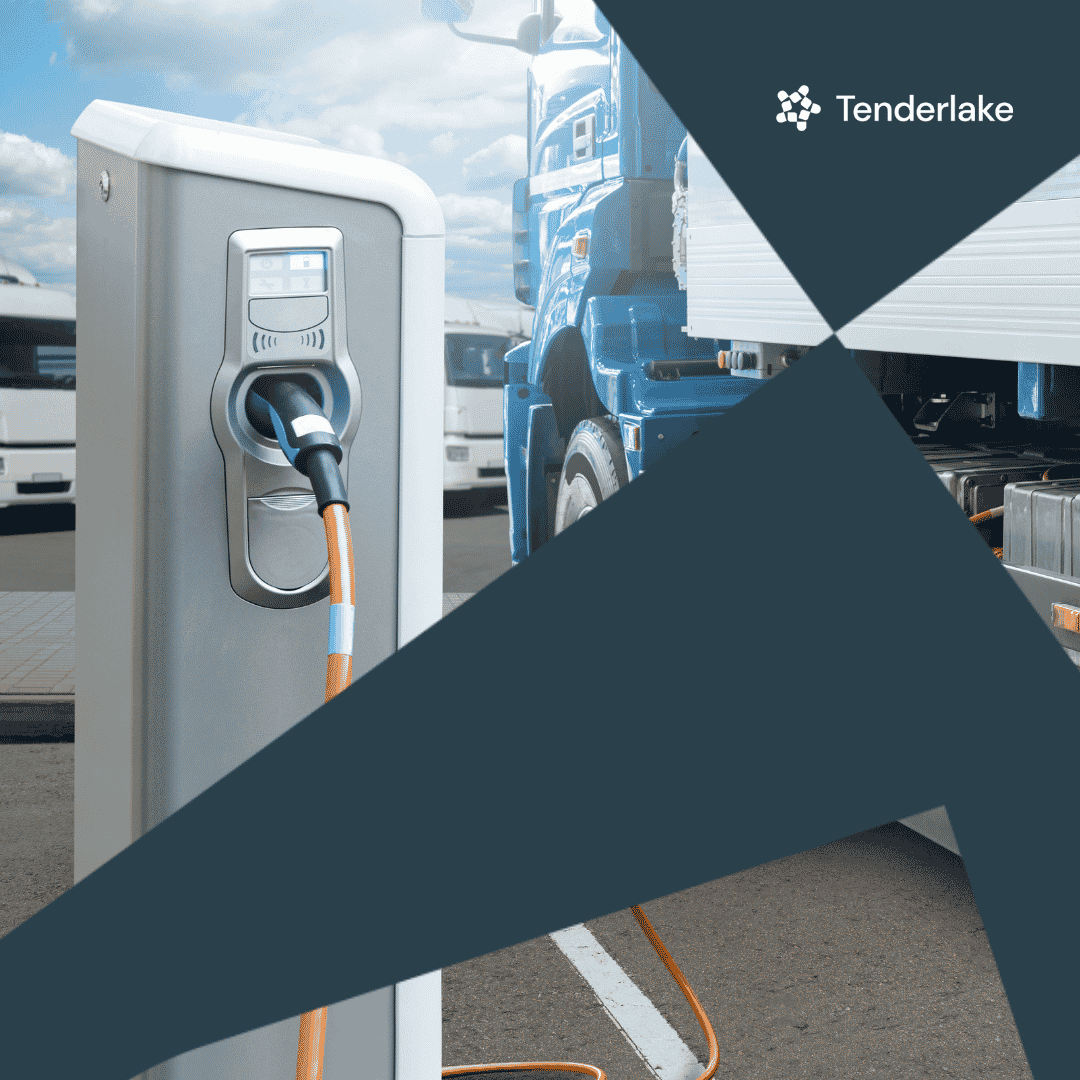
Road operator opens market engagement on electric truck fast charging network
Major road operator explores suppliers to plan, build and run a fast charging network for heavy trucks at motorway service areas, reshaping freight routes.
Major road operator explores suppliers to plan, build and run a fast charging network for heavy trucks at motorway service areas, reshaping freight routes.
Follow Tenderlake on LinkedIn for concise insights on public-sector tenders and emerging procurement signals.
A new Fast Charging Network for Trucks prior information notice from Die Autobahn GmbH des Bundes sets out plans to let contracts for the planning, construction and operation of a fast charging network for electric trucks at managed motorway service areas along federal highways, with a clear focus on swift commissioning, non-discriminatory access and close coordination with site operators.
The prior information notice, published on 21st September 2026, signals that Die Autobahn GmbH des Bundes intends to contract for a dedicated network serving electric trucks rather than light vehicles in general. According to the notice, contracts are to cover the full chain of planning, building and operating fast charging points at managed service areas on federal highways.
Placing infrastructure on managed motorway service areas matters. These locations already anchor long-distance freight routes and offer drivers rest, refuelling and amenities. Integrating high-capacity charging for trucks into this fabric is a logical next step for decarbonising road freight, but it is also more complex than equipping a municipal car park.
The buyer underlines three conditions for the future network: timely commissioning, non-discriminatory access and coordination with affected site operations. Together, these threads show that the project is not only about installing hardware, but also about how the network will be brought into service, how it will be used and how it will sit alongside existing commercial activity at service areas.
Across Europe, most public procurement for charging heavy vehicles has so far focused on depots and city fleets. In July 2026, for example, OK.go MobilitätsAG issued a contract notice for the Construction of Covered Bus Depot, seeking a general contractor to plan, deliver, build and commission charging infrastructure and related facilities for electric buses, including a transformer station and drainage systems. The focus there is a controlled depot environment for a known fleet.
Similarly, many city and regional transport bodies are now procuring depot charging systems for buses. Notices from bodies such as Dresdner Verkehrsbetriebe AG, Söllner Reisen GmbH & Co. KG and wupsi GmbH describe turnkey projects that combine civil works, medium-voltage connections, charger delivery, charging management systems and multi-year maintenance to support the gradual conversion of bus fleets to electric operation.
The new motorway-focused scheme now emerging on the federal network mirrors developments elsewhere. On 28th September 2026, National Highways Limited published its Strategic Charging Infrastructure Scheme, describing collaboration with the Office for Zero Emission Vehicles to enhance electricity network capacity at selected motorway service areas in England in response to growing demand for charging infrastructure. While that initiative covers electric vehicles in general rather than trucks alone, it reflects the same shift from isolated sites to strategic corridors.
Heavy trucks are also starting to feature more prominently in dedicated charging projects. On 17th September 2026, the Fachstelle Beschaffungswesen Stadt Bern launched a contract notice for Charging Infrastructure for Electric Trucks at the Forsthaus energy centre. That project seeks power distribution cabinets with multiple charging points, distributor boxes and a load management system for electric commercial vehicles, emphasising technical and operational requirements at a central site. The Autobahn company’s plan extends this thinking from a single hub to a dispersed motorway network.
The notice from Die Autobahn GmbH des Bundes states that contracts are awarded for three linked activities: planning, construction and operation of fast charging infrastructure. This bundled scope, spanning design to long-term running, is becoming standard in recent charging tenders.
Energy utilities and municipal companies often use framework agreements that combine hardware supply with service obligations. In April 2026, WIEN ENERGIE GmbH issued a contract notice for a Supply Agreement for Charging Stations, seeking framework agreements for the supply and service of DC fast charging stations, including delivery, installation and operational services. Stadtwerke München GmbH followed a similar approach with its Fast Charging Infrastructure Delivery notice, specifying hardware and software criteria across several power classes.
Other public bodies combine infrastructure delivery with long-term concessions. In April 2026, the City of Garbsen published an Electric Vehicle Charging Infrastructure notice, seeking a concessionaire to build and operate public charging infrastructure at 47 locations with commitments running until 2038. Stadt Bremerhaven’s concession for around 151 new AC charging facilities, and Gentofte Kommune’s Charging Points Operation in Gentofte, both require operators to design solutions for varied sites and to bear their own establishment and operational costs.
Though the Autobahn notice does not set out the commercial model in detail, its emphasis on operation alongside planning and construction points towards long-term arrangements. Similar patterns can be seen in contracts that pair delivery with operation and maintenance, such as Vestland fylkeskommune’s August 2026 Operation and Maintenance of Charging Stations service contract, which covers O&M of charging points, payment systems and provision of chargers for new locations.
One of the most striking requirements in the new motorway scheme is that access to the fast charging network for trucks must be non-discriminatory. That points to a model where different logistics operators, fleets and drivers can use the network under equal conditions, rather than a closed system reserved for a single operator or captive fleet.
Non-discriminatory access has been a recurring theme in municipal and regional concessions for public charging. Gentofte Kommune’s tender for publicly accessible charging points, for instance, asks bidders to propose solutions for different locations and charger types while managing their own establishment and operating costs. The district of Lüchow-Dannenberg, working with the Lower Saxony State Authority for Road Construction and Transportation, is using its Charging Infrastructure Expansion model project to extend charging infrastructure in public spaces and publicly accessible municipal areas. Both cases echo the Autobahn company’s emphasis on openness.
The requirement to coordinate with affected site operations underlines another challenge. Managed motorway service areas are already complex, with fuel stations, parking, catering, retail and sometimes hotels. Adding high-capacity truck charging means fitting new equipment, cables and grid connections into sites that must remain fully operational.
Comparable coordination issues appear in depot-based projects. Reisebüro Schmidt GmbH’s September 2026 notice for Charging Infrastructure for Buses at its depot in Wolfenbüttel divides work into three lots covering civil engineering, a medium-voltage transfer station and electrical installations, with mandatory coordination across lots to avoid conflicts. Aare Seeland mobil AG’s Charging Infrastructure Delivery tender likewise bundles delivery and installation of multiple charging points with remote access, commissioning, maintenance and staff training, highlighting that integration work continues well beyond the initial build.
Technical integration is also moving up the agenda. Verkehrsgesellschaft Landkreis Gifhorn mbH is procuring a Charging Management System for VLG to control and monitor charging processes as its bus fleet shifts to electromobility. In Brno, Teplárny Brno, a.s. is establishing a public charging network that must connect to an existing back-end system, according to its Brno Electric Vehicle Charging Stations notice from September 2026. For the Autobahn fast charging network, similar management and back-end considerations are likely to shape how non-discriminatory access is delivered in practice, even if the current prior information notice does not yet detail systems requirements.
As a prior information notice, the Fast Charging Network for Trucks initiative is an early signal rather than a full tender. Further documents will need to spell out the commercial structure, the division of responsibilities between the motorway company, charging operators and possibly grid companies, and the technical standards for hardware and software across sites.
Given the explicit focus on timely commissioning, non-discriminatory access and coordination with site operations, prospective suppliers and operators will be watching for how the future procurement defines service levels, access rules and handover arrangements at busy service areas. The way these issues are resolved will influence not just one contract, but how heavy road freight charging is rolled out along federal motorways in the years ahead.
Tenderlake Monitor reads every public sector notice published across the UK, the EU and the EEA, in the language it was published in, and tells you which ones match what your company sells and why. It works from a plain description of your business, not from keywords or CPV codes.
Follow Tenderlake on LinkedIn for concise insights on public-sector tenders and emerging procurement signals.