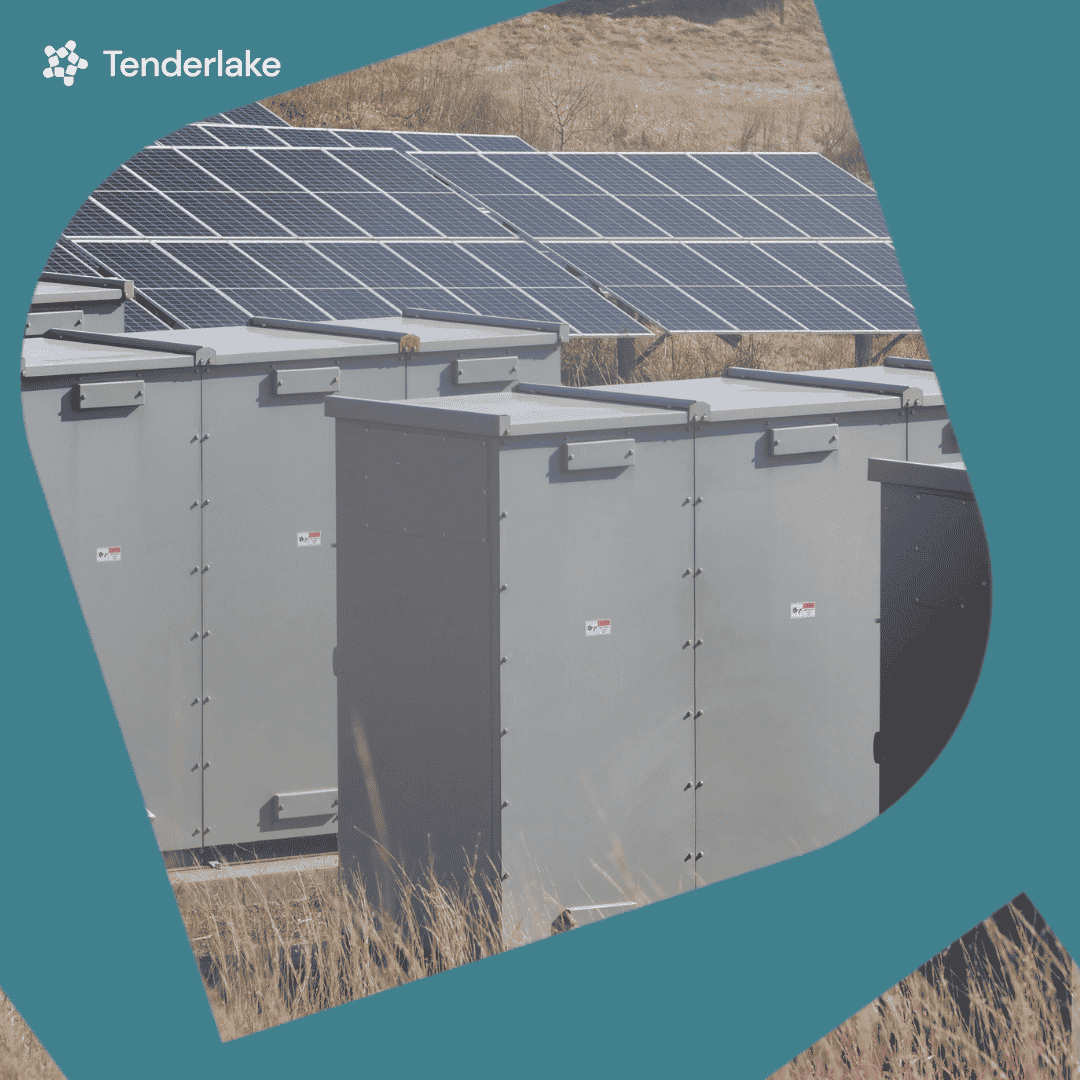
Municipal utility launches tender for new battery storage system
Contract covers full design, construction and commissioning of a battery energy storage system, signalling growing demand for turnkey storage expertise.
Contract covers full design, construction and commissioning of a battery energy storage system, signalling growing demand for turnkey storage expertise.
Follow Tenderlake on LinkedIn for concise insights on public-sector tenders and emerging procurement signals.
A public-law utility in Trier has gone to market for the full design, construction and commissioning of a new battery storage system, signalling how municipal buyers are now treating battery energy storage as core infrastructure rather than a peripheral pilot.
SWT Anstalt des öffentlichen Rechts der Stadt Trier (SWT-AöR), a public-law institution of the City of Trier, has published a contract notice for a scheme titled Battery Storage System Project.
The notice, released on 13th November 2026, is concise. It requires the 'design, construction and commissioning of a battery storage system', without at this stage setting out capacity, configuration, location or use-case. Even so, the wording establishes a clear delivery model: the buyer wants a partner to take the asset from concept through works and into operation-ready status.
For potential bidders, that points towards an integrated package covering project development, technical design, procurement of key components, site works and final commissioning. Instead of letting separate contracts for consultancy, equipment and construction, SWT-AöR is signalling a preference for a single contractor – or consortium under a single contract – that can assume responsibility for performance at handover.
The lack of detail in the notice itself is in line with many recent storage procurements. Buyers are using contract notices to flag intent and scope at a high level, while keeping the detailed technical and commercial requirements within the tender documents. The Trier project follows that pattern, but still marks a notable step: a city-backed utility going straight to market for a dedicated battery energy storage system.
The SWT-AöR scheme sits within a busy year for public-sector battery tenders, especially at municipal level where storage is being tied to depots, buildings and local generation.
In June 2026, Eigenbetrieb Gebäudewirtschaft Stadt Uelzen issued a contract for the delivery and installation of a photovoltaic system with battery storage at an operations building. On 1st July 2026, Derry City and Strabane District Council followed with a contract notice for the design, supply, installation and commissioning of solar PV and BESS at two depots, procured on a lot-by-lot basis. Just weeks later, on 21st July 2026, Cyson Cymru sought contractors for the design, installation and commissioning of a solar farm and BESS at Newport City Council’s recycling centre.
Other cities are integrating storage into existing urban buildings and new solar parks. Stad Halle’s notice of 29th October 2026 covers the design, delivery and installation of BESS systems in two urban buildings, including electrical modifications, energy management and regulatory compliance. On the same day, Stadt Sundern launched a procurement for the construction of ground-mounted photovoltaic systems with integrated battery storage.
Public utilities are also adopting behind-the-meter storage. Hamburger Wasserwerke GmbH’s contract notice of 19th August 2026 concerns the construction of a BESS at the Hamburg-Curslack waterworks, including planning and installation of a 10 MWh system with associated infrastructure.
Development agencies are taking a similar approach for social infrastructure. On 7th September 2026, Enabel published a framework for the assessment, design, supply, installation and commissioning of rooftop solar PV and BESS for schools in Kyiv Oblast, pointing to batteries as tools for both resilience and lower operating costs.
Seen alongside these schemes, SWT-AöR’s tender confirms that batteries are now part of the standard toolkit for cities and utilities managing their own estates. Even without published technical parameters, the Trier project adds to a pattern of storage being embedded in local energy systems to support renewables, reduce grid strain and improve security of supply.
While many municipal projects focus on on-site optimisation, other recent tenders highlight how public buyers expect batteries to deliver grid services and, in some cases, direct market revenues.
Stadtwerke Flensburg’s notice of 13th July 2026 covers the construction and operation of an 8 MW grid-connected BESS designed for reserve energy and energy trading, while reserving part of its capacity as critical start-up power for gas turbines. Stadtwerke Rostock AG, in a 17th July 2026 notice, is procuring a two-hour battery system with turnkey delivery, installation and commissioning, explicitly to generate profits through battery marketing and participation in various electricity markets.
Large grid-connected assets are also multiplying. On 10th June 2026, Liechtensteinische Kraftwerke issued a tender for a battery storage system of at least 25 MW / 50 MWh, with the supplier responsible for component delivery and commissioning. SWE Energie GmbH’s 20th July 2026 procurement seeks the planning, delivery, construction, commissioning and acceptance of a BESS with a preferred capacity of 20 MW and a minimum of 40 MWh.
Distribution operators and generators are shaping similar briefs. Netze ODR GmbH, in a notice dated 24th July 2026, is seeking a contractor for the turnkey construction of a lithium-ion BESS with specified power, capacity, efficiency and operational requirements. Slovenské elektrárne, in a 27th October 2026 contract notice, requires EPC services for the implementation of a BESS providing various grid services and integrating with existing systems. Stadtwerke München’s 28th October 2026 tender for the turnkey erection and integration of two grid-connected battery storage systems alongside existing PV goes further, calling for operational compatibility and explicit options for future expansion.
Longer-term involvement from suppliers is also becoming common. The Ministry of Finance’s Central Executing Unit in Belize, in a 24th September 2026 notice, seeks the design, supply, installation, testing, commissioning and three-year operation and maintenance of four grid-scale BESS to strengthen electricity infrastructure and support renewable energy adoption. In November 2026, SWN Stadtwerke Neumünster GmbH has gone to tender for a 16 MW battery storage system with around 45 MWh of storage, including turnkey delivery, construction, commissioning and maintenance to ensure safe and economical operation.
Fachhochschule Aachen’s 15th October 2026 tender for a BESS as part of the HOLLA project, funded by the European Regional Development Fund and the Just Transition Fund, adds another dimension: public-sector storage embedded in research and regional development programmes.
Taken together, these notices show public buyers looking for suppliers that can:
The SWT-AöR contract aligns with this direction. Its focus on design, construction and commissioning indicates that bidders will need to demonstrate full-lifecycle capability and a track record in managing technical and delivery risk. Experience from projects that combine grid services, on-site optimisation and renewable integration is likely to be relevant, even though the Trier notice does not yet spell out the battery’s primary role.
Further documents will clarify the system’s scale, technical specifications and commercial objectives. For now, the contract notice is another datapoint showing that batteries have moved from experimental deployments into the mainstream of public-sector procurement. For storage developers, EPC contractors and integrators, the lesson is clear: the ability to package design, works, commissioning and ongoing support into a coherent offer is becoming a baseline expectation when competing for public storage projects.
Tenderlake Monitor reads every public sector notice published across the UK, the EU and the EEA, in the language it was published in, and tells you which ones match what your company sells and why. It works from a plain description of your business, not from keywords or CPV codes.
Follow Tenderlake on LinkedIn for concise insights on public-sector tenders and emerging procurement signals.